Guide
Pickleball Paddle Thickness Explained: 14mm vs 16mm
It is the number on every serious paddle listing, and the one most gift buyers skip past. Here is what it changes, which to buy, and why the answer is usually 16.
By Stephen V. · Updated September 2026 · How we pick
Why there is a millimeter number on the listing
Read any serious paddle listing and a number jumps out: 14mm, 16mm, sometimes 13mm or 15.2mm. It is the thickness of the paddle's core — the slab of material between the two hitting faces — and it has become the single most important spec a paddle maker publishes, more than weight, more than shape. JOOLA sells most of its premium paddles in two thicknesses under the same name. Six Zero does the same. For a gift buyer, that turns one decision into two: which paddle, and then which thickness.
The good news is that this is the easiest paddle spec to understand, because it does one thing. The core is what the ball compresses against when it hits the face. A thicker core absorbs more of that impact and lets the ball sit on the face a fraction longer; a thinner core absorbs less and sends the ball back faster. Everything else people say about thickness — control, pop, forgiveness, arm comfort — follows from that. We cover the other two specs a gift buyer meets in our paddle weight guide and paddle shape guide; this page is only about the millimeters.
One thing to clear up first: the rules do not care. USA Pickleball caps a paddle's combined length and width at 24 inches and its length at 17 inches, and states plainly that there is no restriction on paddle thickness and no restriction on paddle weight. Thickness is a pure playing-style choice, not a compliance one, which is why manufacturers are free to offer the same paddle in more than one.
What a thicker core does: 16mm
Sixteen millimeters is the thick end of the mainstream range, and it is the thickness most control-oriented paddles use. JOOLA's own paddle guide describes it directly: a 16mm core "offers control, precision, and stability, catering to a more balanced style of play." In practice that means three things a player feels immediately.
- Dwell time. The ball stays on the face a fraction longer, which makes soft shots — dinks, drops, resets — easier to place. This is the shot family that decides most recreational games.
- Forgiveness. A thicker core is more consistent across the face, so an off-center hit costs less. Players who mis-hit — which is every improving player — feel this as a bigger sweet spot.
- Less vibration. More core between the ball and the hand means less shock reaching the arm, which is why 16mm dominates our tennis-elbow paddle page and our seniors page.
The cost is pace. A 16mm paddle does not return the ball as fast as a thinner one, and a player whose game is built on drives and speed-ups can feel it as a slight deadness. For most players that is a trade worth making, which is why 16mm is the default answer at the end of this page.
What a thinner core does: 13mm and 14mm
Fourteen millimeters is the thin end of the mainstream range, with 13mm a step thinner and 15.2mm — used by Engage — a step between. JOOLA's guide describes 14mm as "ideal for players who prioritize power and faster gameplay," and that is the whole story: less core means less absorption, so the ball leaves the face faster and the paddle feels livelier in hand battles at the net.
What a thinner core gives up is exactly what the thicker one gains. Less dwell time makes the soft game harder to control; a smaller effective sweet spot punishes off-center hits; and more of the impact reaches the arm. None of that is a defect — it is the design — but it means a thin paddle suits a specific player: the one with a big swing who wants the paddle to reward it, the aggressive doubles player who lives in fast exchanges, or the former tennis player who finds thick paddles sluggish. It does not suit a beginner, and it rarely suits a player with a sensitive arm.
Thickness also interacts with face material. A raw carbon face grips the ball for spin regardless of core thickness, so a 14mm raw-carbon paddle is a spin-and-power paddle rather than just a power one — our spin paddle roundup is mostly built from those. Our carbon versus fiberglass guide covers the face side of the equation.
The same paddle, both thicknesses
The clearest way to understand the decision is to look at one paddle sold in both. Six Zero's Double Black Diamond is published in 16mm and 14mm versions with the same Toray T700 raw carbon face, the same thermoformed build and the same elongated, tapered handle; JOOLA does the same with its Hyperion and Perseus lines. Everything is identical except the core, so the difference a player feels is the difference thickness makes and nothing else.
That is also the gift-buying trick this page exists to point out. If the person you are buying for already plays a paddle that comes in two thicknesses, buying them the other one is the safest possible advanced paddle gift: same shape, same handle, same grip, same feel in the hand, in the variant they have probably wondered about. It sidesteps every preference an experienced player has, because they have already expressed it. Our Six Zero Double Black Diamond review walks through that exact 14mm-versus-16mm choice for the paddle the trick works best on.
Which thickness to buy as a gift
Here is the decision, in order of how much you know about the recipient.
- You know nothing about their game: 16mm. It is the friendlier, more forgiving, more arm-comfortable thickness, and it suits the balanced style most recreational players actually have.
- They are a beginner or an older player: 16mm, without hesitation. Forgiveness and damping matter more than pace for both, and our beginner paddle page is almost entirely thick-core.
- They have said they want more power or a faster paddle: 14mm, or 13mm from a brand that offers it. Take them at their word.
- They play a paddle sold in two thicknesses: buy the other one. See above.
- They have a history of elbow or wrist trouble: 16mm, and read our tennis-elbow page — a paddle does not treat a tendon, but a thicker core sends less shock up the arm.
The four paddles below illustrate the range: the same premium paddle in 16mm and 14mm, a 13mm paddle at the thin end, and a 16mm standard-shape paddle at the forgiving end. Each is a live listing in this site's registry with a real price, and each says plainly who it is for and who should skip it.
The gear this guide points to
Disclosure: Popaddle earns a commission on qualifying purchases made through the links on this page, at no extra cost to you. Prices are pulled live and can change. How this works.
| # | Product | Best for | Price |
|---|---|---|---|
| 1 | 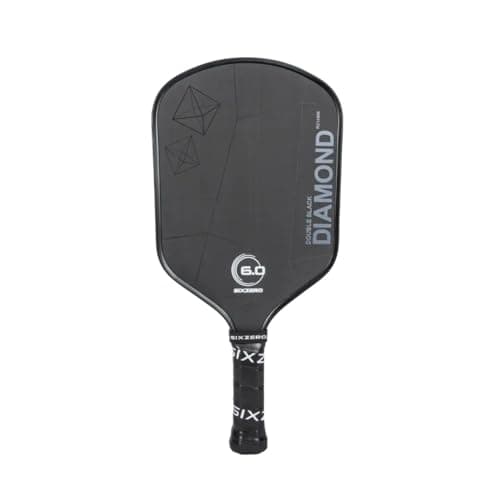 Six Zero Double Black Diamond Control 16mm Six Zero's thermoformed raw-carbon paddle in the thicker, control-leaning core. | The control player, and the default when you do not know | |
| 2 | 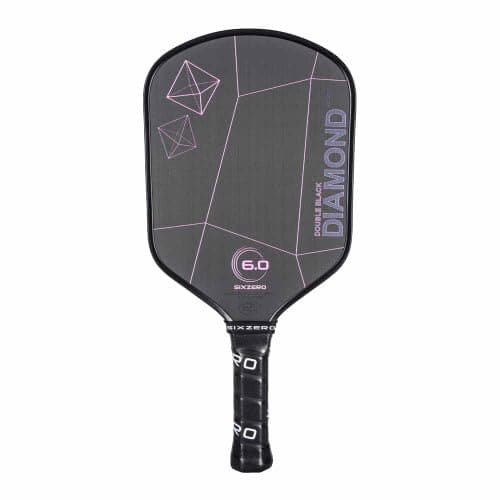 Six Zero Double Black Diamond Control 14mm The identical Double Black Diamond with a thinner core — the cleanest illustration of what 2mm changes. | The same paddle, for the player who wants a faster, livelier feel | |
| 3 | 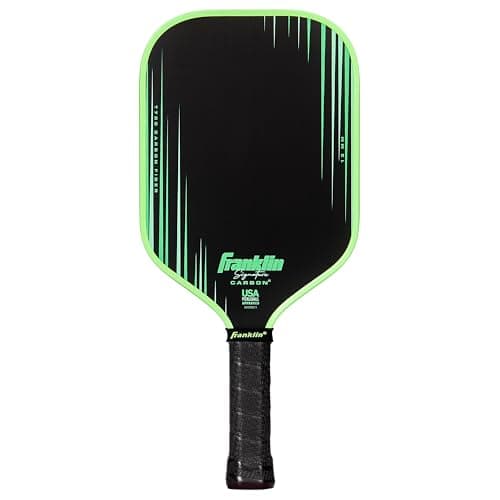 Franklin Sports Signature Carbon 13mm Elongated An elongated 13mm carbon paddle from Franklin — thinner than the mainstream 14mm, for maximum pop. | The big-swinging player who wants the paddle to reward pace | |
| 4 | 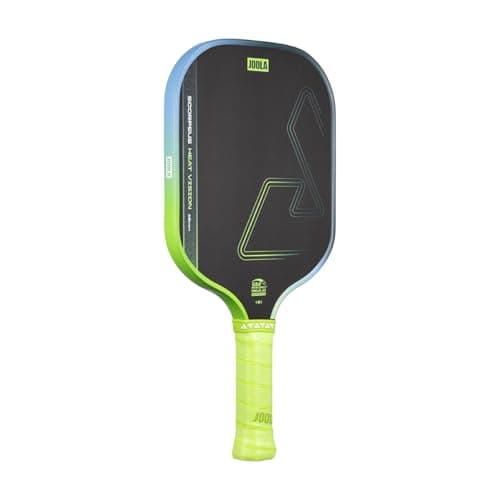 JOOLA SCORPEUS Heat Vision 16mm JOOLA's standard-shape 16mm paddle with a vibration-reducing film — thickness and shape both pulling toward forgiveness. | The doubles player who wants maximum forgiveness — thick core, wide face |
Six Zero Double Black Diamond Control 16mm
Best for: The control player, and the default when you do not know
This is the reference point for everything above: a 16mm honeycomb polymer core under a Toray T700 raw carbon face, thermoformed, with an elongated tapered handle, as Six Zero publishes it. The thicker core gives the dwell time that makes drops and resets easier and damps more impact before it reaches the hand. It is the version to buy unless the recipient has specifically asked for the thinner one, and the listing labels this version Lightweight.
Skip it if: Skip it for a player who has told you they want more pop; that is what the 14mm directly below is for.
Price as of September 17, 2026. #ad · how this works
Six Zero Double Black Diamond Control 14mm
Best for: The same paddle, for the player who wants a faster, livelier feel
Same face, same build, same handle; the only difference is the core, which is exactly why it is here. A 14mm core returns the ball faster and feels quicker in hand battles, at the cost of some dwell time and forgiveness. If the person you are buying for already plays the 16mm and has wondered about the 14mm — or the reverse — this is the gift that cannot miss, because every preference they have is already built in.
Skip it if: Skip it for a beginner, an older player, or anyone with a sensitive arm; a thinner core is less forgiving and sends more of the impact up the arm.
Price as of September 17, 2026. #ad · how this works
Franklin Sports Signature Carbon 13mm Elongated
Best for: The big-swinging player who wants the paddle to reward pace
Thirteen millimeters is a step beyond the usual thin option, and Franklin's Signature Carbon shows what that end of the range is for. The listing is a 13mm elongated carbon paddle, and an elongated shape adds leverage to what a thin core already does. It suits the player whose game is built on drives, and it sits below the tour brands on price, from the most familiar name in recreational pickleball.
Skip it if: Skip it for anyone still learning the soft game; a 13mm core gives the least dwell time of anything on this page, and dinks and drops are harder to control on it.
Price as of September 17, 2026. #ad · how this works
JOOLA SCORPEUS Heat Vision 16mm
Best for: The doubles player who wants maximum forgiveness — thick core, wide face
Thickness is one lever and shape is the other, and this paddle pulls both toward forgiveness. The listing describes a standard shape, a textured carbon fiber face, a 16mm core and SK film for reduced vibration, and JOOLA's guide says the standard shape expands the sweet spot for stability on blocks, resets and counters. For a club doubles player, an older player, or anyone who mis-hits more than they would like, it is the most forgiving combination on this page.
Skip it if: Skip it for a player who wants reach or hits a two-handed backhand; the standard shape has a shorter handle than the elongated paddles above.
Price as of September 17, 2026. #ad · how this works
Frequently asked questions
What does 16mm mean on a pickleball paddle?
The thickness of the core — the material between the two hitting faces — in millimeters. Sixteen is the thick end of the mainstream range and the thickness most control-oriented paddles use. JOOLA's guide describes a 16mm core as offering control, precision and stability for a balanced style of play.
Is 14mm or 16mm better for beginners?
16mm. A thicker core is more forgiving on off-center hits, gives more dwell time for the soft shots beginners struggle with, and sends less vibration to the arm. A 14mm paddle rewards a big, accurate swing that a beginner does not yet have. Most of our beginner paddle picks are thick-core for that reason.
Is there a legal limit on paddle thickness?
No. USA Pickleball's rules cap combined length and width at 24 inches and length at 17 inches, and state that there is no restriction on paddle thickness and no restriction on paddle weight. Thickness is purely a playing-style choice.
Does a thicker paddle help with tennis elbow?
It sends less shock up the arm, because more core sits between the ball and the hand — which is why 16mm dominates our tennis-elbow paddle page. That is an equipment observation, not a medical claim; a paddle does not treat a tendon, and a sore arm is a reason to see a clinician.
What about 13mm and 15.2mm paddles?
They are the same spectrum at different points. Thirteen millimeters is a step thinner than 14mm, for maximum pop; 15.2mm, used by Engage, sits between 14mm and 16mm. The rule of thumb holds throughout: thinner is faster and less forgiving, thicker is softer and more forgiving.
Should I buy the same paddle in the other thickness as a gift?
It is the safest advanced-paddle gift there is. If the person plays a model sold in two thicknesses, the other version has the same shape, handle and grip they already like, in the variant they have probably wondered about. It sidesteps every preference an experienced player holds, because they have already expressed it.
Does thickness change the weight?
Slightly, and manufacturers usually adjust so the two versions land close together; some listings state a weight and some do not. Weight is its own decision — our paddle weight guide covers it — and it should not drive the thickness choice.
Keep exploring
The other number on the listing.
Elongated vs standard paddlesThe shape decision, in plain English.
Six Zero Double Black Diamond reviewThe 14mm vs 16mm choice on one paddle.
Best paddles for advanced playersWhere thickness becomes a real choice.
How to choose a paddle as a giftThe whole decision, start to finish.
Sources
Browse another way