Guide
How to Hold a Pickleball Paddle
One grip covers almost everything in this sport, and most beginners are not using it. Here is the handshake grip, how tight to hold, and when to change.
By Stephen V. · Updated October 2026 · How we pick
The continental grip, and why it is the answer
Hold the paddle out in front of you with the face vertical, as if it were a hand offered for a handshake, and shake hands with it. That is the continental grip, and it is what the overwhelming majority of pickleball players should use for the overwhelming majority of shots.
The reason is structural rather than stylistic. In tennis, players use different grips for forehand, backhand, serve and volley, and they have time to change between them because the court is 78 feet long and the ball is travelling a long way. Pickleball has no such time. The court is 44 feet end to end, and a doubles rally at the non-volley-zone line puts two players roughly fourteen feet apart - the non-volley zone itself is seven feet on each side of the net, as USA Pickleball's own introduction to the game describes it. At that distance, a grip change is a shot you do not hit.
The continental grip's virtue is that it plays both wings without modification. The paddle face sits roughly neutral, so a forehand and a backhand are the same hand position with a different shoulder rotation. You give up a little top-end power on the forehand relative to a more extreme grip, and in exchange you are never caught holding the wrong grip for the ball that arrives. In a sport this fast, that trade is not close.
A common beginner error worth naming: holding the paddle like a frying pan, with the face horizontal and the hand on top of the handle. It feels natural and it works for a mid-court forehand, and then it makes the backhand nearly impossible and the dink uncontrollable. If a new player's backhand is catastrophic, the grip is the first thing to check.
How tight to hold it - the part nobody tells you
Grip pressure is more consequential than grip style and gets a fraction of the attention. The standard instruction, borrowed from racquet sports generally, is to hold the paddle about as firmly as you would hold a small bird you do not want to escape - secure, not crushing. On a one-to-ten scale, something around four or five for soft shots and firming up for a drive.
What a death grip costs you is specific. It locks the wrist, and the wrist is where touch comes from - every dink, drop and reset depends on the paddle being able to give slightly at contact. A rigid wrist turns a soft shot into a punch, which is why beginners pop dinks up for easy put-aways. It also transmits far more vibration into the forearm, which is the mechanism behind a lot of pickleball elbow complaints, and it is tiring in a way that shows up in the third game.
Here is the connection most instruction misses: if you cannot hold the paddle loosely, the problem may not be your technique. A handle that is too large for your hand cannot be held securely at low pressure - you have to squeeze to stop it rotating. Selkirk's own grip-size guidance gives the measurement (from the middle crease of the palm to the tip of the ring finger) and the rule that matters: when between sizes, go smaller, because an overgrip can add thickness and nothing can remove it. Our grip size guide walks through it, and our paddles for small hands page covers what to do when the handle is simply too fat.
The other hidden cause is a dead grip. A compressed, polished, slick grip cannot be held at low pressure either, so you squeeze harder without deciding to. That is a consumable problem with a three-minute fix, and it is worth ruling out before concluding anything about your technique.
What changes for the backhand, the serve and the net
On the two-handed backhand specifically: it is not a beginner shortcut, it is a real technique with a trade. Two hands give you more stability and more power on the backhand side, and they cost you reach and some mobility. It also needs physical room on the handle, which is why players who use it tend to prefer elongated paddles - our elongated versus standard guide covers that shape trade, and it matters more for this than for anything else.
Fixing a grip you cannot hold properly
Three fixes, in the order of cost.
Rewrap it. If the grip is slick, shiny or compressed, nothing else on this page will work. A fresh overgrip costs a couple of dollars and takes three minutes, and it is the single most effective change available to most players. Selkirk publishes a clear how-to covering wrap direction and overlap, and our guide to replacing a grip works through both the overgrip and the full replacement.
Change the texture, not the thickness. If your hand slips, the instinct is to wrap something thick around the handle, which fixes the slipping and creates a size problem. A thin tacky tape or a dry cloth grip changes the friction without changing the circumference. If sweat volume is the real issue, our grips for sweaty hands page sorts the field by whether a grip absorbs moisture or stays tacky, which is the choice that decides whether it works.
Change the geometry. The most interventionist option. Some replacement grips are not round - they are moulded with ridges that index your fingers into position, which gives some players a secure hold at much lower squeeze pressure. That is a genuine help for anyone whose grip pressure is high because of hand strength rather than habit, and it is a real change in feel that not everyone wants.
What none of these fixes is a substitute for: a paddle that is simply too heavy for you. Selkirk's weight guidance frames the trade honestly - heavier paddles are more stable and put more mass behind the ball, lighter ones are quicker and easier to control - and a paddle you have to grip hard to control is a paddle you are fighting rather than holding.
The gear this guide points to
Disclosure: Popaddle earns a commission on qualifying purchases made through the links on this page, at no extra cost to you. Prices are pulled live and can change. How this works.
| # | Product | Best for | Price |
|---|---|---|---|
| 1 | 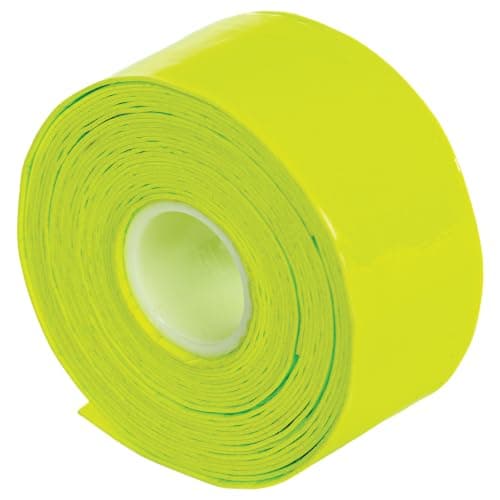 Franklin Sports Pickleball Paddle Overgrips (3-Pack) A three-pack of overgrips with slight tackiness - the cheapest change that fixes grip pressure. | Anyone whose grip is slick, shiny or compressed | |
| 2 | 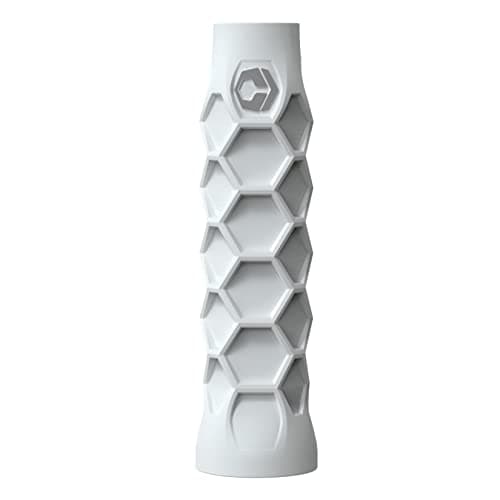 Hesacore Pickleball Paddle Grip A moulded grip listed at 5.25 in with finger support, built to reduce vibration and aid grip strength. | A player who squeezes too hard because they cannot hold on otherwise | |
| 3 | 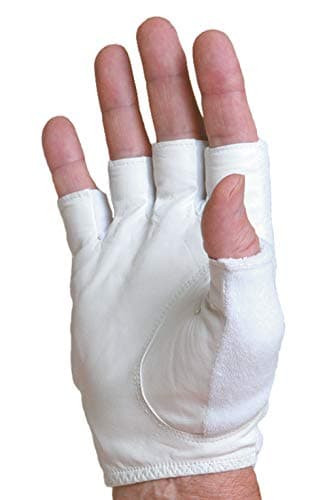 Tourna Men's Half-Finger Tennis Glove A half-finger racquet glove - friction on the hand rather than bulk on the handle. | A player losing the paddle without wanting to add thickness to the handle | |
| 4 | 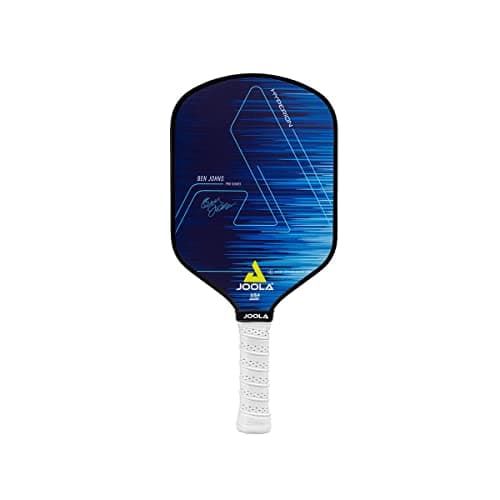 JOOLA Ben Johns Hyperion CAS 16 A 16mm elongated paddle whose listing specifies a Sure-Grip elongated handle - the handle length two hands need. | A player developing a two-handed backhand |
Franklin Sports Pickleball Paddle Overgrips (3-Pack)
Best for: Anyone whose grip is slick, shiny or compressed
Before changing anything about your technique, change this. A compressed, polished grip cannot be held at the low pressure everything above asks for, so you squeeze harder without deciding to - and a locked wrist is the end of your soft game. The listing specifies three overgrips with slight tackiness, which is the right default for most hands: enough friction to hold securely without the gummy feel some players dislike. Three in a pack means one on the paddle and two in the bag, which matters because this is the only equipment failure you can repair between games.
Skip it if: Skip it if your handle is already too thick for your hand - an overgrip adds circumference and makes the real problem worse. Skip it too if you want the dry, cloth-like feel rather than a tacky one; Tourna Grip on our overgrips roundup is that.
Price as of October 25, 2026. #ad · how this works
Hesacore Pickleball Paddle Grip
Best for: A player who squeezes too hard because they cannot hold on otherwise
The interventionist option, and the right one for a specific player: someone whose grip pressure is high because of hand strength or hand pain rather than habit. Rather than a smooth cylinder, this grip is moulded with a pattern that indexes the fingers, which the listing describes as finger support that enhances grip strength and reduces vibration. For a player who has been told to relax their wrist and genuinely cannot because the handle slides, a grip that holds position at lower squeeze pressure is a real solution. It is listed at 5.25 inches and a regular feel, so check that against your own measurement.
Skip it if: Skip it if your hands are small or your measured grip size is under about 4.25 inches - this is a substantial grip and 5.25 in is a large circumference. Skip it too if you dislike a textured feel in the palm; it is a distinctly different sensation from a smooth wrap and not everyone wants it.
Price as of October 25, 2026. #ad · how this works
Tourna Men's Half-Finger Tennis Glove
Best for: A player losing the paddle without wanting to add thickness to the handle
The other way to solve a slipping hand, and the one that does not change your grip size. A glove adds friction between your palm and the handle without wrapping anything extra around the handle, which is exactly the right trade if your grip size is already correct and your problem is hold rather than circumference. The half-finger cut keeps your fingertips in contact with the paddle, which is where feel for a dink comes from - a full-finger glove is warmer and more secure but duller. Cheap enough to be worth trying before changing paddles or grips.
Skip it if: Skip it if your hands sweat heavily - a glove can trap moisture, and a clipped towel plus a dry grip is usually the better system for that. Skip it too if your handle is genuinely too big for you; a glove does not shrink a handle.
Price as of October 25, 2026. #ad · how this works
JOOLA Ben Johns Hyperion CAS 16
Best for: A player developing a two-handed backhand
The two-handed backhand is a legitimate technique rather than a shortcut, and the thing that makes it physically possible is handle length. The listing specifies an elongated handle alongside a carbon abrasion surface for grit and spin and a 16mm polypropylene honeycomb core, USAPA approved - which is to say, a paddle built for a player who wants reach and room for a second hand. That extra handle is also why players coming from tennis gravitate to elongated shapes: the backhand they already own needs somewhere to put the other hand. Our elongated-versus-standard guide covers what you give up for it.
Skip it if: Skip it if you use one hand on the backhand - an elongated shape trades sweet-spot width for reach, and you would be paying for handle you do not use. Skip it too if your hands are small; our small-hands page explains why a standard shape is the better starting point there.
Price as of October 25, 2026. #ad · how this works
Frequently asked questions
What is the correct way to hold a pickleball paddle?
The continental grip - hold the paddle with the face vertical and shake hands with it. It is the right answer for almost everyone because it plays forehand and backhand without changing anything, and pickleball is far too fast at the net to change grips mid-rally. You give up a little forehand power compared with a more extreme grip, and you are never caught holding the wrong grip for the ball that arrives.
How tight should I hold a pickleball paddle?
Firmly enough that it will not turn, loosely enough that your wrist can still give at contact - the classic instruction is to hold it like a small bird you do not want to escape. Roughly four or five out of ten for soft shots, firmer for a drive. A death grip locks the wrist, which is where all touch comes from, and it transmits much more vibration into the forearm.
What is the continental grip?
The grip you get by holding the paddle face vertical and shaking hands with the handle. It puts the paddle face roughly neutral, so a forehand and a backhand are the same hand position with different shoulder rotation. It is the standard recommendation in pickleball specifically because the sport's speed at the net leaves no time to switch grips between shots.
Should I use two hands on my pickleball backhand?
It is a legitimate choice, especially for players coming from tennis who already own the shot. Two hands give you more stability and power on the backhand and cost you reach and some mobility. The practical requirement is handle length - a standard-handle paddle does not have room for two hands, which is why two-handed players tend to prefer elongated paddles.
Why does my paddle twist in my hand?
Usually one of three things, all checkable. The grip is dead - compressed and polished, so you cannot hold it at low pressure. The grip is the wrong size - too large to close your hand around, which forces you to squeeze. Or the paddle is unstable on off-centre contact, which is a core-thickness and shape question. Rewrap it first; it is the cheapest and most often correct fix.
Do I need a different grip for serving?
No - continental works, and it is arguably the best grip for a pickleball serve. The serve must be struck below the waist with an upward motion and contact below the wrist, so you want a grip that keeps the face open through a low contact, which is what continental does. Unlike tennis, there is no overhead serve here to need a specialist grip for.
Is the frying-pan grip ever right?
Rarely, and it is the most common beginner error. Holding the paddle with the face horizontal and the hand on top feels natural and works acceptably for a mid-court forehand, then makes the backhand almost impossible and the dink uncontrollable. If a new player's backhand is a disaster, this is the first thing to check - switching to continental usually fixes more than any amount of swing coaching.
Keep exploring
Measure before blaming your technique.
How to replace a paddle gripThe three-minute fix.
Best overgrips and grip tapeTacky, dry, thin and cushioned.
Elongated vs standard paddlesWhat a two-handed backhand needs.
Pickleball rules for beginnersIncluding what a legal serve requires.
Sources
- USA Pickleball — How to Play Pickleball (the court, the two-bounce rule, the non-volley zone "nicknamed the Kitchen", and serving)
- USA Pickleball — Official Rulebook (Section 2: court, net, ball and paddle specifications; no paddle weight or grip-size restriction)
- USA Pickleball — Official Rulebook (full text, searchable edition)
- Selkirk Sport — how to know your pickleball grip size (measure from the middle crease of the palm to the tip of the ring finger; between sizes, go smaller)
- Selkirk Sport — pickleball paddle weight guide
Browse another way