Best Gear
Pickleball Paddles With the Biggest Sweet Spot
No manufacturer publishes a sweet-spot measurement, so nobody can rank them by one. What you can do is buy the three design choices that make a face more forgiving.
By Stephen V. · Updated October 2026 · How we pick
If you want the most forgiving face in this registry, the pick to start with is the Six Zero Double Black Diamond Control 16mm — a control-first paddle whose listing specifies both the thick core and the lightweight build that make a face feel large. If you want the single biggest hitting area, the Selkirk SLK Evo Control XL is the one named for it, and the Vatic Pro Prism Flash is the pick for the specific technology that props up the edges of the face: foam-injected walls.
First, the honest caveat, because this is a query where almost everything written is marketing. No manufacturer publishes a sweet-spot measurement, there is no standard test for it, and USA Pickleball's equipment rules govern paddle dimensions and surface — not forgiveness. So nobody, including us, can rank paddles by sweet-spot size with a number. What is real is the engineering: three design choices reliably make the usable area of a face larger, and you can read all three off a listing. This page sorts by those.
Choice one: shape. Selkirk's own guide to paddle shapes puts it plainly — a standard or widebody shape spreads the hitting area across a wider face, while an elongated shape trades sweet-spot width for reach and leverage. That trade is the single biggest determinant of how big a face feels, and it is the reason a 16-inch elongated paddle can feel less forgiving than a cheaper widebody. USA Pickleball's rulebook caps a paddle at 24 inches of combined length and width with a 17-inch maximum length, so every manufacturer is dividing the same budget between tall-and-narrow and short-and-wide. Wide is the forgiving end.
Choice two: core thickness. JOOLA's own paddle guide associates a 16mm core with control and stability, and thinner cores with pop. Stability is the word to notice. A thicker core absorbs and spreads impact rather than concentrating it, so a ball landing an inch off centre loses less speed and twists the paddle less. In practice that is indistinguishable from a bigger sweet spot, and it is why every pick on this page with a published thickness is 16mm or close to it.
Choice three: what is in the walls. The newest lever is foam — paddles built with foam injected around the perimeter of the core, which supports the part of the face that is normally the deadest. Two picks below say so on the listing. It is the most direct engineering answer to this query that exists, and it is also the newest and most expensive, so it sits alongside the cheaper shape-and-thickness picks rather than replacing them.
How these picks were chosen, and what we are not claiming. Each one is an existing, currently purchasable listing in this site's own registry. Nobody here has measured a sweet spot, there is no lab behind this site, and not one rating, test or award on this page is invented — every shape, thickness, core and material claim below is repeated from the listing or from the sources at the foot of the page. The picks are ordered by how many of the three forgiveness levers they pull, then by price. Prices move constantly, so every number is pulled live and stamped with the date it was checked.
Disclosure: Popaddle earns a commission on qualifying purchases made through the links on this page, at no extra cost to you. Prices are pulled live and can change. How this works.
| # | Product | Best for | Price |
|---|---|---|---|
| 1 | 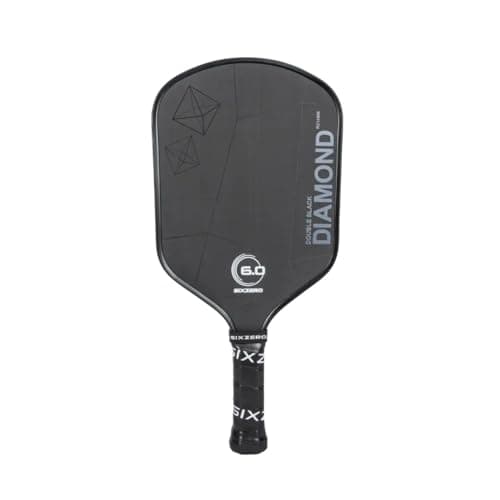 Six Zero Double Black Diamond Control 16mm A 16mm control paddle, listed lightweight - thick core and low mass, the two levers that matter most. | A player who wants the most forgiving paddle here and will keep it for years | |
| 2 | 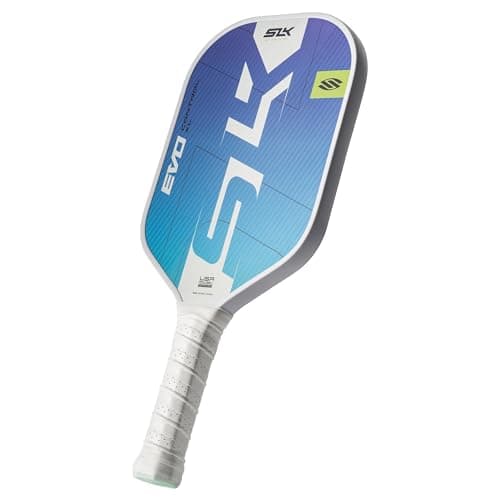 Selkirk SLK Evo Control XL Carbon Fiber Selkirk's carbon-fiber control paddle in the XL shape - a bigger face, which is the most literal answer to this question. | Someone who wants the largest face on the page, by name | |
| 3 | 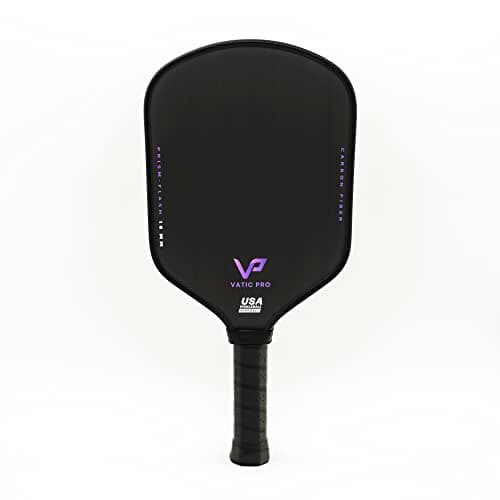 Vatic Pro Prism Flash Carbon Fiber 16mm A 16mm carbon-fiber paddle whose listing specifies foam-injected walls, and ships with a cover. | A player who wants the specific technology that props up the edges of the face | |
| 4 | 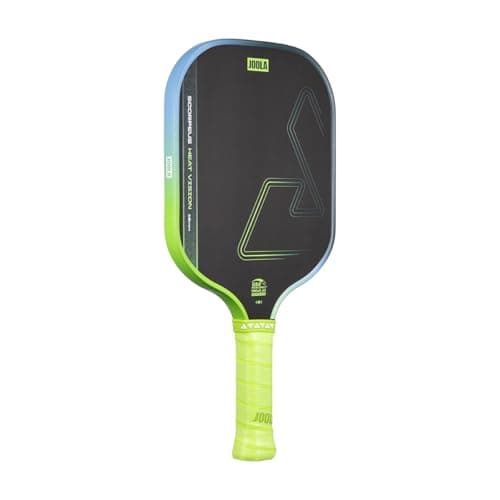 JOOLA SCORPEUS Heat Vision 16mm A 16mm paddle in a standard shape, with a textured carbon face and SK Film listed for reduced vibration. | A player who wants a mainstream brand's forgiving build | |
| 5 | 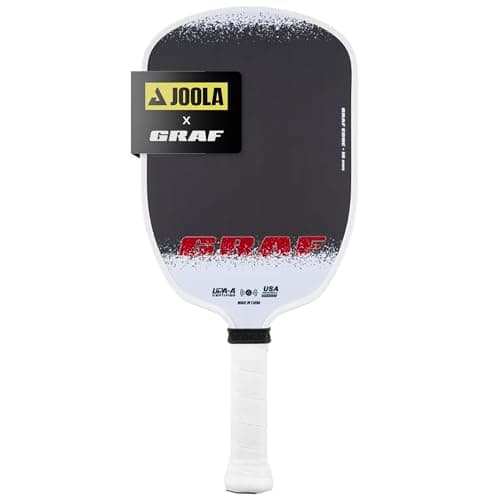 JOOLA GRAF Edge 16mm A 16mm carbon-fiber paddle at the bottom of this page's price range. | A forgiving 16mm paddle without a premium price | |
| 6 | 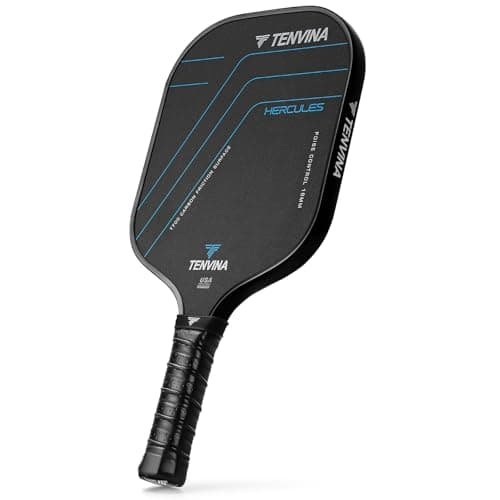 TENVINA Pickleball Paddles A 16mm multi-layer T700SC carbon-fiber paddle at the cheapest end of the carbon field. | Someone testing whether a thick core changes anything for them | |
| 7 | 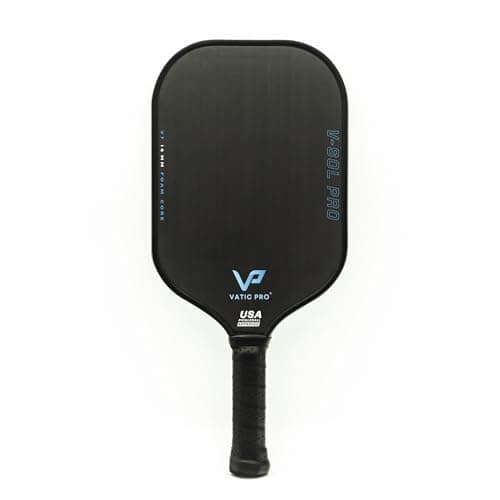 Vatic Pro V-Sol Pro V7 16mm Foam Core A 16mm foam-core paddle, listed with a cover included - the most committed version of the forgiveness argument. | A player who wants a full foam core, not just foam walls |
The picks in detail
Six Zero Double Black Diamond Control 16mm
Best for: A player who wants the most forgiving paddle here and will keep it for years
This is the paddle that pulls the most forgiveness levers at once. The listing specifies a 16mm core, which is the thickness JOOLA's guide ties to control and stability rather than pop, and a lightweight build, which means less mass to be twisted when the ball lands off centre. Six Zero's Double Black Diamond is a control paddle by name and by design, and control paddles are forgiving almost by definition: the design goal is a predictable, stable response across the face rather than maximum ball speed from the middle. If you are tired of shots that die when you miss the centre by an inch, this is the one.
Skip it if: Skip it if you want power - a control paddle gives some up on purpose, and no amount of forgiveness compensates if you want to hit through people. Skip it too if your budget is the constraint; this is the most expensive pick here and the value picks pull two of the same three levers.
Selkirk SLK Evo Control XL Carbon Fiber
Best for: Someone who wants the largest face on the page, by name
If the question is simply which paddle has the most face to hit with, this is the honest answer in this registry: the listing specifies the XL shape, which is a larger hitting area rather than a longer one. That distinction matters and is the whole argument of this page - Selkirk's own shape guide explains that a wider face spreads the hitting area while an elongated one trades that width for reach. It is also a carbon-fiber control build from a brand that publishes genuinely useful grip-size and weight guidance, which makes it easier to buy the right version of without handling one first.
Skip it if: Skip it if you want reach for a two-handed backhand or baseline drives - a wide face is the opposite trade. Skip it too if you want the newest foam-wall engineering; the Vatic picks below have it and this does not.
Price as of October 25, 2026. #ad · how this works
Vatic Pro Prism Flash Carbon Fiber 16mm
Best for: A player who wants the specific technology that props up the edges of the face
This is the most direct engineering response to the question on the page. The listing specifies foam-injected walls around a 16mm carbon fiber build - and the perimeter of the core is precisely where a paddle normally goes dead, because an impact near the edge has nothing solid behind it. Filling that space is a deliberate attempt to make the outer face behave more like the middle, which is what a bigger sweet spot actually means in practice. It arrives with a paddle cover, which is a small thing that matters: face-to-face abrasion in a bag is the most avoidable way to wear out the face you just paid for.
Skip it if: Skip it if you are new to the sport and still working out what you want - this is a specific build for a player who knows. Skip it too if you want the widest possible face; that is the SLK Evo Control XL above, which is a shape answer rather than a materials one.
Price as of October 25, 2026. #ad · how this works
JOOLA SCORPEUS Heat Vision 16mm
Best for: A player who wants a mainstream brand's forgiving build
A clean, unexotic version of the argument this page makes. The listing specifies a standard shape — not elongated, so the face is spread wide rather than long — plus a 16mm core and SK Film for reduced vibration. Those three together describe a paddle built to behave predictably rather than to maximise one number, and vibration damping is a related benefit: a paddle that does not jar your hand on an off-centre hit is a paddle you will keep swinging freely with. JOOLA is also one of the few brands publishing its own paddle guidance, which is why its core-thickness framing appears throughout this page.
Skip it if: Skip it if you want an elongated shape for reach; this is deliberately not that. Skip it too if you want foam walls - the Vatic picks are the ones with that, and this is a conventional honeycomb build.
Price as of October 25, 2026. #ad · how this works
JOOLA GRAF Edge 16mm
Best for: A forgiving 16mm paddle without a premium price
The sensible-money pick, and it pulls the single most reliable lever: the listing specifies a 16mm core, the thickness JOOLA's own guide associates with control and stability. If you are upgrading from a cheap fiberglass paddle or a set paddle, going to a real carbon face with a thick core is the step change - the difference between that and a premium control paddle is smaller than the difference between that and what you are probably holding now. It is the right pick for a player who wants a more forgiving paddle but is not yet sure how long they will stay interested in paddle specifications.
Skip it if: Skip it if you have already played a premium 16mm control paddle and know you want one; the step up is real, just smaller. Skip it too if you want the widest face here rather than the thickest core.
Price as of October 25, 2026. #ad · how this works
TENVINA Pickleball Paddles
Best for: Someone testing whether a thick core changes anything for them
This exists on the page to answer a fair question: is the 16mm thing real, or is it marketing? This is the cheapest way to find out with a genuine carbon face rather than painted fiberglass. The listing specifies multi-layer T700SC friction carbon fiber and a 16mm thickness, USAPA approved — the same two headline specifications as paddles costing twice as much, from a brand with less of a name. Buy it, play a month, and if the forgiveness is what you wanted you will know exactly what to look for when you spend more.
Skip it if: Skip it if you want a brand with published shape and weight guidance to help you choose - that is the Selkirk and JOOLA picks above. Skip it too if you want foam walls or an XL face; at this price you get the core thickness and the face material, not the perimeter engineering.
Price as of October 25, 2026. #ad · how this works
Vatic Pro V-Sol Pro V7 16mm Foam Core
Best for: A player who wants a full foam core, not just foam walls
The premium end of the same reasoning as the Prism Flash, taken further: this listing specifies a foam core at 16mm rather than foam merely injected into the walls. The argument for foam in a paddle is specifically about consistency across the face - a core that supports impact everywhere, instead of a honeycomb that is stiffest where its cells are best supported and deadest near the edges. If you have already decided that off-centre response is the thing you care most about, this is the pick that commits hardest to it, and it ships with a cover so the face survives the bag.
Skip it if: Skip it if you have not yet played a 16mm paddle at all - start cheaper and work out whether this is the axis you care about. Skip it too if you want the widest face; this is a materials answer, and the SLK Evo Control XL is the shape one.
Price as of October 25, 2026. #ad · how this works
Frequently asked questions
Which pickleball paddle has the biggest sweet spot?
Nobody can answer that with a number, and you should be suspicious of any page that does - manufacturers do not publish sweet-spot measurements and there is no standard test for one. What is measurable is the design: a standard or widebody shape spreads the hitting area, a 16mm core stabilises off-centre impacts, and foam in the walls or core supports the perimeter of the face. In this registry the paddle pulling the most of those levers is the Six Zero Double Black Diamond Control 16mm, and the one with the largest face by name is the Selkirk SLK Evo Control XL.
What actually is the sweet spot on a pickleball paddle?
The area of the face where a ball comes off predictably, with the most of its energy preserved and the least twisting of the paddle in your hand. It is not a marked zone; it is a gradient, strongest near the geometric centre and fading toward the edges, where there is less structure behind the face. Everything that makes the gradient flatter - a wider face, a thicker core, foam supporting the perimeter - makes the sweet spot feel bigger.
Does a thicker core really give a bigger sweet spot?
It gives something that feels like one, which is the part that matters to a player. JOOLA's own paddle guide ties a 16mm core to control and stability and thinner cores to pop. A thicker core spreads impact over more material rather than concentrating it, so a ball landing off centre loses less pace and torques the paddle less. You cannot call that a larger sweet spot in a laboratory sense, but on a court it is the same experience.
Elongated or standard shape for a bigger sweet spot?
Standard, clearly. Selkirk's shape guide explains the trade directly: elongated paddles buy reach and leverage by making the face longer and narrower, which concentrates the sweet spot; standard and widebody shapes spread the hitting area. USA Pickleball's rules cap a paddle at 24 inches of combined length and width, so every design is splitting the same budget - and if forgiveness is your priority, you want it spent on width.
Is a bigger sweet spot only useful for beginners?
No, though it matters most there. Beginners miss the centre more often, so the gain is biggest. But forgiveness is also why a lot of advanced players use 16mm control paddles: fast hands at the net means taking balls on the edge of the face with no time to adjust, and a paddle that stays stable through that is a competitive advantage rather than a crutch. The trade you are making is top-end power, not credibility.
Will a heavier paddle have a bigger sweet spot?
A heavier paddle is more stable through impact, which helps - but weight and sweet spot are different axes, and more weight has real costs in hand speed and in fatigue. The useful version of this is where the weight sits: mass near the handle is easier to control, mass out at the tip gives leverage but is harder to stop. Our paddle weight guide covers the trade properly, and several picks on this page are listed as lightweight precisely because they get their stability from core thickness instead.
Are foam-core paddles worth the extra money for this?
They are the most direct engineering answer to the question, and they are also the newest and most expensive. Foam in the walls or the core supports the part of the face that is otherwise the deadest, which is a real mechanism rather than a marketing adjective. Whether it is worth the premium over a 16mm honeycomb paddle depends on how much your game involves balls landing near the edge. If you are not sure, buy the value pick first - it is a cheaper way to learn what you actually want.
Keep exploring
Sources
- Selkirk Sport — the ultimate guide to pickleball paddle shapes (standard/widebody shapes spread the hitting area; elongated shapes trade sweet-spot width for reach)
- JOOLA — Official Paddle Guide (core thickness: 16mm for control and stability, thinner cores for pop)
- USA Pickleball — Official Rulebook, Section 2 (2.E.3 paddle size: 24 in combined length and width, 17 in maximum length; 2.E.4 no weight restriction; no grip-size restriction)
- USA Pickleball — Approved equipment database (which paddles are approved for sanctioned play)
- Selkirk Sport — pickleball paddle weight guide
Browse another way