Guide
Is a Pickleball Machine Worth It?
It is the most expensive thing a pickleball player can be given, and for the right person the most transformative. Here is how to tell whether yours is that person.
By Stephen V. · Updated September 2026 · How we pick
What a ball machine actually does
A pickleball machine is a battery-powered launcher that feeds balls across the net at a set speed, height and interval, so a player can hit the same shot two hundred times in a row without a partner. That is the entire pitch, and it is a strong one for a specific kind of player: the one who has realized that the difference between the players who win and the players who nearly win is repetition, and who cannot get enough of it from games.
Games are a poor way to practice. In a doubles game a player might hit thirty third-shot drops in an hour, scattered among serves, returns and dinks, with no two the same. A machine feeds thirty in three minutes, identically, until the shot is grooved. That is why coaches own them, why clubs own them, and why a certain kind of obsessed recreational player saves up for one. It is also why the question in the title has a clear answer: a machine is worth it exactly to the extent that the person will drill with it, and not at all otherwise.
Who it pays off for — and who it does not
Be honest about which list the person you are buying for is on, because the gap between them is the whole price of the machine.
- It pays off for: a player who already drills, or complains they cannot find anyone to drill with. A coach or anyone who runs sessions. A player who has said, in as many words, that they wish they had a ball machine. A household with its own court or a portable net on a full-size space. A competitive player working on one specific weakness.
- It does not pay off for: a social player who turns up, plays doubles and goes home, however many times a week. A beginner, who needs games and instruction more than repetition. An apartment-dweller without court access. Anyone who has never expressed the wish — a machine is not the kind of gift that creates the habit; it rewards a habit that exists.
A useful test: has this person ever set up a hopper of balls and practiced alone against a wall or with a feeding partner? If yes, a machine is the upgrade they will use. If no, the machine will not be the thing that starts it.
What a machine needs around it
A machine does not work alone, and the three things it needs are worth budgeting for — sometimes as the gift itself, if the machine is too much.
- Space. A regulation court is 20 feet by 44 feet. A machine sits on one side and feeds to the other, so it wants the full length; a short driveway with a half-court net will only support a narrow range of drills. Public courts work, if the person can carry the machine there — which is why portability and battery life matter.
- Balls. A machine holds and fires dozens at a time, and a drilling session goes through every one repeatedly. A bulk pack of forty outdoor balls is the minimum realistic supply; our outdoor balls roundup covers the options.
- A way to collect them. Every ball the machine fires has to be picked up and reloaded. A wheeled hopper or a pickup tube is not optional with a machine; it is the difference between a twenty-minute drill and a twenty-minute drill followed by ten minutes of stooping. Our caddies and hoppers page is the companion to this one.
What to look for on a listing
Machines vary enormously in price and the listings are dense with features. These are the ones that matter, in order.
- Adjustability. Speed, elevation and feed interval at minimum. A machine that fires one kind of ball is a serving machine, not a training one; being able to dial a slow high lob for overheads and a flat fast drive for blocks is what makes it useful for more than a week.
- Spin and oscillation. Better machines add topspin or backspin and can sweep side to side, so the player moves rather than standing in one spot. The listings say whether they do.
- Battery. A rechargeable battery is essential for any machine used on a public court, and the listing should state that it has one. Stated capacity or run time is a bonus; not every listing gives it.
- Capacity. How many balls it holds between reloads. More is better up to the point where the machine becomes too heavy to carry.
- Remote control. Lets the player start, stop and adjust from the far side of the net instead of walking back every time. Worth a great deal in practice.
- Ball return. A few machines pair with a return net that catches balls and funnels them back to the hopper, which removes most of the collecting. It is the feature that changes how often a machine gets used.
What this page cannot tell you is how any of these machines performs, because nobody here ran one. Every feature below is quoted from the listing, and the two machines are presented as the two price tiers in this site's registry rather than as a ranking.
The cheaper alternatives
Most of what a machine provides — repetition — can be had for a fraction of the price, and for a lot of players the cheaper route is the right gift.
A hopper and a feeding partner is how most drilling actually happens. One person feeds from a basket of balls, the other hits, they swap. A wheeled hopper holding a hundred balls plus a bulk pack of balls costs a small fraction of a machine and covers every drill a machine does, at the price of needing a second person. A wall is free and works for dinks, volleys and resets; a tube of balls and a pickup tube make it painless. And a lesson — an hour with a coach who has a machine — is often the best answer of all for a player who is curious rather than committed.
So the verdict. If the person you are buying for drills already, has somewhere to do it and has wished for a machine out loud, it is worth it, and the two below are the ones in this site's registry. If any of those three is missing, buy the hopper and the balls, and let the machine be the thing they save up for themselves. That is not a lesser gift; it is the one they will use every week.
The gear this guide points to
Disclosure: Popaddle earns a commission on qualifying purchases made through the links on this page, at no extra cost to you. Prices are pulled live and can change. How this works.
| # | Product | Best for | Price |
|---|---|---|---|
| 1 | 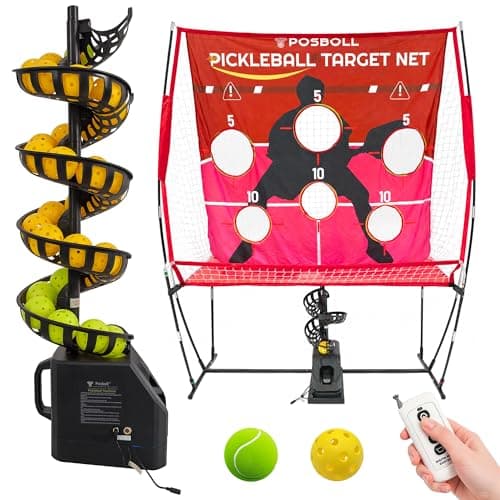 Posboll Pickleball Machine Ball Thrower Posboll's all-in-one launcher — the listing pairs the machine with an auto-return net, a rechargeable battery and a remote control. | The drilling player who wants a machine with a return net, at the entry price | |
| 2 | 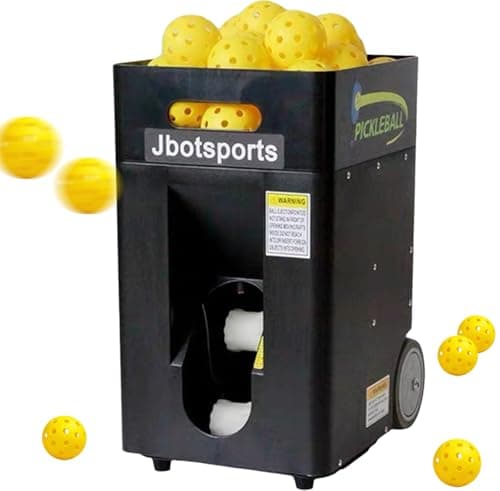 JP02 Portable Pickleball Machine A portable machine with swing and spin modes, multiple serve modes, and adjustable speed, elevation and frequency. | The coach, the competitor, the player working on a specific weakness | $589.99 · View on Amazon $698.99 save 16% |
| 3 | 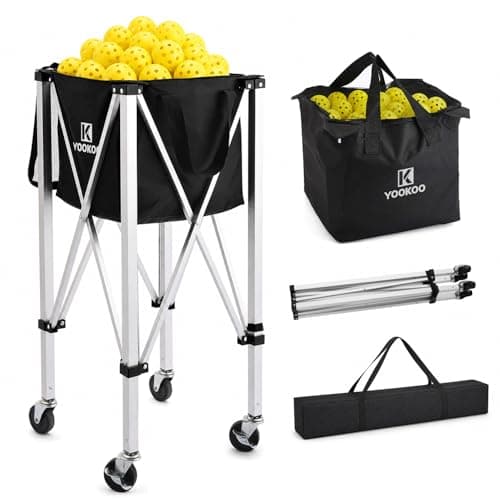 YooKoo Pickleball Hopper for 100 Balls A pickleball-named hopper with a stated 100-ball capacity and a bag, for feeding a machine or a partner. | Pairing with a machine, or the whole gift for a player who drills with a partner | |
| 4 | 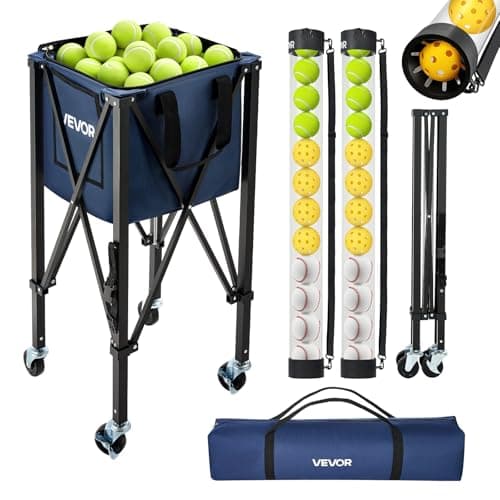 VEVOR 3-in-1 Pickleball Hopper with Pickup Tube A folding, wheeled hopper with the highest stated capacity in the registry and a pickup tube included. | Feeding a machine for a group, or running sessions | $92.06 · View on Amazon $109.99 save 16% |
Posboll Pickleball Machine Ball Thrower
Best for: The drilling player who wants a machine with a return net, at the entry price
This is the machine for the player whose case for one is strong but whose budget is not unlimited. The listing describes an all-in-one launcher, and its return net is the feature that matters most for solo practice: balls come back toward the hopper rather than scattering across the court, which is the difference between drilling and mostly collecting. A rechargeable battery makes it usable on a public court and a remote lets the player adjust it from the far side. As a gift for someone who drills alone, it delivers the core benefit of a machine at the lower of the two price tiers here.
Skip it if: Skip it for a coach or a serious competitor who needs spin, oscillation and multiple serve modes; that is what the JP02 below adds, at a considerably higher price. And skip it entirely for a social player.
Price as of September 17, 2026. #ad · how this works
JP02 Portable Pickleball Machine
Best for: The coach, the competitor, the player working on a specific weakness
This is the machine that does what the section above says a training machine should. The listing describes swing and spin serve modes, multiple serve modes, and adjustable speed, elevation and frequency, in a portable unit. That combination is what lets a player drill overheads one minute and blocks the next, or a coach run a varied session for a group, rather than hitting the same feed until it stops being useful. It is the most expensive item on this site, and it is here for the person whose commitment to the game is beyond question.
Skip it if: Skip it unless the recipient is a genuinely dedicated player or a coach; its capability is wasted on anyone who does not drill on purpose, and the lower-priced machine above covers the essentials for a fraction of the cost.
YooKoo Pickleball Hopper for 100 Balls
Best for: Pairing with a machine, or the whole gift for a player who drills with a partner
Whichever machine you buy, this is the other half of the purchase, and for many players it is the better gift on its own. The listing describes a pickleball hopper with a stated capacity of 100 balls and an included bag, which is comfortably more than a drilling session needs and enough to keep a machine fed between reloads. Paired with a bulk pack of outdoor balls and a feeding partner, it covers most of what a machine does for a small fraction of the price. It is the top pick on our caddies page for the same reason.
Skip it if: Skip it if the recipient needs to wheel the balls any distance; the listing describes a basket with a bag rather than a wheeled cart, and the cart below is the answer for a coach who moves between courts.
Price as of September 17, 2026. #ad · how this works
VEVOR 3-in-1 Pickleball Hopper with Pickup Tube
Best for: Feeding a machine for a group, or running sessions
For a coach or a player who reloads a machine constantly, this is the cart. The listing claims a capacity of 150 tennis balls or 260 pickleballs — a manufacturer figure, and brands state these inconsistently, so treat it as a size class — and it folds flat, rolls on wheels and includes a pickup tube for collecting while walking the court. The tube-plus-cart combination is what turns a machine session from mostly stooping into mostly hitting. It is the club-grade option and the right partner for the full-featured machine above.
Skip it if: Skip it for a solo player with one machine and one court; it is the most cart a recreational player could need, and the 100-ball hopper above is the sensible size for that person.
Frequently asked questions
Is a pickleball machine worth it for a recreational player?
Only if they drill on purpose. A recreational player who already sets up a hopper and practices alone or with a feeding partner will use a machine every week. A recreational player who plays social doubles and goes home will not, however keen they are. The test is whether the habit already exists — a machine rewards it; it does not create it.
How much space does a pickleball machine need?
Ideally a full court — 20 feet by 44 feet by USA Pickleball's rules — because the machine sits on one side and feeds to the other. A short driveway with a half-court net supports only a narrow range of drills. Public courts work if the machine is portable and battery-powered, which is why both matter on a listing.
What else do I need to buy with a ball machine?
Balls — a bulk pack of forty outdoor balls is the realistic minimum, since a session fires every ball repeatedly — and a hopper or pickup tube to collect them. Collection is not optional: without it, a twenty-minute drill becomes a twenty-minute drill and ten minutes of stooping. Our outdoor balls and caddies pages cover both.
What should I look for on a ball machine listing?
Adjustable speed, elevation and feed interval at minimum; spin and side-to-side oscillation if the budget allows; a rechargeable battery for public-court use; ball capacity; a remote control; and, ideally, a return net that funnels balls back to the hopper. The listings on this page state which of those each machine has, and this page repeats only what they state.
Is a cheaper machine good enough?
For a solo drilling player, usually yes. The essentials — a feed at a set speed and interval, a battery and a remote — cover most practice, and a return net matters more to how often the machine gets used than spin or oscillation do. The full-featured machines earn their price for coaches and competitors who need varied feeds.
What are the alternatives to a ball machine?
A hopper and a feeding partner, which is how most drilling actually happens and costs a small fraction of a machine. A wall, which is free and works for dinks, volleys and resets. And a lesson with a coach who owns a machine, which is often the best answer for a player who is curious rather than committed.
Should I buy a ball machine as a surprise gift?
Only for someone who has explicitly wished for one. It is the most expensive item on this site, it needs space and supplies around it, and it only pays off for a player who drills. For anyone else, the hopper and a bulk pack of balls is the gift that gets used, and the machine can be the thing they save up for themselves.
Keep exploring
The combined roundup, including both machines.
Best ball caddies and hoppersThe other half of any machine purchase.
Best outdoor pickleball ballsWhat to feed it.
Best portable pickleball netsFor a home court to drill on.
Gifts for pickleball coachesThe recipient a machine most often suits.
Sources
Browse another way