Best Gear
The Best Pickleball Shoes for Plantar Fasciitis
Heel pain is a medical problem, not a shopping problem. But the shoe on your foot is one of the few variables you control, and the podiatrists are specific about which features matter.
By Stephen V. · Updated October 2026 · How we pick
If you have plantar fasciitis and you play pickleball, the pick to start with is the FitVille Men's Wide Pickleball Shoe with Arch Support — a court shoe whose own listing names plantar fasciitis and specifies arch support and a wide toe box. For women, the New Balance 696 V6 in a W width is the closest equivalent in this registry, and if budget is the binding constraint the Ryka Courtside in W is the cheapest honest answer on this page.
Start with the part most gear pages skip. The American Podiatric Medical Association describes plantar fasciitis as an inflammation of the band of fibrous tissue running along the bottom of the foot from the heel to the ball, and says plainly that the inflammation "may be aggravated by shoes that lack appropriate support, especially in the arch area." That is the whole mechanism in one sentence, and it is why a shoe matters here in a way it does not for most conditions — but it is aggravation, not cause, and no shoe on this page is a treatment. If your heel hurts every morning, the first purchase is an appointment, not footwear.
What the podiatrists actually ask for is a short, checkable list. The APMA's own prevention guidance names shoes that fit well front, back and sides, with shock-absorbent soles, rigid shanks and supportive heel counters, and it warns against shoes with excessive wear on the heels or soles. Three of those four are things you can read off a listing or feel in the first thirty seconds out of the box: does the heel cup hold your heel still, does the midsole have cushioning under the heel, and does the shoe come in your actual width rather than a single medium. The fourth — a rigid shank, meaning the shoe does not fold in half across the arch — is the one most cheap court shoes fail.
Why pickleball makes this harder than walking. The APMA's sports guidance is blunt that sport-specific shoes exist because different sports load the foot differently, and Harvard Health Publishing is explicit that pickleball's "sudden starts and stops and side-to-side moves increase stress on joints, muscles, and ligaments." Running shoes are built to roll you forward and are deliberately soft and unstable laterally; that combination is close to the worst case for an inflamed arch doing a sideways sport. A court shoe with a flat, wide, stable platform is doing something a cushioned running shoe cannot.
The width question is the one buyers underestimate. The APMA names excessive pronation — the foot rolling too far inward — as a source of abnormal pull on the tissues at the back of the heel, and a shoe that is too narrow quietly encourages exactly that by pushing the forefoot off its own base. Four of the picks below are sold in a named wide or extra-wide width, which is why they are here: a correctly supportive shoe in the wrong width is not supportive. If you have never had your feet measured, Brannock's own fitting instructions explain that length, arch length and width are three separate measurements, and the one that most often gets skipped is the arch.
How these picks were chosen, and what we are not claiming. Each one is an existing, currently purchasable listing in this site's own registry, re-checked against the live price layer before publication. Nobody here has worn them, there is no lab behind this site and not one rating on this page is invented — every arch support, width, cushioning or material claim below is repeated from the listing or from the sources at the foot of the page. They are ordered by how directly the listing addresses arch support and width, then by who the shoe is cut for. Prices and sizes move constantly on court shoes, so every number is pulled live and stamped with the date it was checked.
Disclosure: Popaddle earns a commission on qualifying purchases made through the links on this page, at no extra cost to you. Prices are pulled live and can change. How this works.
| # | Product | Best for | Price |
|---|---|---|---|
| 1 | No image FitVille Men's Wide Pickleball Shoes with Arch Support (Wide) The one court shoe here whose own listing names plantar fasciitis, arch support and a wide fit together. | A man whose heel pain gets worse in a narrow shoe | |
| 2 | 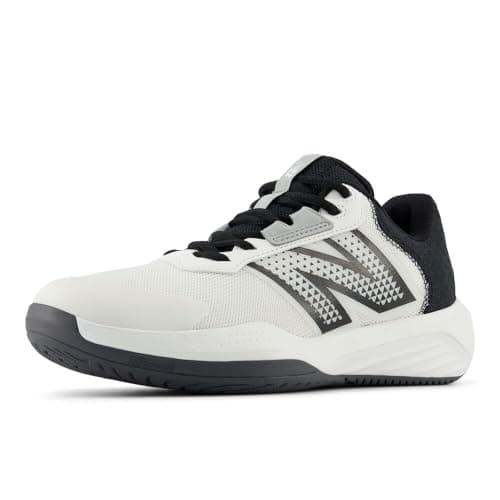 New Balance Women's 696 V6 Tennis Shoe (Width W) A tennis shoe from the brand that has published genuine width ranges for decades, listed in W. | A woman who wants a mainstream court shoe in a real W width | $73.67 · View on Amazon $79.99 save 8% |
| 3 | 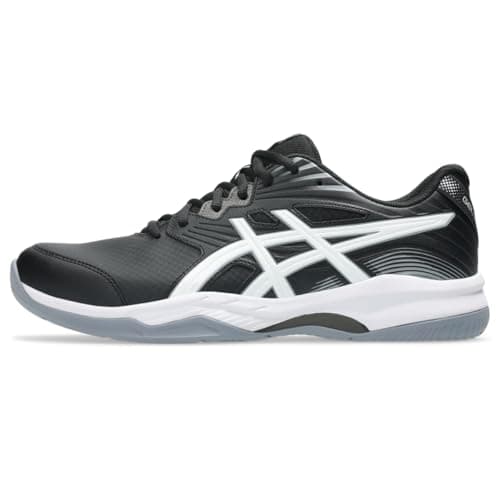 ASICS Men's Gel RENMA 2 Pickleball Shoes ASICS' pickleball-specific shoe, from the GEL line built around shock absorption. | A player whose heel hurts most on hard outdoor courts | |
| 4 | 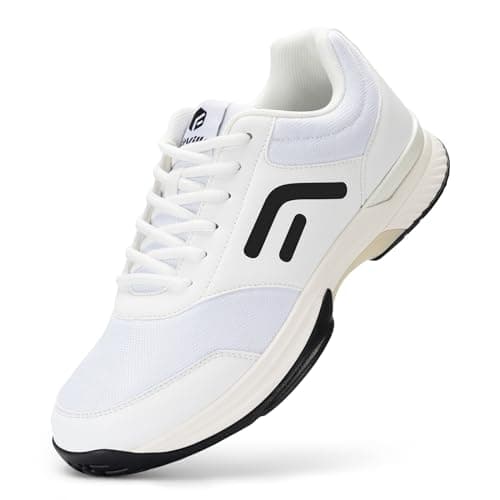 FitVille Extra Wide Pickleball Shoes Tennis V3 (Men's X-Wide) The same arch-support brief as the top pick, one width step further out. | A foot that has never fit a court shoe at all | $55.99 · View on Amazon $69.99 save 20% |
| 5 | 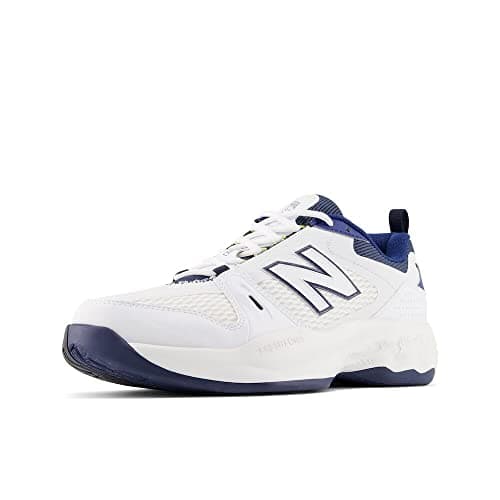 New Balance Men's 1007 Tennis Shoe (Width 4E) New Balance's wide-fitting tennis shoe in a true 4E, and the most expensive pick here. | A man in a 4E who wants a court shoe built like a tank | |
| 6 | 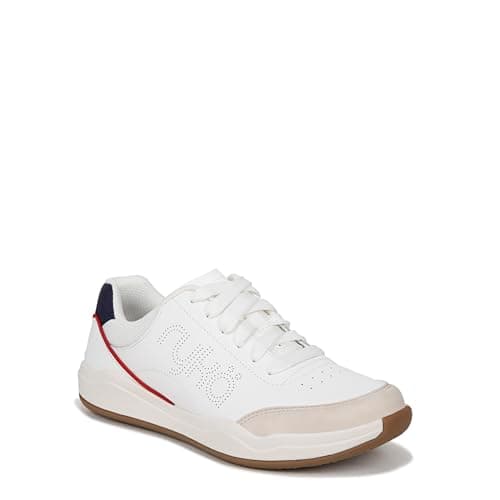 Ryka Women's Courtside Pickleball Sneakers (Width W) A women's pickleball shoe in a W width at the bottom of this page's range. | A woman who needs a W width now, cheaply | $29.99 · View on Amazon $99.99 save 70% |
| 7 |  ASICS Women's Upcourt 6 Volleyball Shoes A court shoe built for indoor surfaces, where grip and a stable platform matter more than outsole life. | A woman playing mostly on indoor wood or sport court |
The picks in detail
FitVille Men's Wide Pickleball Shoes with Arch Support (Wide)
Best for: A man whose heel pain gets worse in a narrow shoe
This is the most direct answer on the page, because it is the only listing in this registry that puts all three variables in the title: an all-court tennis shoe, with arch support, offered in a Wide width, described by the manufacturer as being for plantar fasciitis. That matters less as a medical claim — it is a shoe, not a device — and more as a statement of what the shoe was designed around. FitVille builds its whole line for feet that do not fit standard lasts, which is exactly the population that gets told to buy supportive shoes and then cannot find any in their width. For the buyer who has been walking around in a medium-width court shoe wondering why the arch support never seems to help, this is the first thing to try.
Skip it if: Skip it if your foot is genuinely narrow — a wide last on a narrow foot lets the heel move, and a heel that moves defeats the heel counter the APMA asks for. Skip it too if you want a recognizable court brand on your feet: FitVille is a fit specialist, not a pickleball name, and the shoe looks like what it is.
New Balance Women's 696 V6 Tennis Shoe (Width W)
Best for: A woman who wants a mainstream court shoe in a real W width
New Balance is the obvious answer for women here for one unglamorous reason: it actually sells widths, and has for a very long time, so a W is a real last rather than the same shoe with a looser upper. The 696 V6 is a court shoe rather than a runner, which gives you the flat stable platform and the lateral support pickleball's side-to-side movement needs, and it is the pick we would hand to someone who wants a shoe that looks normal on a court and comes in the width she actually measures. Pair it with whatever insert your podiatrist recommends — a court shoe with a removable footbed is the right host for a custom orthotic, and that combination is far more effective than any shoe alone.
Skip it if: Skip it if you need extra-wide rather than wide; W is one step, not two, and the FitVille picks go further. Skip it too if you specifically want a pickleball-marketed shoe — this is a tennis shoe, which is the right category but not the right label if that matters to the recipient.
ASICS Men's Gel RENMA 2 Pickleball Shoes
Best for: A player whose heel hurts most on hard outdoor courts
The APMA's prevention list asks for shock-absorbent soles, and this is the pick that addresses that line most directly: the Gel-RENMA 2 is ASICS' purpose-built pickleball shoe and sits in the GEL family, the cushioning platform the brand has marketed for decades. If your pain spikes on outdoor concrete and acrylic rather than indoor wood, cushioning under the heel is the variable you are missing, and a shoe designed for the sport gets you the court outsole at the same time. ASICS also makes court shoes in sizes that run true, which is worth something when you are buying online and cannot walk in them first.
Skip it if: Skip it if you need a width — this is a standard-width shoe and no amount of cushioning fixes a shoe that squeezes. Skip it too if you are between sizes and plan to add a thick orthotic insert; a cushioned shoe with a bulky insert can end up tighter over the instep than you expect.
Price as of October 25, 2026. #ad · how this works
FitVille Extra Wide Pickleball Shoes Tennis V3 (Men's X-Wide)
Best for: A foot that has never fit a court shoe at all
This is the pick for the buyer whose problem is not subtle. The Tennis V3 listing specifies an extra-wide court shoe with arch support, which is a genuinely rare combination — most brands stop at wide, and most of what exists in extra-wide is a walking shoe with no business on a court. If you have spent years buying court shoes a half size up to get width, that habit is itself a problem: a too-long shoe lets the foot slide forward on a stop, which puts the arch under exactly the stretch the APMA warns about. Buy the width and keep the length honest.
Skip it if: Skip it if a Wide is enough — extra-wide in the right length will feel sloppy on a merely wide foot. Skip it too if you want the shoe to pass as a sneaker off the court; this is a function-first design and it reads that way.
New Balance Men's 1007 Tennis Shoe (Width 4E)
Best for: A man in a 4E who wants a court shoe built like a tank
4E is the width that essentially no other court shoe on this registry offers, and for a certain foot it is the only number that matters. The 1007 is a substantial tennis shoe with the stability a sideways sport asks for, and the reason it costs what it does is that it is built to hold its structure through a season rather than compress into a soft, unsupportive shell by the spring. That durability argument is directly relevant here: the APMA explicitly warns against playing in shoes with excessive wear on the heels or soles, so a shoe that resists breaking down is doing medical work, not just lasting longer.
Skip it if: Skip it if you do not need a 4E — you are paying for width engineering you will not use, and the cheaper picks above cover a Wide foot properly. Skip it too if you want something light; this is the heaviest-feeling pick on the page by design.
Price as of October 25, 2026. #ad · how this works
Ryka Women's Courtside Pickleball Sneakers (Width W)
Best for: A woman who needs a W width now, cheaply
Ryka builds women's athletic shoes on a women's last rather than a shrunken men's one, and the Courtside is its pickleball court shoe, offered in a W width at a fraction of what the rest of this page costs. That makes it the right pick in two situations: you need a correctly wide court shoe this week and cannot spend, or you are not yet sure whether a wide fit is the thing that helps and want to test the idea without committing a hundred dollars to it. A cheap shoe in the right width beats an expensive shoe in the wrong one every time.
Skip it if: Skip it if you expect a season of hard play out of it — the cheapest shoe on the page is also the one most likely to compress, and a compressed midsole is the condition the APMA tells you to stop playing in. Skip it too if you need more than a W.
ASICS Women's Upcourt 6 Volleyball Shoes
Best for: A woman playing mostly on indoor wood or sport court
Indoor and outdoor pickleball are different problems for a sore foot. On wood or a cushioned sport court, the floor is doing some of the shock absorption for you, and what you need from the shoe is a flat, stable, grippy platform that stops your foot from sliding on a lateral push — sliding is what loads the arch. The Upcourt 6 is a gym-court shoe, which is precisely that brief, and it comes from a brand that sizes consistently. If your league plays indoors year-round, this is a more sensible purchase than an outdoor-rated shoe you will wear out on a surface that was never the problem.
Skip it if: Skip it if you play outdoors regularly — an indoor outsole shreds on concrete and acrylic, and a worn outsole is on the APMA's do-not-play list. Skip it too if you need a width; this is a standard fit.
Price as of October 25, 2026. #ad · how this works
Frequently asked questions
Can the right shoes cure plantar fasciitis?
No, and anyone who says otherwise is selling something. The American Podiatric Medical Association describes plantar fasciitis as an inflammation of the plantar fascia and lists footwear as an aggravating factor, not the cause — shoes that lack support, especially in the arch, make it worse. The right shoe removes an aggravator, which is genuinely useful and often the difference between playing and not playing. The treatment itself is a medical question: see a podiatrist, especially if the pain is worst in the first steps of the morning.
What exactly should I look for in a shoe if I have heel pain?
The APMA's own prevention list is the best checklist there is: shoes that fit well at the front, back and sides, with shock-absorbent soles, rigid shanks and supportive heel counters. In practice that means four things you can check. Does the heel cup hold your heel still when you walk? Is there real cushioning under the heel? Does the shoe refuse to fold in half across the arch? And does it come in your actual measured width? A shoe that passes all four is a reasonable buy regardless of what the marketing says.
Can I just wear running shoes with good arch support?
It is the most common mistake in the sport and it is a bad trade. Running shoes are built to move you forward and are deliberately soft, which makes them unstable in the side-to-side direction pickleball lives in — and Harvard Health Publishing is specific that the sudden starts, stops and lateral moves are where the stress on joints and ligaments comes from. A soft, laterally unstable shoe lets your foot roll on a stop, and rolling is what pulls on an inflamed arch. Our pickleball shoes versus tennis shoes guide walks through the difference in detail.
Do I need a wide shoe, or just a supportive one?
Possibly both, and the width comes first. A supportive shoe in a too-narrow width pushes the forefoot off its own base and encourages the inward roll the APMA names as a source of abnormal pull on the heel tissues. Four of the picks on this page are sold in a named Wide, W, X-Wide or 4E for that reason. If you have never been measured, Brannock's fitting instructions are worth two minutes: length, arch length and width are three different measurements, and arch length is the one almost nobody checks.
Should I use custom orthotics in pickleball shoes?
If a podiatrist has prescribed them, yes, and that changes which shoe you want: pick one with a removable footbed and enough volume over the instep to take an insert without pinching. That combination — a stable court shoe as the host and the prescribed insert doing the arch work — is more effective than any off-the-shelf shoe on its own. Buy the shoe in your true length rather than sizing up, and try the insert in it before you play a full session.
How often should I replace court shoes if I have plantar fasciitis?
Sooner than you would otherwise, and by condition rather than by calendar. The APMA explicitly tells you not to wear shoes with excessive wear on the heels or soles, and a court shoe's midsole quietly compresses long before the upper looks finished. Two honest tests: stand the shoe on a flat surface and look at whether it leans, and press a thumb into the heel foam to see whether it still pushes back. If you play several times a week and your heel pain is creeping back, assume the shoes are a suspect.
What else is worth buying for sore feet besides shoes?
Socks, and then nothing else from us. A cushioned athletic sock adds a real layer of shock absorption and reduces the friction that causes blisters when a foot slides, and our pickleball socks page covers the options in this registry. Beyond that, the useful purchases are medical rather than retail — a prescribed orthotic, a night splint, a stretching routine — and none of them are things this site sells or should pretend to advise on.
Keep exploring
The fit-led version of this page, without the medical angle.
Best pickleball shoesThe full court-shoe roundup.
Pickleball shoes vs tennis shoesWhy running shoes are the wrong tool.
Best women's pickleball shoesWomen's lasts and widths.
Best men's pickleball shoesMen's court shoes across the price range.
Best budget pickleball shoesIf the budget is the binding constraint.
Best pickleball socksThe cheapest real cushioning upgrade.
Best paddles for seniorsThe other half of a comfort-led setup.
Sources
- American Podiatric Medical Association — Heel Pain / plantar fasciitis ("The inflammation may be aggravated by shoes that lack appropriate support, especially in the arch area"; prevention: shoes that fit well front, back and sides with shock-absorbent soles, rigid shanks and supportive heel counters)
- American Podiatric Medical Association — Choosing Shoes for Sports (sport-specific shoes; support through quick changes of direction)
- Harvard Health Publishing — Practical pointers for pickleballers ("sudden starts and stops and side-to-side moves increase stress on joints, muscles, and ligaments"; players aged 50+)
- Brannock Device Co. — fitting instructions (how shoe length, arch length and width are actually measured)
Browse another way