Guide
Pickleball Glasses vs Sunglasses
People search for pickleball sunglasses and usually mean pickleball glasses. They are different products solving different problems, and the distinction is worth two minutes.
By Stephen V. · Updated October 2026 · How we pick
Two different problems, often confused
The search term is "pickleball sunglasses" and the product people usually need is "pickleball glasses". It is worth separating them, because buying the wrong one leaves you exposed to the problem you were actually worried about.
The honest summary: one is comfort and performance, the other is safety. If you play outdoors on a bright court, glare is a genuine problem worth solving. If you play doubles at the non-volley line, impact is a genuine problem worth solving. They are not the same purchase and a product that claims to be both should be checked on the second claim rather than the first.
The case for protective eyewear, which is the serious half
Mass General Brigham has published specifically on pickleball eye injuries, which tells you something about how routine they have become: a hospital system does not write about a hazard that is not showing up. The mechanism is not mysterious. Pickleball is played with a hard plastic ball and a rigid paddle, at close quarters, with four people inside a small court and a rule set that pulls everybody toward the net. A ball hit hard from seven feet away does not give you time to blink.
What follows from that is a simple risk logic. Eye injuries are rare per session and extremely expensive when they happen, which is exactly the shape of risk that cheap protective equipment exists for. That is also true for a demographic reason: Harvard Health Publishing notes that pickleball injuries concentrate in players over 50, a group more likely to have had eye surgery or to be managing an existing eye condition — and for anybody who has had cataract or retinal surgery, this stops being a judgment call and becomes a question for their ophthalmologist.
Our are pickleball glasses necessary page goes through this question on its own terms, and best pickleball glasses is the roundup of what this registry carries.
The one thing not to do: ordinary fashion sunglasses
If you take one thing from this page, take this. Everyday sunglasses are the worst available option on a pickleball court, and they are worse than no eyewear at all in one specific respect: a lens that is not impact-rated can break, and it breaks toward your eye. You have added a hazard while feeling protected.
They also tend to fail on fit, which matters more than people expect. Fashion frames are not designed to stay on a head that is lunging sideways, and glasses that slide down your nose during a rally are a distraction at best. Sport frames use wrap, grip and sometimes a strap for exactly this reason.
The honest conclusion is that if you want sun protection on court, you want sport sunglasses with polycarbonate lenses and a frame built to stay put, or lensed protective eyewear — not the pair in your car door. And if you only care about the impact risk, a lens-free protective frame is a cheaper and in some ways better answer, which is the next section.
Lens-free frames: why pickleball players like them
Lens-free protective eyewear is a design that looks odd until you understand it: a rigid frame with an open aperture where the lens would be, sized so that a pickleball cannot pass through to the eye. Several of the picks below are this type, and they are genuinely popular in the sport for three reasons.
They cannot fog, because there is no lens to fog — which is the single most common complaint about wearing anything on your face in summer. They cannot distort or scratch, so your vision is exactly your vision. And they are usually light, because a frame without lenses weighs very little.
What they do not do is anything at all about the sun, or about dust, or about a ball small enough to pass through the opening — which a pickleball is not, but a tennis ball-sized concern about shards or insects is a different matter. They are a single-purpose product: impact protection, nothing else. For an indoor player that is the whole requirement. For an outdoor player on a bright court, the lensed options below are the ones that solve both problems at once.
How to choose, in one short decision
Three questions, and they resolve nearly every version of this purchase.
A note on the fourth row, because it is common and badly served: plenty of players wear their everyday prescription glasses on court and consider themselves protected. Standard prescription lenses are not necessarily impact-rated and standard frames are not designed to stay on during lateral movement. If you play in your glasses, that is a conversation worth having with your optician rather than an assumption worth keeping.
Finally, the transparent bit. This site carries protective eyewear, not tinted sport sunglasses — so if what you actually want is a pair of polarized sport shades, we do not have a verified listing to point you at and we would rather say that than send you somewhere we have not checked. What follows is the protective half of the category, which is the half that is about safety. A hat or visor is the other honest answer to glare.
The gear this guide points to
Disclosure: Popaddle earns a commission on qualifying purchases made through the links on this page, at no extra cost to you. Prices are pulled live and can change. How this works.
| # | Product | Best for | Price |
|---|---|---|---|
| 1 | 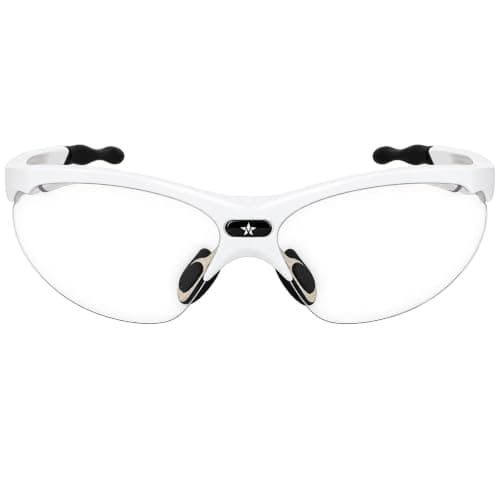 Master Athletics Protective Eyewear Sports safety glasses with impact-resistant polycarbonate lenses, listed as anti-fog and scratch-resistant. | An outdoor player who wants impact protection and a lens | |
| 2 | 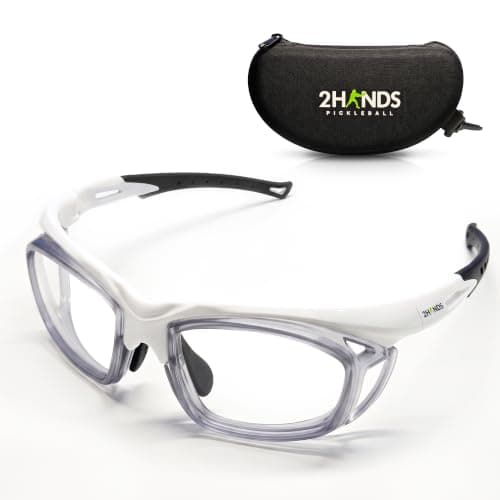 2Hands Lens-Free Pickleball Glasses A lightweight, impact-resistant lens-free protective frame built for pickleball. | A player who wants protection without anything to fog or distort | |
| 3 | 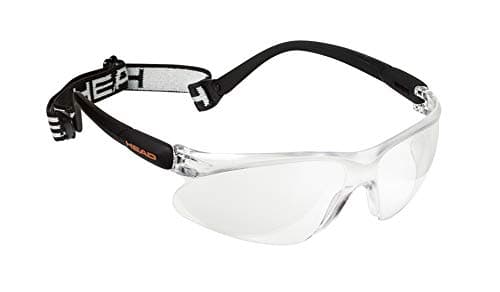 HEAD Impulse Racquetball & Squash Goggles HEAD's racquetball and squash goggles, with an adjustable strap, at the bottom of the range. | A cheap way to stop putting it off | $13.17 · View on Amazon $14.00 save 6% |
| 4 | 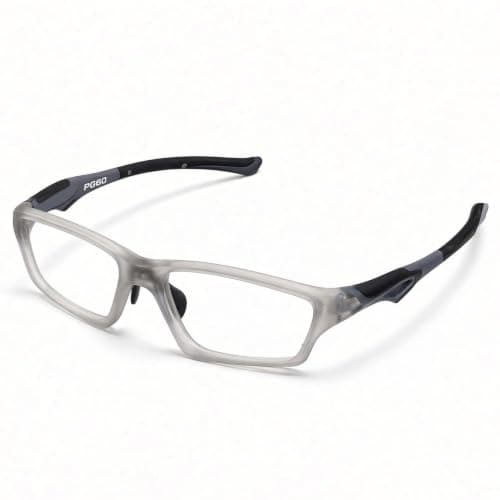 eSeasonGear PG60 Lens-Free Sport Glasses Lens-free pickleball protective eyewear at the floor of this page's range. | A spare pair for the bag, or a first pair to test the idea |
Master Athletics Protective Eyewear
Best for: An outdoor player who wants impact protection and a lens
This is the pick for the player who came here searching for sunglasses and actually needs protection. The listing specifies impact-resistant polycarbonate lenses with anti-fog and scratch-resistant treatment, built for pickleball, padel, tennis, squash and racquetball - which is the right category of product, from a brand that makes pickleball equipment rather than generic safety glasses. Polycarbonate is the lens material used in sport eyewear precisely because of how it behaves under impact, and having a lens at all is what separates this from the lens-free picks below.
Skip it if: Skip it if fogging has defeated every lensed option you have tried - an anti-fog coating helps but does not repeal physics, and the lens-free frames below cannot fog at all. Skip it too if you play exclusively indoors, where you are paying for a lens you do not need.
Price as of October 25, 2026. #ad · how this works
2Hands Lens-Free Pickleball Glasses
Best for: A player who wants protection without anything to fog or distort
This is the design that pickleball players keep coming back to, and the logic is sound: no lens means nothing to fog, nothing to scratch, nothing to distort, and your vision is exactly your vision. The listing specifies a lightweight impact-resistant lens-free protective frame sized for clear vision on court, and it is purpose-built for pickleball rather than borrowed from another sport. For an indoor player, or an outdoor player who wears a hat for glare, this is the whole solution and there is nothing superfluous in it.
Skip it if: Skip it if glare is your actual complaint - a frame with no lens does nothing about the sun, and the lensed pick above is the one that addresses both. Skip it too if you want something that looks like normal eyewear; lens-free frames look like what they are.
Price as of October 25, 2026. #ad · how this works
HEAD Impulse Racquetball & Squash Goggles
Best for: A cheap way to stop putting it off
Protective eyewear only works if you own some, and price is the reason most people do not. These are proper racquet-sport goggles from HEAD - a brand with decades in racquet sports - with anti-fog and scratch-resistant protective eyewear and an adjustable strap, at a price that makes the decision trivial. Racquetball and squash are faster, closer-quarters sports than pickleball with the same fundamental hazard, so eyewear designed for them is not a compromise here. The strap is a genuine advantage for a player who lunges.
Skip it if: Skip it if you want something that does not look like goggles, because these do. Skip it too if you specifically want a pickleball-branded product as a gift; this reads as equipment rather than as a present.
eSeasonGear PG60 Lens-Free Sport Glasses
Best for: A spare pair for the bag, or a first pair to test the idea
Two real uses, and both are about removing excuses. The first is the test case: you are not sure you will tolerate wearing anything on your face during a game, and you would rather find out for a few dollars than for fifty. The second is the spare - a second pair that lives permanently in the bag so that the day you forget your main pair is not a day you play without protection. The listing specifies lens-free protective eyewear for pickleball, which is the same single-purpose design as the pick above at a fraction of the price.
Skip it if: Skip it if this is a gift that needs to feel considered; the cheapest item in a category reads as a filler. Skip it too if glare is the problem - lens-free means lens-free.
Price as of October 25, 2026. #ad · how this works
Frequently asked questions
Do I need pickleball glasses or pickleball sunglasses?
Glasses, if the question is about safety. Protective eyewear exists because a hard plastic ball and a rigid paddle at close range can injure an eye, and Mass General Brigham has published specifically on pickleball eye injuries - which is not something a hospital system does about a hypothetical hazard. Sunglasses solve glare, which is a real comfort and performance problem outdoors but not a safety one. Lensed protective eyewear is the product that does both.
Can I just wear my normal sunglasses to play pickleball?
It is the worst available option, and in one respect worse than nothing. Fashion sunglasses have no impact rating, which means a lens can break - toward your eye - while you feel protected. They also tend not to stay on a head that is moving sideways. If you want sun protection on court, you want sport frames with polycarbonate lenses or lensed protective eyewear, not the pair in your car.
Why are pickleball glasses sold without lenses?
Because a pickleball cannot pass through the aperture, so the frame alone does the protective job - and removing the lens removes the three things players complain about. Lens-free frames cannot fog, cannot scratch and cannot distort your vision, and they weigh very little. What they do not do is anything about sun, dust or glare. They are single-purpose, and for an indoor player that single purpose is the entire requirement.
Do pickleball glasses fog up?
Lensed ones can, in heat and humidity, and an anti-fog coating reduces it rather than eliminating it. Lens-free frames cannot fog at all, which is the main reason they are as popular as they are in this sport. If fogging has made you give up on eyewear before, the lens-free route is the one to try, with a hat or visor handling the glare instead.
Are pickleball eye injuries actually common?
They are common enough that Mass General Brigham has published on them, which is the honest way to answer a question we have no statistics of our own for. The structural reason is clear: a hard plastic ball, a rigid paddle, four players in a small court, and a rule set that pulls everybody toward the net. Per session the risk is low; per incident the cost is very high, which is the shape of risk that inexpensive protective equipment is for.
What if I already wear prescription glasses?
Do not assume they are protecting you. Standard prescription lenses are not necessarily impact-rated and ordinary frames are not built to stay on during lateral movement. The two sensible routes are a protective frame that fits over your glasses, or asking your optician about polycarbonate sport lenses in a sport frame. If you have had cataract, retinal or other eye surgery, this is a question for your ophthalmologist rather than for us.
Does this site sell pickleball sunglasses?
No, and we would rather say so than point you at something we have not checked. What this registry carries is protective eyewear - lens-free frames and lensed protective glasses - which is the safety half of the category. If what you want is a pair of polarized sport shades, buy them from somewhere that specializes in them. For glare specifically, a hat or visor is the cheap answer and our hats and visors page covers those.
Keep exploring
The full protective-eyewear roundup.
Are pickleball glasses necessary?The should-I question, answered honestly.
Best pickleball hats and visorsThe cheap answer to glare.
What to wear to play pickleballThe whole on-court kit.
Best pickleball accessoriesEverything else in the bag.
What is the kitchen in pickleball?Why everybody ends up at the net.
Pickleball gifts for seniorsWhere eye protection matters most.
Best pickleball bagsSomewhere to keep the spare pair.
Sources
- Mass General Brigham — Pickleball eye injuries (why the ball and paddle are an eye hazard at close range, and why protective eyewear is recommended)
- Harvard Health Publishing — Practical pointers for pickleballers ("sudden starts and stops and side-to-side moves increase stress on joints, muscles, and ligaments"; players aged 50+)
- USA Pickleball — How to Play Pickleball (serving, the two-bounce rule, the Non-Volley Zone "nicknamed the Kitchen, is the 14-foot area around the net (7 feet on each side)", scoring, and calling the score)
- USA Pickleball — Official Rulebook (court 20 x 44 ft; non-volley zone 7 ft from the net on each side; 2.E.3 paddle size 24 in combined length and width, 17 in maximum length; 2.E.4 no weight restriction)
Browse another way