Best Gear
The Best Indoor Pickleball Shoes
Indoor pickleball is played on wood and cushioned sport court, and the shoe that survives a year of outdoor concrete is the wrong tool for it. Here is what changes, and what to buy.
By Stephen V. · Updated October 2026 · How we pick
If your pickleball happens in a gym, the pick to start with is the ASICS Men's Upcourt 6 — an indoor-court shoe sold in the volleyball category, which is the category gym floors were always served by. The women's Upcourt 6 is the same answer on a women's last. If you would rather have a shoe with pickleball on the box, the Skechers Viper Court Rally is the pick, and if you play on both surfaces the Diadem Court Flo is the all-court compromise that does not pretend otherwise.
Here is the distinction almost every shoe roundup skips. An outsole is a trade-off, not a quality ranking. Outdoor pickleball is played on concrete and acrylic, which are abrasive, so an outdoor-rated court shoe uses a harder, more wear-resistant rubber that will last a season of it. Indoor pickleball is played on hardwood and cushioned sport court, which are not abrasive at all — so nothing is wearing your outsole out, and the only thing you actually need from it is grip and a non-marking compound the facility will allow on its floor. Buying the abrasion-resistant shoe for an indoor floor means paying for durability you cannot use and getting less grip in exchange.
That is why the volleyball aisle is the honest answer for indoor play. Volleyball, basketball and indoor pickleball are the same problem for a shoe: a flat, stable, grippy platform that holds its shape while you push sideways on a wooden floor. Both Upcourt 6 picks below are listed as volleyball shoes, and that is a feature here, not a mislabel. Everything on this page described as "all court" is built to survive outdoors, which makes it a reasonable buy only if some of your play actually happens there.
What to check before you buy, in order. First, non-marking: most gyms and school facilities require it, and it is worth confirming on the listing or with the venue rather than discovering it at the door. Second, a flat and wide platform — not the rockered, built-up heel of a running shoe. The American Podiatric Medical Association is explicit that sport-specific shoes exist because different sports load the foot differently, and Harvard Health Publishing is blunt about what pickleball does: "sudden starts and stops and side-to-side moves increase stress on joints, muscles, and ligaments." A running shoe is engineered to roll you forward and is deliberately unstable laterally, which is close to the worst case for a sideways sport on a slick floor.
Third, your actual width. A court shoe that is too narrow pushes the forefoot off its own base, and on a grippy indoor floor that is exactly where a rolled ankle comes from. Two picks below exist on this page only because they come in a named width, and if nobody has ever measured your feet, Brannock's own fitting instructions are worth two minutes: length, arch length and width are three separate measurements, and the arch is the one that gets skipped.
How these picks were chosen, and what we are not claiming. Each one is an existing, currently purchasable listing in this site's own registry. Nobody here has worn them, there is no lab behind this site, and not one rating on this page is invented — every category, material, width or shape claim below is repeated from the listing or from the sources at the foot of the page. They are ordered by how directly the shoe is built for an indoor floor, then by who it fits. Court-shoe prices and sizes move constantly, so every number is pulled live and stamped with the date it was checked.
Disclosure: Popaddle earns a commission on qualifying purchases made through the links on this page, at no extra cost to you. Prices are pulled live and can change. How this works.
| # | Product | Best for | Price |
|---|---|---|---|
| 1 | 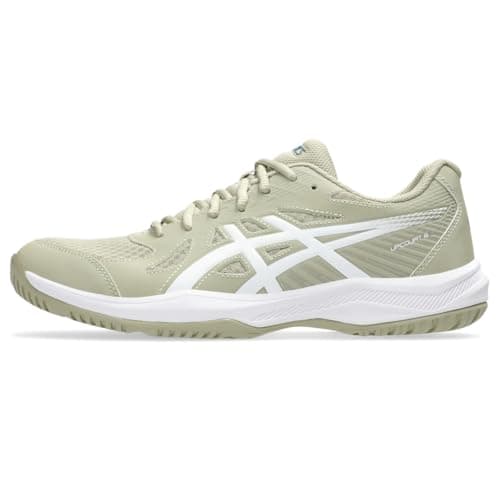 ASICS Men's Upcourt 6 Volleyball Shoes An indoor-court shoe from the category that has served gym floors for decades, at the bottom of this page's price range. | A man whose pickleball is mostly on gym wood | |
| 2 |  ASICS Women's Upcourt 6 Volleyball Shoes The women's Upcourt 6 - the same indoor-court brief, built on a women's fit rather than a downsized men's one. | A woman playing indoors who wants the same shoe on a women's last | |
| 3 | No image Skechers Men's Viper Court Rally Pickleball Shoe A pickleball-specific court shoe from the line Skechers built for the sport. | A player who wants pickleball on the box, not volleyball | |
| 4 | 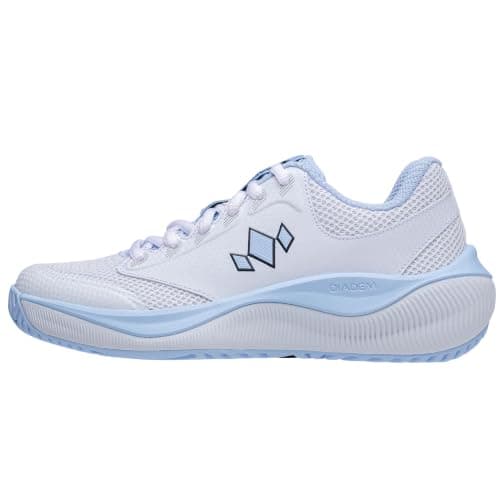 Diadem Court Flo Tennis & Pickleball Shoe (Unisex) A tennis and pickleball court shoe listed in unisex sizing, for the player who genuinely needs one shoe for both floors. | Someone who plays in a gym in winter and outdoors in summer | |
| 5 | 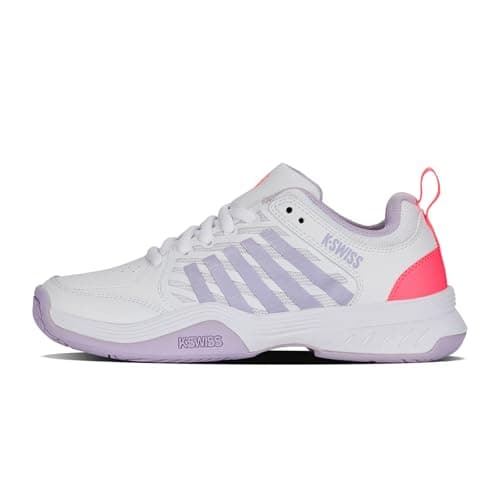 K-Swiss Women's Court Express 2 Tennis Shoe A women's tennis shoe from a court-shoe specialist, listed in a standard M width. | A woman who wants a real court shoe without spending much | $64.95 · View on Amazon $70.00 save 7% |
| 6 | No image Skechers Men's Viper Court Smash Pickleball Sneaker (X-Wide) Skechers' pickleball court shoe in a genuine X-Wide, which almost nothing else on an indoor court offers. | A man whose foot has never fitted a standard court shoe | |
| 7 | 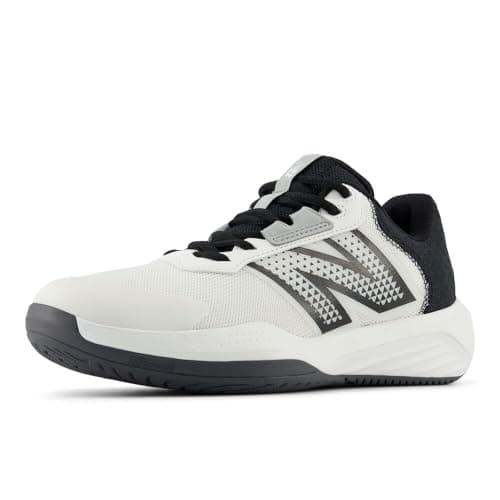 New Balance Women's 696 V6 Tennis Shoe (Width W) A mainstream women's court shoe in a true W width, from the brand that has published real width ranges for decades. | A woman who measures a W and plays on a gym floor | $73.67 · View on Amazon $79.99 save 8% |
The picks in detail
ASICS Men's Upcourt 6 Volleyball Shoes
Best for: A man whose pickleball is mostly on gym wood
This is the most direct answer on the page for indoor play, and the reason is the category it is sold in: the Upcourt 6 is listed as a volleyball shoe, which is to say a shoe designed to grip and stay stable on an indoor hardwood floor while its wearer pushes sideways. That is the identical mechanical brief as indoor pickleball. ASICS has built this line for the indoor court for a long time, it sizes consistently enough to buy online with confidence, and it is the cheapest pick here — because you are not paying for outdoor abrasion resistance you will never use on a wooden floor.
Skip it if: Skip it if any of your play is outdoors; an indoor outsole shreds on concrete and acrylic, and you will be shopping again by spring. Skip it too if you need a width - this is a standard fit, and the Skechers X-Wide below is the pick that goes further.
Price as of October 25, 2026. #ad · how this works
ASICS Women's Upcourt 6 Volleyball Shoes
Best for: A woman playing indoors who wants the same shoe on a women's last
The argument is identical to the men's pick and so is the shoe's job: a flat, grippy, stable platform for a wooden floor. What you get by buying the women's version rather than a small men's size is a last shaped for a narrower heel and a different forefoot proportion, which is the difference between a shoe that holds your heel still and one that lets it lift on a lateral push. A heel that lifts on a grippy indoor floor is how blisters and rolled ankles happen, so this is not a cosmetic distinction.
Skip it if: Skip it if you play outdoors more than occasionally - buy an all-court shoe instead. Skip it too if you need a W width; the New Balance 696 V6 below is the pick that comes in one.
Price as of October 25, 2026. #ad · how this works
Skechers Men's Viper Court Rally Pickleball Shoe
Best for: A player who wants pickleball on the box, not volleyball
Sometimes the right shoe and the right label are different things, and that is a real problem if this is a gift or if the recipient would rather not explain why they are wearing volleyball shoes. The Viper Court Rally is Skechers' pickleball court shoe, so it is purpose-built for the sport's movement pattern and it says so, and Skechers sizing is familiar to a very large number of people who already own a pair of something from the brand. For indoor play specifically it gives you the same low, flat, lateral-support platform the picks above do.
Skip it if: Skip it if your gym is strict about non-marking soles and you cannot confirm the compound on the colorway you want - check before you buy rather than after. Skip it too if you want the cheapest honest indoor shoe; the Upcourt 6 is less.
Diadem Court Flo Tennis & Pickleball Shoe (Unisex)
Best for: Someone who plays in a gym in winter and outdoors in summer
Most people buying an indoor shoe do not play exclusively indoors, and buying two pairs is not always sensible. The Court Flo is listed as a tennis and pickleball shoe - an all-court build, which is the correct choice when some of your play is on abrasive outdoor surfaces - and Diadem is a racquet-sport brand rather than a general athletic one. It is on this page as the honest compromise rather than the best indoor shoe: you give up a little grip on wood to get an outsole that survives concrete. The listing carries dual women's/men's sizing, so check the conversion on the size you want before ordering.
Skip it if: Skip it if literally all of your play is indoors - an all-court outsole is paying for wear resistance a wooden floor will never test. Skip it too if you need a named width; this is a standard fit.
Price as of October 25, 2026. #ad · how this works
K-Swiss Women's Court Express 2 Tennis Shoe
Best for: A woman who wants a real court shoe without spending much
K-Swiss has made nothing but court shoes for decades, which is worth more than it sounds: the brand's whole business is the flat, supportive, laterally stable platform that racquet and paddle sports need, and it is not adapting a running shoe to do it. The Court Express 2 is the sensible-money end of that range. For indoor pickleball it gives you the low stance and the stable base that matter on a wooden floor, and it is a tennis shoe rather than a pickleball-marketed one, which in practice usually means the same shoe for less money.
Skip it if: Skip it if you need a wide fit - this is listed in M. Skip it too if you want the most indoor-specific outsole on the page; the women's Upcourt 6 is the purer indoor shoe.
Skechers Men's Viper Court Smash Pickleball Sneaker (X-Wide)
Best for: A man whose foot has never fitted a standard court shoe
This is the pick for the buyer whose problem is not the floor, it is the shoe. X-Wide is a real last rather than the same shoe with a looser upper, and it exists in very few court shoes at any price. Width matters more indoors than people expect: on a grippy wooden floor the shoe stops but the foot keeps going, and a forefoot that is being squeezed off its base is where that force ends up. Buying a wide court shoe in the right length is also better than the common workaround of buying a standard shoe a half size up, which just lets the foot slide forward on every stop.
Skip it if: Skip it if a standard width fits you - an X-Wide on a medium foot feels sloppy and lets the heel move. Skip it too if you want the lightest shoe here; this is a substantial build.
New Balance Women's 696 V6 Tennis Shoe (Width W)
Best for: A woman who measures a W and plays on a gym floor
New Balance is the obvious answer for a woman who needs a width, for one unglamorous reason: it actually sells them, and has for a very long time, so a W is a genuinely different last. The 696 V6 is a tennis shoe rather than a runner, which gives you the flat platform and lateral support an indoor floor asks for, and it has a removable footbed - which makes it the right host for an orthotic if you wear one. That combination of a correct width and a correct insert does far more for comfort than any single feature of a shoe.
Skip it if: Skip it if you need extra-wide rather than wide; W is one step, not two. Skip it too if you want a specifically indoor outsole - this is an all-court tennis shoe, which is a reasonable indoor choice but not the purest one here.
Frequently asked questions
Do I really need different shoes for indoor pickleball?
You need a court shoe either way - that part is not optional, because the lateral stability a paddle sport asks for is something running shoes are deliberately built not to have. Whether you need a specifically indoor court shoe depends on how you play. If all of your pickleball is on gym wood or cushioned sport court, an indoor shoe gives you better grip and costs less, because nothing is abrading the outsole. If any meaningful amount is outdoors, buy an all-court shoe: an indoor outsole will not survive concrete.
Can I wear volleyball or basketball shoes for indoor pickleball?
Volleyball shoes, yes - two of the picks on this page are listed in exactly that category, and the mechanical brief is the same: grip and lateral stability on a wooden floor. Basketball shoes are a worse fit. High-top basketball builds are heavier and taller, which raises your centre of gravity and slows the quick low changes of direction pickleball asks for. A low court shoe is the better tool.
What does non-marking mean, and does it matter?
It means the outsole compound does not leave scuff marks on a finished floor, and it matters because the facility decides, not you. Many gyms, school halls and community centres require non-marking soles as a condition of use. It is worth confirming on the product listing or with the venue before buying - the specific colorway can differ from the model, and it is a cheap thing to check versus being turned away.
Are running shoes really that bad for pickleball?
For this sport, yes - and it is a design conflict rather than a quality issue. A running shoe is built to roll the foot forward through a straight-line gait, with a soft, built-up heel and deliberately little lateral structure. Pickleball, as Harvard Health Publishing puts it, involves sudden starts and stops and side-to-side moves that increase stress on joints, muscles and ligaments. The APMA's guidance on choosing shoes for sports makes the same point generally: sport-specific shoes exist because sports load the foot differently.
How do I know what width I need?
Get measured, ideally on a Brannock device, and read all three numbers. Brannock's own fitting instructions explain that length, arch length and width are separate measurements, and the arch length is the one most often skipped - it determines where the shoe should flex, which is why a shoe can be the right length and still feel wrong. If you have spent years buying court shoes a half size up for room, that is a width problem wearing a length disguise.
Will indoor court shoes work on an outdoor court in a pinch?
For one or two sessions, yes. As a habit, no - you will sand the outsole down fast, and a worn outsole is both a grip problem and, on a court, a genuine slipping risk. If you find yourself playing outdoors regularly, that is the signal to buy an all-court shoe and keep the indoor pair for the gym.
Are expensive indoor court shoes worth it?
Less than for outdoor play, which is a slightly unusual answer. A big part of what premium outdoor court shoes charge for is outsole durability against abrasive surfaces, and an indoor floor does not abrade anything. What is still worth paying for indoors is fit - a correct width, a heel that holds, and a brand that sizes predictably. That is why the cheapest pick on this page is also the top pick.
Keep exploring
The category roundup, across both surfaces.
Pickleball shoes vs tennis shoesWhether the tennis pair in the closet will do.
Best pickleball shoes for wide feetEvery width option in one place.
Best budget pickleball shoesIf price is the binding constraint.
What to wear to play pickleballThe rest of the kit, indoors and out.
Sources
- American Podiatric Medical Association — Choosing Shoes for Sports (sport-specific shoes; support through quick changes of direction)
- Harvard Health Publishing — Practical pointers for pickleballers ("sudden starts and stops and side-to-side moves increase stress on joints, muscles, and ligaments")
- Brannock Device Co. — fitting instructions (how shoe length, arch length and width are actually measured)
- USA Pickleball — How to Play Pickleball (court, the non-volley zone, and what a beginner actually needs)
Browse another way