Guide
How to Replace a Pickleball Paddle Grip
It takes three minutes, costs a couple of dollars, and does more for how a paddle feels than anything else you can buy. Here is the method, and the choice to make first.
By Stephen V. · Updated October 2026 · How we pick
First decide which product you need
This is where most people get it wrong, and the mistake is expensive in feel if not in money. There are two different products on the same shelf and they do opposite things to your grip size.
JustPaddles' own explainer sets the distinction out the same way, and the practical rule falls straight out of it. If your handle already feels too fat, an overgrip is the wrong product - you want to strip back to a thinner replacement grip, or play on the bare stock grip. If the handle is slightly too slim, or the right size but slick, an overgrip is exactly right. Our page on paddles for small hands goes further into what to do when the handle is simply too big.
One more consideration: grip size itself. Selkirk's guidance is to measure from the middle crease of your palm to the tip of your ring finger, and when between sizes to go smaller, because an overgrip can add thickness and nothing can remove it. That rule is the reason to think about this before wrapping rather than after - our grip size guide has the method.
The method, step by step
Allow three minutes the first time and ninety seconds after that. You need the new grip, scissors, and the finishing tape that comes in the packet.
1. Strip, if you are replacing. For a full replacement grip, unwind the old one from the top down and peel off any adhesive residue. For an overgrip, leave everything alone - you are wrapping over it.
2. Start at the butt end. Peel the backing off the tapered start of the new grip and anchor it at the bottom of the handle, aligned with the butt cap. Wrapping bottom-to-top is the standard direction and there is a reason for it: your hand slides down the handle under load, which tightens an upward-wrapped grip and would peel a downward-wrapped one.
3. Wrap upward with even tension and consistent overlap.Each turn should overlap the previous one by roughly an eighth of an inch. Selkirk's own how-to covers this and it is the step that decides whether the job feels professional: too little overlap leaves gaps that read as ridges under your fingers, and too much builds the handle up unevenly and wastes grip length. Keep the tension firm and constant - a grip wrapped loose will move, and one wrapped at varying tension feels lumpy.
4. Stop before the paddle face. Finish an inch or so below where the handle meets the face, and trim the excess at an angle so the final edge lies flat rather than ending in a square step.
5. Tape it. Use the finishing tape in the packet, wrapped over the trimmed end. Do not skip this: a grip that starts unravelling mid-rally is a genuine problem, and electrical tape is a poor substitute because it slides once it warms up.
6. Check before you play. Hold the paddle at the pressure you actually use. If you feel ridges, your overlap was uneven; if the handle now feels fat, you added a layer you did not want. Both are fixable in another ninety seconds, which is the nice thing about this job.
When to rewrap, and which feel to choose
The signals are easy to read once you know them. A grip is finished when it looks shiny where your palm sits, when it feels slick rather than grippy, when it has gone hard and compressed, or when it has started to come loose at the edges. For most players who play a few times a week, that lands somewhere around twenty to forty hours of play - but hand chemistry varies enormously, and someone with sweaty hands in a hot climate may be rewrapping monthly.
The important point is that this is a consumable, not a repair. A dead grip is not a sign the paddle is finished - our guide to how long paddles last covers the four tests that actually tell you that - and a great many people replace a perfectly good paddle when a two-dollar wrap would have fixed what they were complaining about.
If moisture is your actual problem rather than grip texture, our grips for sweaty hands page sorts the whole field by whether a grip absorbs or resists, which is the choice that decides whether any of this works for you.
Mistakes that make a new grip feel worse than the old one
Wrapping top-down. It will feel fine for a session and then start peeling, because your hand slides down the handle and lifts the leading edge of every turn. Start at the butt cap.
Inconsistent overlap. The single most common cause of a grip that feels wrong for reasons the owner cannot name. Pick an eighth of an inch and hold it the whole way up; a grip with gaps in the middle and heavy overlap at the top is thicker at the top, which changes where your hand naturally sits.
Adding an overgrip to a handle that was already too big. Covered above and worth repeating because it is so common. If you are squeezing hard to keep the paddle from turning, more circumference is the opposite of the fix.
Skipping the finishing tape. Three seconds of work that prevents the one failure mode that happens mid-point.
Expecting it to fix a worn face. A grip changes how the paddle feels in your hand and nothing about how it behaves on the ball. If your spin has gone and the ball slides off the face, that is a face-texture problem - clean it first, per our paddle cleaning guide, and then read the wear tests.
The gear this guide points to
Disclosure: Popaddle earns a commission on qualifying purchases made through the links on this page, at no extra cost to you. Prices are pulled live and can change. How this works.
| # | Product | Best for | Price |
|---|---|---|---|
| 1 | 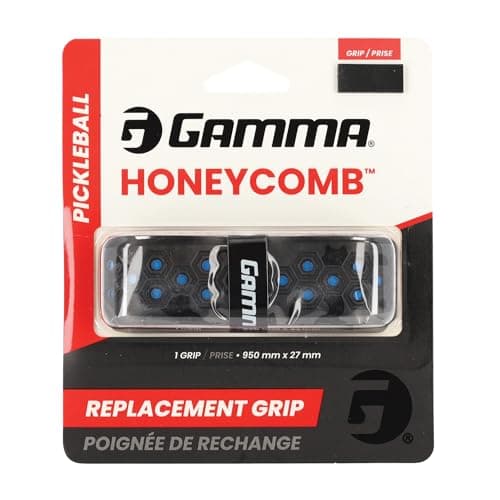 Gamma Honeycomb Cushion Replacement Grip A moisture-wicking replacement grip - the product for a full rewrap rather than a layer on top. | Someone taking the factory grip off entirely | |
| 2 |  Srikel Pickleball Paddle Overgrip Twelve overgrips in one pack, listed as ultra tacky, absorbent and non-slip. | Anyone who wants to stop running out of grips | |
| 3 | 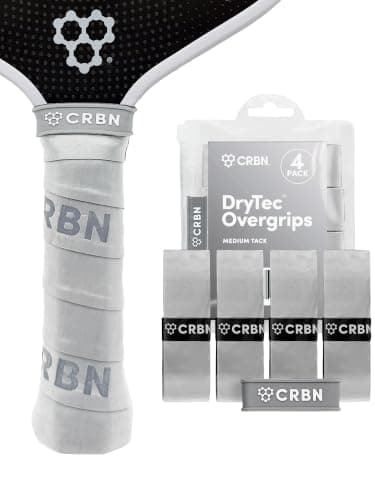 CRBN Drytec Overgrips (4-Pack) A four-pack of overgrips listed to absorb both shock and moisture. | A player whose grip goes slick within a game | |
| 4 | 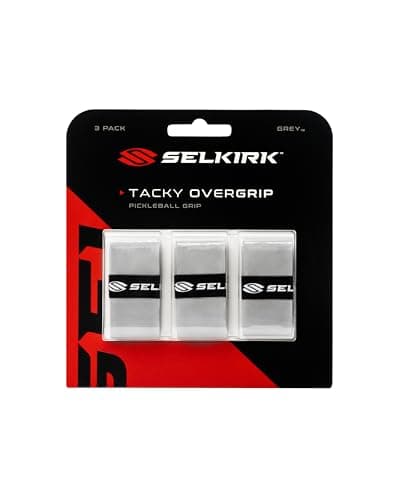 Selkirk Sport Non-Slip Pickleball Grip Tape (Tacky, 3-Pack) A thin tacky three-pack - grip security with minimal added circumference. | A handle that is slick but already the right size, or slightly too big |
Gamma Honeycomb Cushion Replacement Grip
Best for: Someone taking the factory grip off entirely
If you have decided on a genuine replacement rather than an overgrip, this is the one in this registry built for it. The listing specifies a replacement grip for pickleball paddles with moisture-wicking construction, which is the right property for the layer that sits directly against your hand all game. A replacement grip is the move when the factory grip is shot, when you want to change the cushioning of the handle, or when you are trying to get the handle back down to a size you can hold at low pressure - none of which an overgrip can do, since it only ever adds.
Skip it if: Skip it if the grip underneath is still sound - an overgrip over a good factory grip is cheaper, faster and reversible. Skip it too if you want a contoured rather than a smooth handle; the Hesacore below is that, and it is a different feel entirely.
Price as of October 25, 2026. #ad · how this works
Srikel Pickleball Paddle Overgrip
Best for: Anyone who wants to stop running out of grips
The volume buy, and the reason it is here is behavioural rather than technical: people play on dead grips because they have run out, not because they do not know better. A twelve-pack removes that excuse for a year or more at a few cents per wrap. The listing specifies ultra tacky, absorbent and non-slip with a soft touch, which is the mainstream combination most hands want - tacky enough to hold at low squeeze pressure, with some absorbency so it does not go slippery the moment you sweat. Keep two in the bag and the rest at home.
Skip it if: Skip it if your handle is already too thick - every overgrip adds circumference, and a replacement grip is the right direction instead. Skip it too if you specifically want the dry, cloth-like feel; this is firmly in the tacky camp.
Price as of October 25, 2026. #ad · how this works
CRBN Drytec Overgrips (4-Pack)
Best for: A player whose grip goes slick within a game
The pick for the specific failure where a brand-new tacky grip is useless twenty minutes in because your hands sweat. The listing specifies Drytec overgrips that absorb shock and moisture, which is the correct design target: for a heavy-sweating hand, resisting moisture is a losing strategy and absorbing it is the one that works. Four to a pack is a sensible quantity to find out whether absorbency is what you have been missing. Pair it with a clipped towel - the combination of a grip that takes moisture away and a towel that dries your hand between points is far more effective than either alone.
Skip it if: Skip it if your hands stay dry - you would be paying for absorbency you do not need, and a plain tacky grip is cheaper. Skip it too if your problem is grip size rather than moisture; our small-hands page covers that.
Price as of October 25, 2026. #ad · how this works
Selkirk Sport Non-Slip Pickleball Grip Tape (Tacky, 3-Pack)
Best for: A handle that is slick but already the right size, or slightly too big
The answer to the awkward case this page keeps returning to: your handle is slick, but it is also already as big as you can comfortably hold, so a cushioned wrap would solve one problem and create another. A thin tacky tape changes the friction without meaningfully changing the circumference. Selkirk also publishes the clearest how-to on wrapping a paddle properly, including wrap direction and overlap, which makes it a sensible brand to buy from for a job you may not have done before - most grip complaints turn out to be wrapping complaints.
Skip it if: Skip it if you want cushioning for hand or joint pain - thin is the opposite of what helps there, and a cushioned replacement grip is the right product. Skip it too if you prefer a dry cloth feel to a tacky one.
Frequently asked questions
What is the difference between an overgrip and a replacement grip?
An overgrip wraps on top of the paddle's existing grip and adds thickness; a replacement grip replaces the factory grip entirely, so you peel the old one off first. The practical consequence is about size: if your handle already feels too fat, an overgrip makes it worse and a thinner replacement grip is the fix. If the handle is the right size but slick, or slightly too slim, an overgrip is exactly right.
Which direction do I wrap a pickleball grip?
From the butt end of the handle upward toward the paddle face. The reason is that your hand slides down the handle under load, which tightens an upward-wrapped grip and would lift the leading edge of a downward-wrapped one. Start by anchoring the tapered end of the new grip at the butt cap, then work up.
How much should each wrap overlap?
Roughly an eighth of an inch, and the key is consistency rather than the exact figure. Too little overlap leaves gaps that feel like ridges under your fingers; too much builds the handle up unevenly and uses up the grip before you reach the top. Selkirk's own wrapping guide covers this, and it is the step that most determines whether the finished job feels right.
How often should I replace my paddle grip?
When it looks shiny where your palm sits, feels slick rather than grippy, has gone hard and compressed, or is lifting at the edges. For someone playing a few times a week that tends to be somewhere in the twenty to forty hour range, but hand chemistry varies hugely - a heavy sweater in a hot climate might rewrap monthly. It is a consumable, and replacing it early is cheap.
Do I need the finishing tape?
Yes, and it comes in the packet. It holds the trimmed top edge down, and without it a grip will start to unravel mid-rally, which is both distracting and genuinely unsafe if the paddle moves in your hand. Electrical tape is a poor substitute because it slides once it warms up with your hand.
Will a new grip make my paddle play better?
It will make the paddle feel dramatically better and it will indirectly improve your soft game, because a grip you can hold at low pressure lets your wrist stay relaxed - and a relaxed wrist is where touch comes from. What it will not do is restore spin or ball bite, which come from the texture of the paddle face. If the ball is sliding off the face, clean the face first and then run the paddle-wear tests.
Can I put two overgrips on to build the handle up?
You can, and plenty of players do when their handle is a size too small. Wrap the first one, tape it, and wrap the second over it from the butt end again. Two thin wraps are more comfortable than one thick one for most hands. If you find yourself needing three, the paddle is simply the wrong grip size for you and the next paddle should be a larger handle rather than a tower of tape.
Keep exploring
The full field, tacky and dry.
Pickleball grip size guideMeasure before you wrap.
How to hold a pickleball paddleWhy grip pressure matters more than style.
Best grips for sweaty handsAbsorb or resist - the choice that matters.
How long do paddles last?A dead grip is not a dead paddle.
Sources
- JustPaddles — the difference between a pickleball overgrip and a replacement grip (an overgrip adds thickness over the stock grip; a replacement grip replaces it)
- Selkirk Sport — how to overgrip your pickleball paddle for maximum performance (direction of wrap, overlap, and finishing tape)
- Selkirk Sport — how to know your pickleball grip size (measure from the middle crease of the palm to the tip of the ring finger; between sizes, go smaller)
- Selkirk Sport — 8 essential items for sweaty pickleball players (sweat management on court)
- JOOLA — Official Paddle Guide (core thickness: 16mm for control and stability, thinner cores for pop)
Browse another way