Guide
How Long Do Pickleball Paddles Last?
Nobody can give you a number of months, and anybody who does is guessing. What we can give you is the four tests that tell you a paddle is finished.
By Stephen V. · Updated October 2026 · How we pick
Why nobody can tell you a number of months
You will find articles confidently stating that a pickleball paddle lasts one year, or two, or five hundred hours. We are not going to add one, because the number depends almost entirely on variables nobody asking the question has told us: how many times a week it is played, whether on abrasive outdoor concrete or indoor wood, how hard the owner hits, whether it lives in a sleeve or loose in a bag, and whether it spends summer afternoons in a car.
A paddle played twice a week indoors and stored properly can be unremarkable years later. The same paddle played five times a week on outdoor concrete and left in a hot trunk can be noticeably dead in a single season. Those are the same paddle. The honest framing is not "how long" but "how do I tell", which is what the rest of this page is.
Worth saying plainly: there is no lab behind this site, we have not destruction-tested anything, and no figure on this page is invented. What follows is reasoning from how these paddles are built, plus what the manufacturers and USA Pickleball publish. Our guide to how long pickleball balls last is the companion page, and balls are a much more answerable question.
How a paddle actually dies
Not by breaking. Catastrophic failure happens — a cracked face, a delaminated edge, a paddle that met a court post — but it is the exception. The normal end of a paddle's life is gradual and has two mechanisms.
The face goes smooth. What a modern paddle does to a ball comes mostly from the texture of its face: a carbon or composite surface grips the ball, which is what produces spin and control. That texture wears from ball contact, abrasion against other paddles, and court surfaces. It fades gradually enough that owners usually do not notice until they pick up a new paddle and feel the difference. This is the most common way a paddle ends, and it is also the reason a sleeve is the best value accessory in the sport.
The core softens. Underneath the face is a honeycomb core, and the cells in it compress and break down with repeated impact — fastest in the sweet spot, where every ball lands. A paddle with a tired core feels dull and sounds dead, and it loses the liveliness that made it feel good new. A soft spot you can feel by pressing on the face is the advanced version of the same thing.
Both of these are cumulative impact problems, which is why the things that accelerate them are the things that add impact or heat: hard hitting, hot storage, and abrasion in a bag.
The four tests
Run these before you buy anything. They cost nothing and they are more reliable than a date on a receipt.
A rattle or a soft spot means the paddle is done, and it may also mean it is no longer legal for sanctioned play — USA Pickleball's approved equipment database is the authority on a paddle's current status, and a damaged paddle should not be assumed to still conform. A merely smooth face is a judgment call: it is a worse paddle than it was, and whether that matters depends on your level.
One honest check before you condemn it: clean it first. Court dust and sunscreen fill in face texture and mimic wear, and a wipe costs nothing. Our guide to cleaning a paddle has the conservative method - and emphatically not the abrasive one, which will create the exact wear you are testing for.
What kills paddles early
Four things, in rough order of how much damage they do relative to how avoidable they are.
Heat. A paddle is a composite face bonded to a plastic honeycomb core with adhesive, and a car interior in summer is a genuinely hostile environment for all three. This is the single most avoidable way to ruin an expensive paddle, it is completely free to avoid, and a cover does not help with it. Take the paddle inside.
Face-to-face contact in a bag. Two paddles stored face to face sand each other every time the bag moves. So do keys, ball tubes and grit in the same compartment. A sleeve costs a small fraction of a paddle and removes nearly all of this.
Hitting things that are not balls.Scraping the face on concrete to pick up a ball, tapping paddles at the end of a game edge-to-face, and the occasional collision with a partner's paddle. Individually trivial, cumulatively the reason the bottom corner of most paddles looks worse than the rest.
Cold, for balls more than paddles. Worth a mention because people conflate the two: cold weather cracks pickleballs rather than paddles, which is covered on our balls page. A cold paddle is mostly fine once it warms up.
When to replace, and when not to
Replace it if it rattles, has a soft spot, has a cracked face or a lifting edge guard. Those are structural and they are not repairable in any way worth doing.
Do not replace it if the handle is slick — that is a grip, and a grip is a consumable. Rewrapping costs a few dollars and makes a tired paddle feel new in the hand, which is why the most common paddle "upgrade" that actually improves someone's experience is an overgrip. JustPaddles' explainer on overgrips versus replacement grips is worth two minutes if you have never done it, and Selkirk publishes a step-by-step wrapping guide. We have put both into one page: our guide to replacing a pickleball paddle grip covers which of the two products you need, the wrap direction, the overlap, and the mistakes that make a new grip feel worse than the old one.
And consider the honest possibility that the paddle is fine and you want a new one. That is a perfectly good reason to buy a paddle and it does not need a maintenance justification. If you have improved past what your paddle was built for, our ratings explainer covers what changes between levels, and are expensive paddles worth itmakes the case for and against spending more. The picks below cover both situations: the consumables that extend a paddle's life, and the paddles worth replacing a dead one with.
The gear this guide points to
Disclosure: Popaddle earns a commission on qualifying purchases made through the links on this page, at no extra cost to you. Prices are pulled live and can change. How this works.
| # | Product | Best for | Price |
|---|---|---|---|
| 1 | 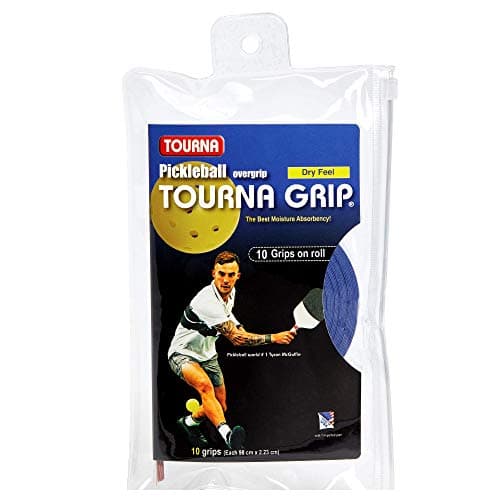 Pickleball Tourna Grip (10-Pack) Ten overgrips in one box - the cheapest thing that makes a tired paddle feel new. | A paddle that feels old because its handle is finished | |
| 2 | 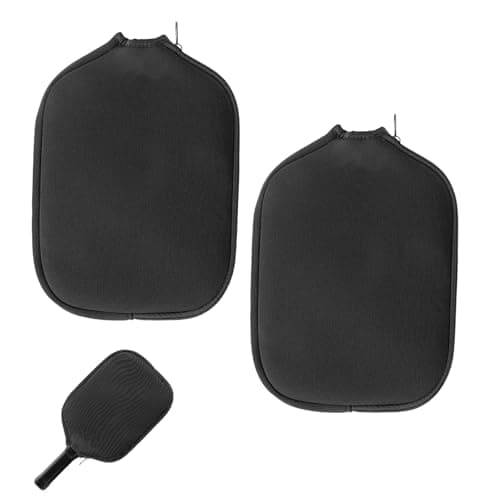 2 Pcs Pickleball Paddle Covers Two universal sleeves, listed as compatible with most standard and elongated paddles. | A household with two paddles in one bag | |
| 3 | 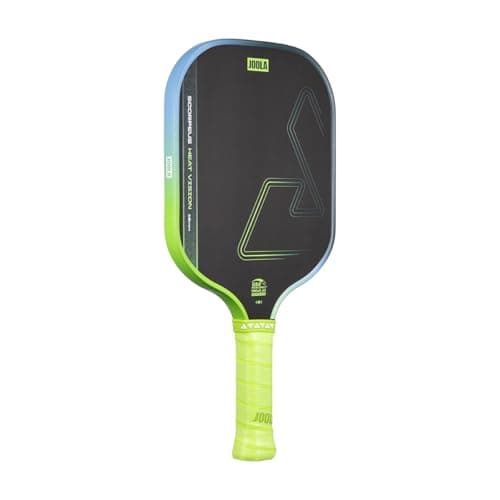 JOOLA SCORPEUS Heat Vision 16mm A 16mm standard-shape paddle whose listing specifies a textured carbon face and SK Film for reduced vibration. | Replacing a dead paddle with one built to last | |
| 4 | 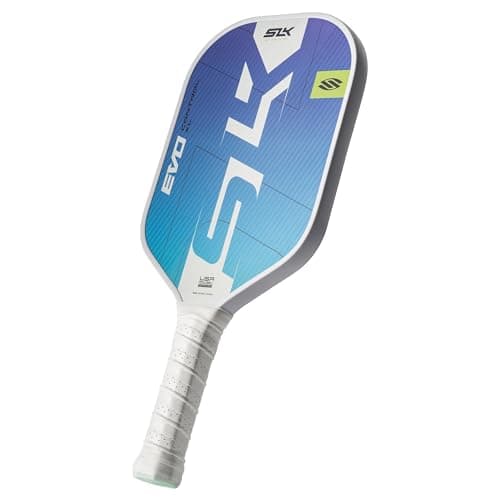 Selkirk SLK Evo Control XL Carbon Fiber Selkirk's carbon-fiber control paddle in the XL shape, from a brand with usable fit guidance. | A replacement that is an upgrade without being a splurge |
Pickleball Tourna Grip (10-Pack)
Best for: A paddle that feels old because its handle is finished
The single most common reason a paddle feels past it is the grip, and the grip is a consumable rather than part of the paddle's life. A ten-pack costs a fraction of any paddle and removes every excuse not to rewrap, which is the point: people leave dead grips on because they have run out, not because they do not know. Tourna Grip is the name players reach for when they want the dry, cloth-like feel rather than a rubbery one, and ten is enough for a couple of seasons of honest maintenance.
Skip it if: Skip it if you have not worked out whether you prefer a dry or a tacky grip - buy a small pack of each first, which our sweaty-hands page sorts by exactly that. Skip it too if you play only occasionally.
Price as of October 25, 2026. #ad · how this works
2 Pcs Pickleball Paddle Covers
Best for: A household with two paddles in one bag
The second-biggest avoidable cause of face wear is two paddles abrading each other in a bag, and that problem needs two covers rather than one. The listing specifies universal case sizing compatible with most USAPA-standard and elongated paddles, which covers both common shapes, and the pair costs about what a single coffee does. For anyone who has just read the four tests above and found a smoother middle than edge on a paddle they like, this is the purchase that stops it happening to the next one.
Skip it if: Skip it if you only own one paddle and would rather have the better-made brand case on the covers page. Skip it too if your bag already has individual padded paddle slots.
Price as of October 25, 2026. #ad · how this works
JOOLA SCORPEUS Heat Vision 16mm
Best for: Replacing a dead paddle with one built to last
If the four tests have condemned your paddle, this is the one we would replace it with. The listing specifies a textured carbon fiber surface for spin - the face material that holds its bite longer than painted fiberglass - plus a 16mm core and SK Film for reduced vibration, from a brand with real engineering rather than marketing adjectives. The 16mm core is the thickness JOOLA's own paddle guide associates with control and stability, and a thicker core also spreads impact rather than concentrating it, which is the mechanism behind core fatigue in the first place.
Skip it if: Skip it if your paddle is not actually dead - clean it and rewrap it first, which costs a tenth as much. Skip it too if you want an elongated shape; this is a standard build.
Price as of October 25, 2026. #ad · how this works
Selkirk SLK Evo Control XL Carbon Fiber
Best for: A replacement that is an upgrade without being a splurge
This is the sensible replacement for a player who liked their old paddle and wants a better version rather than a different sport. The SLK Evo Control listing specifies a carbon fiber face in the XL shape - a larger hitting area, which is more forgiving of the off-center contact that wears a sweet spot unevenly in the first place. Selkirk also publishes genuinely useful grip-size and weight guidance, which matters when you are replacing a paddle you had grown used to and want the new one to feel familiar in the hand.
Skip it if: Skip it if you want power; a control paddle is a deliberate trade. Skip it too if your old paddle was elongated and you liked the reach - this is a bigger face, not a longer one.
Price as of October 25, 2026. #ad · how this works
Frequently asked questions
How long does a pickleball paddle last?
There is no honest number, and we are not going to invent one. It depends on how often you play, on what surface, how hard you hit, and how the paddle is stored - a paddle played twice a week indoors and kept in a sleeve can be fine years later, while the same paddle played five times a week on outdoor concrete and left in a hot car can be noticeably dead in a season. The useful question is how to tell, and the four tests on this page answer that.
Do pickleball paddles wear out?
Yes, but they rarely break. They wear out in two ways: the face texture goes smooth, which costs you spin and control, and the honeycomb core compresses under the sweet spot, which makes the paddle feel and sound dead. The first is usually what players notice, and it often shows up as a ball that slides off the face where it used to grab.
How do I know if my pickleball paddle is dead?
Four checks. Tap the face with a knuckle and listen for a dull patch where the lively ring used to be. Run a fingertip across the hitting area and then across a corner that never gets hit, and compare smoothness. Hit soft spin shots and see whether the ball still grabs. And shake the paddle next to your ear while pressing across the face - a rattle or a soft spot means it is finished. Clean it first, though: dust and sunscreen can mimic a worn face.
What ruins a pickleball paddle fastest?
Heat, and it is completely avoidable. A paddle is a composite face bonded to a plastic core with adhesive, and a car interior in summer is hostile to all three - a cover does not help with that. The next biggest avoidable cause is two paddles sitting face to face in a bag, sanding each other every time the bag moves. A sleeve costs a fraction of a paddle and removes nearly all of the second problem.
Can a worn paddle still be legal for tournaments?
Do not assume so. USA Pickleball's rules govern paddle size and surface, and its approved equipment database is the authority on whether a specific paddle is currently approved - a paddle with a cracked face, a lifting edge guard or an altered surface should not be presumed to still conform. If you play sanctioned events, check the database rather than a product listing, and retire anything structurally damaged.
Should I replace my paddle or just the grip?
The grip, in most cases where the complaint is how the paddle feels in the hand. A grip compresses and polishes smooth and is a consumable, not part of the paddle's structural life; rewrapping costs a few dollars and genuinely transforms an old paddle. Replace the paddle itself when it rattles, has a soft spot, has a cracked face or a lifting edge guard - those are not repairable in any way worth doing.
Does a more expensive paddle last longer?
Not reliably, and it is the wrong reason to spend more. Premium paddles tend to use face materials that hold texture well, which helps, but they also get played more by the people who buy them and are often thinner-cored and livelier, which does not. What genuinely extends a paddle's life is storage and a sleeve, both of which cost almost nothing. Our are-expensive-paddles-worth-it guide covers what the money actually buys.
Keep exploring
Before you decide it is dead.
How long do pickleball balls last?The companion question, with a clearer answer.
Best pickleball paddle coversThe cheapest life extension there is.
Best grips and overgripsRewrapping instead of replacing.
Are expensive paddles worth it?What the money actually buys.
Pickleball ratings explainedWhether you have outgrown the paddle.
Best pickleball paddlesIf it really is time to replace it.
How much do paddles cost?One pick per price band.
Sources
- USA Pickleball — Official Rulebook (court 20 x 44 ft; non-volley zone 7 ft from the net on each side; 2.E.3 paddle size 24 in combined length and width, 17 in maximum length; 2.E.4 no weight restriction)
- USA Pickleball — Approved equipment database (current approval status, paddle by paddle)
- USA Pickleball — Update regarding the spin rate test and implementation timeline (2,100 RPM limit, effective 2026-10-01)
- JOOLA — Official Paddle Guide (core thickness: 16mm for control and stability, thinner cores for pop)
- JustPaddles — the difference between a pickleball overgrip and a replacement grip
- Selkirk Sport — how to overgrip your pickleball paddle for maximum performance
Browse another way