Guide
Can You Use a Tennis Ball Machine for Pickleball?
A pickleball is wider than a tennis ball and weighs less than half as much. That single pair of facts explains every problem people have feeding one through a tennis machine.
By Stephen V. · Updated October 2026 · How we pick
The short answer, and the two numbers behind it
Sometimes, unreliably, and whether it works depends entirely on your specific machine. The reason is not mysterious - it comes down to two published specifications, and once you see them side by side the whole problem is obvious.
Read the first two rows together, because that is the whole story. A pickleball is roughly a quarter of an inch WIDER than a tennis ball and weighs well under half as much. Those figures come from USA Pickleball's Equipment Standards Manual and the ITF's Rules of Tennis respectively, both of which are linked at the foot of this page - neither number is estimated here.
A tennis ball machine is a mechanism built around one ball shape: a hopper and feed path sized for 2.6 inches, and two counter-rotating wheels tuned to grip and launch something that weighs two ounces. Give it a ball that is larger, so it does not travel the feed path the same way, and much lighter, so the wheels have far less mass to push against, and you get exactly the symptoms people report: jams in the feed, wildly inconsistent speed and spin, and balls that fly long or dribble out with no obvious pattern.
What actually goes wrong
Feeding jams. The most common failure and the most annoying. A hopper and feed tube sized for a 2.6-inch ball may physically accept a 2.9-inch one and then bridge - two balls wedging against each other across a gap built for something narrower. You get three balls, a pause, then two balls at once.
Inconsistent speed. The throwing wheels are calibrated for mass. A ball weighing under half as much leaves at a different speed for the same wheel setting, and small variations in how it enters the wheels produce large variations in where it goes. The practice value of a machine comes entirely from the ball arriving the same way every time, so inconsistency does not just reduce the benefit - it removes the reason to use one.
Unpredictable spin. A felt cover is designed to be gripped. A smooth plastic shell perforated with holes is not, and whether a given ball grips depends partly on where its holes happen to be when it meets the wheels. Spin settings become a suggestion.
Damage, in both directions. Pickleballs are brittle - our guide to how long they last covers how outdoor balls crack - and a machine tuned for rubber can crack them quickly, which is expensive at volume. Some manufacturers also exclude non-tennis balls from warranty cover, so it is worth reading yours before finding out.
The honest caveat: some tennis machines genuinely do handle pickleballs, particularly models with adjustable feed mechanisms or a manufacturer-supplied pickleball conversion. If you already own one, the correct next step is to test it with a dozen balls you do not mind losing, not to assume either way. That test costs nothing and settles the question for your specific machine.
What to do instead
If you already own a tennis machine: test it. A dozen balls, fifteen minutes, and you will know. Check your warranty terms first. If it feeds reliably, you have saved several hundred dollars and you should get on with practising.
If it does not feed reliably, or you are buying new: buy a pickleball machine. The category exists, the machines are cheaper than tennis equivalents, and the feed path and wheel calibration are built for the ball you are actually using. Before you spend, read our honest page on whether a machine is worth it at all - for a lot of players the answer is no, and the money is better spent on balls and a hopper.
If the answer is no: a wall and forty balls cover most of what a machine would do for a fraction of the price. Our guide to practising alone lays out six drills that need no machine, and the serve drill - the highest-value solo practice in the sport - needs nothing but balls and a target.
One piece of equipment that genuinely does cross over and is worth knowing about: hoppers and pickup tubes sold for both sports. If you own tennis collection gear, it very likely handles pickleballs already, which removes the most tedious part of any machine or drilling session.
The gear this guide points to
Disclosure: Popaddle earns a commission on qualifying purchases made through the links on this page, at no extra cost to you. Prices are pulled live and can change. How this works.
| # | Product | Best for | Price |
|---|---|---|---|
| 1 | 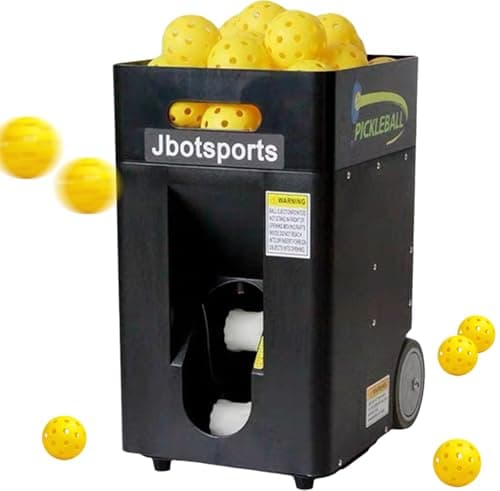 JP02 Portable Pickleball Machine A pickleball machine with adjustable speed, elevation and frequency, and multiple serve modes. | A committed player who has decided a machine is worth it | $589.99 · View on Amazon $698.99 save 16% |
| 2 | 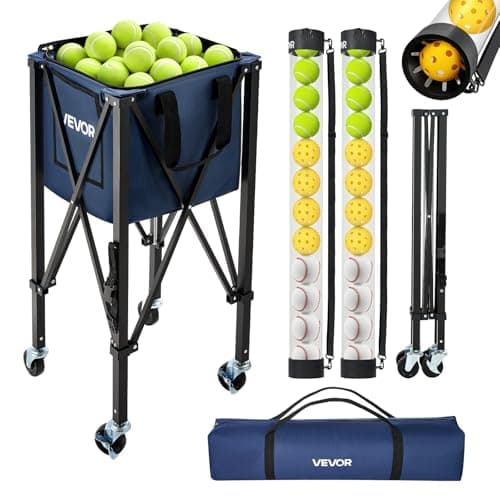 VEVOR 3-in-1 Pickleball Hopper with Pickup Tube A hopper listed for both tennis and pickleball, holding 150 tennis balls or 260 pickleballs, with a pickup tube and wheels. | Someone who plays both sports and wants one collection tool | $96.90 · View on Amazon $109.99 save 12% |
| 3 | 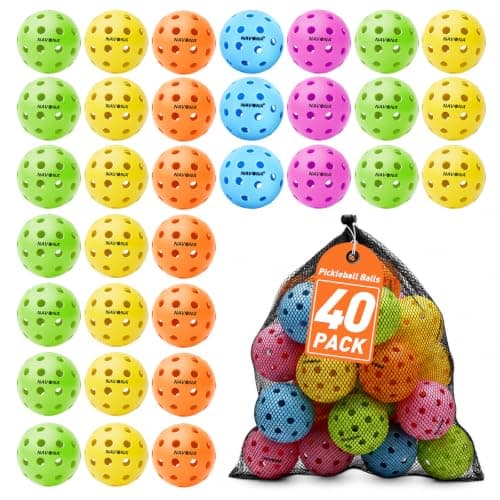 Navona 40 Pack Premium 40 Holes Multicolor Outdoor Pickleball Forty outdoor balls - enough to fill a hopper or to make a wall session properly useful. | Feeding a machine, or replacing it entirely | |
| 4 |  BAGAIL Portable Pickleball Net Set with Wheels A portable net listed in 22 ft regulation and 11 ft half-court sizes, with a ball collector and carry bag. | Machine or drill practice somewhere without a marked court | $71.99 · View on Amazon $79.99 save 10% |
JP02 Portable Pickleball Machine
Best for: A committed player who has decided a machine is worth it
If the tennis machine does not feed reliably and you still want machine practice, this is the category to buy from rather than fighting the wrong tool. The listing specifies adjustable speed, elevation and frequency plus multiple serve modes including swing and spin - which matters because the practice value of a machine is entirely about repeatability, and a feed path and wheel set designed around a 2.9-inch, sub-one-ounce ball is the only way to get it. Set it to drop balls into the kitchen and drill the third-shot drop, then switch to drives and practise resetting them.
Skip it if: Skip it if you play less than weekly - this is a lot of money for equipment that lives in a garage, and our page on whether machines are worth it says so plainly. Skip it too if you have nowhere you can occupy a court for an hour; a machine needs space and time as much as money.
VEVOR 3-in-1 Pickleball Hopper with Pickup Tube
Best for: Someone who plays both sports and wants one collection tool
This is the honest good-news half of the cross-over question. Where machines are ball-specific, collection gear often is not - and this listing specifies explicitly that it handles both, with capacity given as 150 tennis balls or 260 pickleballs, a built-in pickup tube, folding frame and wheels. If you are coming to pickleball from tennis, this is the piece of equipment that genuinely serves both, and it removes the real limiting factor in any drilling session, which is the collecting rather than the hitting. Buy this before you buy a machine.
Skip it if: Skip it if you only need to carry a dozen balls to a social game - a simple tube is far less to store and transport. Skip it too if you have no car; this is a cart-format item and it is bulky by design.
Navona 40 Pack Premium 40 Holes Multicolor Outdoor Pickleball
Best for: Feeding a machine, or replacing it entirely
A machine with a dozen balls in it is a machine you reload every two minutes, so bulk balls are not optional here. The listing specifies forty 40-hole outdoor balls meeting USAPA official requirements. The other reason this pick is on the page: for many people it is the alternative to the machine rather than an accessory to it. Forty balls plus a wall plus a target covers serves, drops, dinks and resets for a fraction of what a machine costs, and the serve drill alone is the single highest-value solo practice in the sport.
Skip it if: Skip it if your practice is indoors on wood - these are outdoor balls, and indoor balls have a different hole count and flight. Skip it too if you only play social games; a dozen is plenty for that.
Price as of October 25, 2026. #ad · how this works
BAGAIL Portable Pickleball Net Set with Wheels
Best for: Machine or drill practice somewhere without a marked court
A machine or a drilling session needs a net at the right height, and for a lot of people the real obstacle is not equipment but a court they can occupy. The listing specifies a 2-in-1 net offering the 22-foot regulation width and an 11-foot half-court configuration, with wheels, a ball collector and a carry bag. The half-court mode is the useful one for solo and machine work: you do not need a full court to groove a drop, you need regulation net height and somewhere to aim. Practising over the right height is what makes the shots transfer to a real game.
Skip it if: Skip it if you have court access already - put the money into balls and collection gear instead. Skip it too if you want a permanent tournament-grade net; the heavier wheeled nets in our roundup are built to stay put, and this one is built to be carried.
Frequently asked questions
Can you use a tennis ball machine for pickleball?
Sometimes, and unreliably. Some machines - particularly those with adjustable feed mechanisms or a manufacturer pickleball conversion - will do it. Many jam or throw inconsistently, because a pickleball is larger in diameter than a tennis ball (2.874 to 2.972 in against 2.57 to 2.70 in) and weighs well under half as much (0.78 to 0.935 oz against 1.975 to 2.095 oz). If you already own a machine, test it with a dozen balls before buying anything; if you are buying new, buy a pickleball machine.
Is a pickleball bigger or smaller than a tennis ball?
Bigger in diameter, and much lighter - which surprises most people. USA Pickleball's Equipment Standards Manual specifies a pickleball at 2.874 to 2.972 inches across and 0.78 to 0.935 ounces; the ITF's Rules of Tennis specify a Type 2 tennis ball at 2.57 to 2.70 inches and 1.975 to 2.095 ounces. Larger and lighter is the worst combination for a feed mechanism built around the other one.
Why does my tennis machine jam with pickleballs?
Because the feed path is sized for a narrower ball. A hopper and tube built for 2.6 inches may accept a 2.9-inch ball and then bridge, with two balls wedging against each other across a gap designed for something smaller. The symptom is a run of balls, a pause, then two at once - which is also why the speed feels erratic even when it is feeding.
Will using pickleballs damage my tennis ball machine?
The more common damage runs the other way - a machine tuned for a two-ounce rubber ball can crack brittle plastic pickleballs quickly, which gets expensive at volume. Mechanical damage to the machine is less likely but jams put load on the feed mechanism. The practical point is a contractual one: some manufacturers exclude non-tennis balls from warranty cover, so check yours before experimenting.
Can you play pickleball with a tennis ball?
No. USA Pickleball's rules require a perforated ball within a specific diameter and weight range with a bounce of 30 to 34 inches from a 78 inch drop, and a tennis ball fails on every count - it is smaller, more than twice as heavy, unperforated and far bouncier. It would also not resemble the sport: the entire soft game exists because a light perforated ball slows and drops, where a tennis ball carries and sits up.
What tennis equipment does work for pickleball?
More than you would think. Ball hoppers and pickup tubes are frequently sold for both sports and handle both balls. Towels, bottles and bags cross over entirely. Court shoes mostly do, with a caveat about matching the outsole to the surface - our shoes comparison covers that. Nets are a borderline case, since pickleball's is lower at 36 inches at the sidelines and 34 at the centre. Ball machines are the clearest no.
Do I even need a ball machine?
Probably not, and it is worth being honest about that before spending several hundred dollars. A wall and forty balls cover dinks, resets, volleys and reaction work, and serve practice with a target needs nothing but balls. A machine's unique contribution is consistent repetition at a chosen pace, which is genuinely valuable for a player drilling one shot several times a week - and wasted on someone who plays socially twice a month.
Keep exploring
Read this before spending the money.
How to practise pickleball aloneSix drills that need no machine.
Best nets and machinesThe purpose-built field.
Pickleball court vs tennis courtThe other cross-over question.
Pickleball shoes vs tennis shoesWhere the cross-over answer is yes.
Sources
- USA Pickleball — Equipment Standards Manual (ball diameter 2.874-2.972 in, weight 0.78-0.935 oz, bounce 30-34 in from a 78 in drop; paddle surface requirements)
- USA Pickleball — Official Rulebook (Section 2: court, net, ball and paddle specifications; no paddle weight or grip-size restriction)
- International Tennis Federation — Rules of Tennis (Appendix I ball specifications: Type 2 ball 2.57-2.70 in diameter, 1.975-2.095 oz)
- USA Pickleball — Approved equipment database (which paddles and balls are approved for sanctioned play)
Browse another way