Guide
How Much Do Pickleball Paddles Cost?
A price ladder in plain English: what changes as you move up, and the band that makes sense for the person you're buying for.
By Stephen V. · Updated August 2026 · How we pick
Why there is no single answer
Ask what a pickleball paddle costs and the honest response is another question: which kind? The category spans a genuinely enormous range, from a two-paddle bundle that costs less than a takeout meal up to single enthusiast paddles that cost more than a decent pair of running shoes. Both are real pickleball paddles. Both are sold in large numbers. Neither is a rip-off.
That range exists because paddles serve two completely different buyers. One is a household that wants four paddles and some balls so people can play in the garden on a Sunday. The other is a player who has been improving for two years and is now choosing equipment the way a golfer chooses clubs. A product built for the first buyer and one built for the second have almost nothing in common except the outline.
We deliberately do not print prices in our copy on this site, because paddle prices move constantly and a number typed into an article is out of date within weeks. Every paddle we recommend renders its current price live on the page. What this guide gives you instead is the thing a number cannot: what actually changes as you move up the ladder, so you can decide which band your recipient belongs in before you look at a single figure.
The bottom band: starter sets
The cheapest way into pickleball is a set: two or four paddles, a handful of balls, usually a carry bag, all in one box. Per paddle, these are dramatically cheaper than anything sold individually, and that is not a trick — it is because the paddles inside are built to a budget, almost always with fiberglass faces and simple construction.
What you get is a completely legitimate way to play. Many of these sets are USA Pickleball approved, which means the paddles are sanctioned for organized play rather than being toys. What you do not get is the gritty carbon surface that produces spin, or the refined feel that comes with more expensive construction. For someone who has never played, that absence is invisible.
This band is the right answer far more often than people expect. If you are buying for a household, a couple who want to try the sport, a family, or anyone who does not yet own a paddle, a set is both the cheapest and the most useful thing you can give — because a single paddle is useless without a second one.
The middle band: a real single paddle
Move up and you reach individual paddles bought for one person, and this is where the single most noticeable upgrade in the whole category happens: the switch from a slick fiberglass face to a textured carbon one. As we explain in our carbon versus fiberglass guide, that texture grips the ball for a fraction longer, which is where spin and control come from.
A player moving from a starter set to a genuine carbon paddle feels the difference on the first swing. That is worth stressing, because it means the biggest improvement per dollar spent happens at the bottom of this band rather than the top. Someone who has been playing for a few months and is clearly hooked will get more joy from this step than from any subsequent one.
This is also the band where paddles start advertising specifics: core thickness in millimeters, carbon grades like T700, foam-injected edges, USA Pickleball approval. Those details are real, but for a gift buyer the headline is simply that the face is carbon and the paddle is from a brand players recognize.
The top band: enthusiast paddles
Above the middle band sit paddles built for players who have specific opinions. Here the money buys specialized construction: thermoforming, where the whole paddle is molded as one sealed piece for a bigger sweet spot; raw unpainted carbon for maximum grip on the ball; foam injection for stability on off-center hits; and shapes tuned for reach or maneuverability.
The honest thing to say is that the improvement per dollar is smaller up here than lower down. A premium paddle is a better paddle, but it is a refinement rather than a transformation, and it is optimized for things a casual player is not doing. It is also, importantly, the band where personal preference matters most — which makes it the riskiest band to buy in as a surprise.
We cover the trade-off in detail on our are expensive paddles worth itguide. The short version: buy in this band when you know your recipient's preferences or when the gift is meant to be a splurge, not because more money is automatically a better present. For a recipient who has never played, a boxed set is the better use of the same money than a single paddle — our best beginner pickleball sets page covers that field.
Which band should you buy in?
Match the band to the player rather than to your budget, and you will get this right almost every time:
- They have never played: bottom band, a set. Two paddles beats one better paddle, because pickleball needs a second person.
- They play regularly on a paddle from a set: middle band, a single carbon paddle. This is the highest-impact gift on the whole ladder.
- They are seriously committed and have opinions: top band only if you know what they want. Otherwise buy them something adjacent — a bag, a bottle, eye protection — and let them choose the paddle.
One last piece of arithmetic worth knowing. Because sets divide the cost across multiple paddles, a four-paddle set and a single mid-range paddle can land in similar territory. If your recipient plays with their family, the set is often the better gift even when the individual paddles are less refined — four people playing beats one person playing well.
The gear this guide points to
Disclosure: Popaddle earns a commission on qualifying purchases made through the links on this page, at no extra cost to you. Prices are pulled live and can change. How this works.
| # | Product | Best for | Price |
|---|---|---|---|
| 1 | 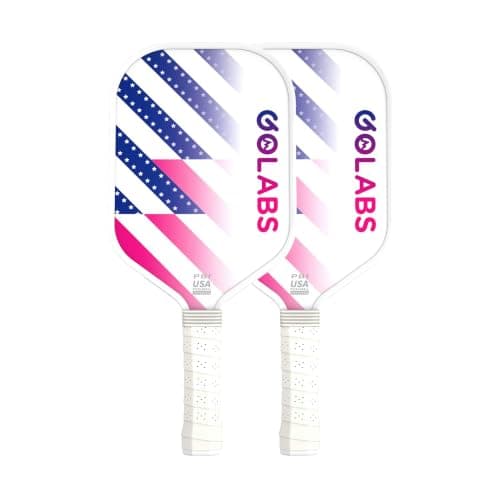 Golabs Pickleball Paddles Set of 2 Two USAPA-approved fiberglass paddles — the cheapest legitimate way in. | A first paddle for someone who owns none | |
| 2 | 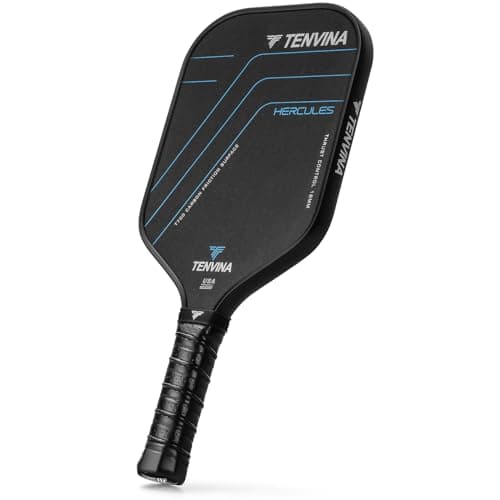 TENVINA Pickleball Paddles A multi-layer T700SC carbon face at the cheapest honest price for the material. | The first real carbon paddle | |
| 3 | 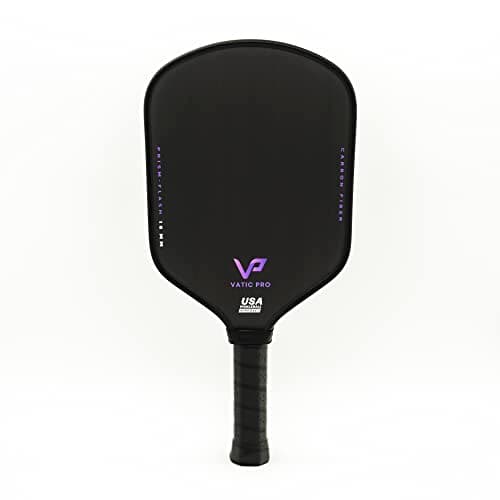 Vatic Pro Prism Flash Carbon Fiber 16mm A 16mm carbon paddle with foam-injected walls and a cover included. | A regular player who wants a paddle they chose deliberately | |
| 4 | 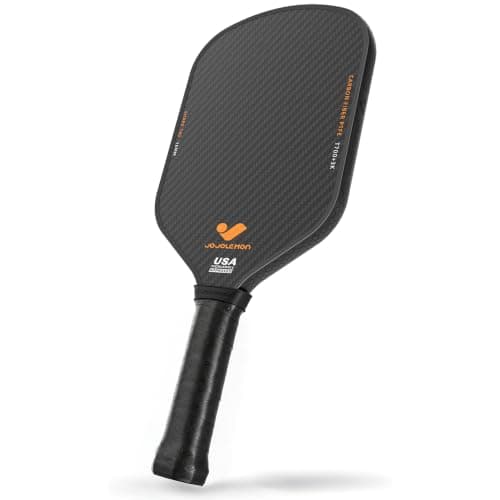 JOJOLEMON Pickleball Paddles Featuring a Raw Carbon Fiber Paddle A raw carbon face over a 16mm power polymer core — the enthusiast tier. | A dedicated player, when you know what they like | $79.99 · View on Amazon $109.99 save 27% |
Golabs Pickleball Paddles Set of 2
Best for: A first paddle for someone who owns none
This is what the bottom of the ladder buys: a pair of USA Pickleball approved fiberglass paddles with a 16mm core. Approved means these are sanctioned for organized play rather than toys, which is the line that separates a real budget set from a supermarket one. Per paddle it is the cheapest thing on this page by a wide margin, and for a household or a couple who have never played it is more useful than any single paddle at the same total price, because two people can actually start.
Skip it if: Skip it for a regular player who has already outgrown the paddle that came with their set.
Price as of October 25, 2026. #ad · how this works
TENVINA Pickleball Paddles
Best for: The first real carbon paddle
This is the point on the ladder where the biggest single improvement happens, and it is not at the top. A multi-layer T700SC matte-textured carbon face on a standard 16mm build delivers the gritty surface that produces spin and control, and it is USAPA approved for organized play. For a player who has been using a set paddle and is clearly keen, this is the band where their money goes furthest — and where a gift makes the most difference to how the game feels for them.
Vatic Pro Prism Flash Carbon Fiber 16mm
Best for: A regular player who wants a paddle they chose deliberately
Moving further up the middle band buys refinement rather than a different material. This Vatic Pro pairs a 16mm carbon face with foam-injected walls that make off-center hits more forgiving, and it comes with a paddle cover so it survives life in a bag. It has a strong following among players who research their own equipment, which is why it reads as an insider pick — a useful quality when you are buying gear for someone who knows more about it than you do.
Skip it if: Skip it for a complete beginner, who gets more immediate fun from the free power of a fiberglass paddle.
Price as of October 25, 2026. #ad · how this works
JOJOLEMON Pickleball Paddles Featuring a Raw Carbon Fiber Paddle
Best for: A dedicated player, when you know what they like
This is what the top of the ladder looks like: an unpainted raw carbon fiber face over a 16mm power polymer core, built for spin and shot-to-shot consistency. Raw carbon is a genuine enthusiast feature — the unpainted surface grips the ball harder than a coated one — and this is a paddle designed to reward good technique rather than compensate for a beginner's. Give it to someone whose conversation includes the words dink and drop, and it lands as a serious, considered gift.
Skip it if: Skip it as a surprise for a competitive player with strong preferences, and skip it entirely for a casual one.
Frequently asked questions
How much should I spend on a pickleball paddle as a gift?
Match the band to the player, not the budget. A beginner is best served by a cheap two-paddle set, because pickleball needs two people. A regular player on a set paddle gets the most from a mid-range carbon paddle. Only go to the top band if you know their specific preferences.
Why are some pickleball paddles so cheap?
Because they are sold in sets and built to a budget, usually with fiberglass faces and simple construction. That is not a scam — many are USA Pickleball approved and perfectly legitimate for organized play. They simply lack the textured carbon face and refined construction that more expensive paddles are sold on.
What's the difference between a cheap paddle and an expensive one?
Mostly the face material and the construction. Cheap paddles use fiberglass, which is slick and springy. Expensive ones use carbon, often thermoformed or foam-injected, which grips the ball for spin and control. The gap you notice most is the first step up to carbon, not the step from good to premium.
Are pickleball paddle sets good value?
Very, if the recipient needs more than one paddle — which almost every new player does. Because the cost spreads across two or four paddles, a set can land close to the price of one mid-range single. For a family or a couple, that is usually the better gift even though each individual paddle is less refined.
Do paddle prices change much?
Constantly, which is why we never type a figure into our copy. Paddle listings run frequent promotions and prices move week to week. Every paddle we recommend shows its current price live on the page, so what you see is what it costs today rather than what it cost when the page was written.
Is a more expensive paddle easier to play with?
Not necessarily, and sometimes the reverse. Premium paddles are tuned for players with developed technique — a raw carbon face rewards a good swing and does less to help a poor one. A beginner often has more fun with a cheap fiberglass paddle that adds free power. Expensive means specialized, not easier.
Keep exploring
Budgets across the whole category, not just paddles.
Are expensive paddles worth it?What the top band actually buys.
Best pickleball paddlesThe full roundup, with live prices.
Best pickleball paddle setsWhere the bottom band lives.
Best paddles under $100The ranked list for the most-asked price band.
Best paddles under $50The band below, and why most of it is sold in pairs.
Sources
Browse another way