Guide
How to Keep Score in Pickleball
Scoring is the one part of pickleball that genuinely confuses newcomers. It is three numbers in doubles and two in singles, and once you know what the third number is for, the rest falls into place.
By Stephen V. · Updated October 2026 · How we pick
The one rule that makes scoring make sense
Start here, because everything else is a consequence of it: only the serving team can score a point. USA Pickleball states it plainly in its own how-to-play material. If the serving team wins the rally, they get a point. If the receiving team wins the rally, they get nothing except the chance to serve later.
That single asymmetry is why pickleball needs a third number in the score and why tennis players find it disorienting. In tennis, whoever wins the point wins the point. In pickleball, winning a rally while receiving buys you position rather than score, and the game keeps track of how far through the serving team's turn you are. The third number is that bookkeeping.
The second consequence is that games take a shape newcomers do not expect. A team can win six rallies in a row while receiving and the scoreboard does not move. Nothing has gone wrong; that is the sport. If you are learning the rules from scratch, our pickleball rules for beginners page covers the serve, the two-bounce rule and the faults that end a rally, and what the kitchen is explains the one rule that causes more arguments than scoring does.
Doubles scoring: the three numbers
In doubles, the score is called as three numbers before every serve, and USA Pickleball gives the order explicitly: the serving team's score, then the receiving team's score, then the server number — 1 or 2.
So "5-3-2" means the serving team has five, the receiving team has three, and the serving team's second server is about to serve — which also tells you that a side-out is one lost rally away. That is the real purpose of the third number: it tells everyone on court how much of the serving team's turn is left.
The sequence inside a team's turn works like this. The server serves; if the serving team wins the rally, they get the point, the two partners switch sides (left and right), and the same person serves again, now to the other box. If the serving team loses the rally, no point is scored and the serve passes to the partner — server 2. When server 2 loses a rally, it is a side-out and the serve goes to the other team.
Two details trip people up. First, only the serving team switches sides, and only after winning a point — the receiving team stays put. Second, you keep serving as long as you keep winning rallies; there is no limit, which is why a confident server can run out a game.
Why the first serve of the game is 0-0-2
This is the single most asked question about pickleball scoring, and the answer is a fairness rule rather than a quirk. USA Pickleball describes it directly: at the start of the game, the first serving team gets only one server before the side-out, rather than the usual two.
The reason is obvious once stated. Serving is an advantage, so a team that got two servers in the opening turn would have a structural head start. Giving the first team a single server evens it up. The traditional call for that opening serve is "0-0-2" — zero, zero, second server — which is a way of announcing that this turn ends at the first lost rally.
You will also hear "0-0-start" in casual play, which means the same thing and is arguably clearer. Either is fine at a club. In a sanctioned match, follow the referee.
Singles scoring: two numbers, and the side you stand on
Singles is simpler, because there is no partner to track. USA Pickleball's material is explicit that in singles only two numbers are called — your score, then your opponent's — with no server number, since there is only ever one server.
The piece of information the third number used to carry is replaced by a positional rule: the server stands on the right when their score is even and on the left when it is odd. Zero counts as even, which is why every singles game starts with a serve from the right.
This is genuinely useful as an error check rather than just a rule to obey: if you are unsure whether you called the score correctly, look at which side you are standing on. In singles the two must agree, and if they do not, one of them is wrong.
How long a game lasts, and the win-by-two rule
USA Pickleball's how-to-play material states the standard: most games are played to 11 points and you must win by 2. That means a game at 10-10 keeps going — 11-10 is not a win — until somebody leads by two.
Tournaments vary this. Games to 15 or 21, also win by 2, are common in later rounds and in some formats, and that is a tournament-director decision rather than a different rule of the sport. If you are playing in a sanctioned event, the format is published in advance; if you are playing at a club, 11 win by 2 is the default to assume.
Worth knowing because it changes how the end of a game feels: because only the serving team can score, a deuce at 10-10 can last a long time. Side-outs pass back and forth without the scoreboard moving. This is normal and it is where most close games are actually decided.
Calling the score, and how to stop losing track
The rule that solves most scoring confusion is a courtesy one: call the score before every serve, loudly enough for all four players to hear. USA Pickleball lists it among the basics of on-court etiquette, alongside calling out balls clearly and only when you are certain. Announcing the score before the serve means a disagreement surfaces before a rally rather than after it, which is the difference between a two-second correction and an argument.
Three habits that genuinely help beyond that. First, in doubles, remember your server number as a fact about you, not about the game: if you served first in your team's turn, you are 1. Second, in singles, use the even-right / odd-left rule as a check every single time. Third, when all four players disagree, the convention is to replay from the last score everyone agrees on rather than arguing about what happened — and the rulebook is the place to settle anything that actually matters.
If you are teaching somebody, the best thing you can do is call the score out loud yourself for the first few games, including the server number. Most new players understand the three numbers within a session; what they lack is the habit of saying them. Our starter kit checklist covers what else a new player needs, and beginner sets is the gift version of the same question.
The gear this guide points to
Disclosure: Popaddle earns a commission on qualifying purchases made through the links on this page, at no extra cost to you. Prices are pulled live and can change. How this works.
| # | Product | Best for | Price |
|---|---|---|---|
| 1 | 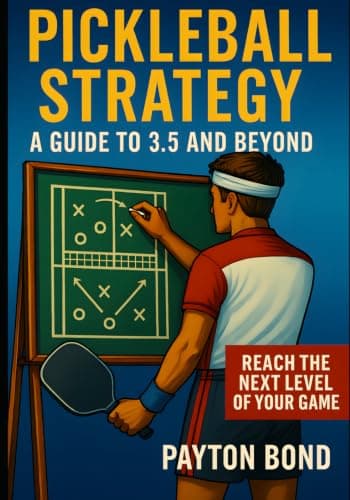 Pickleball Strategy A strategy book whose subtitle names the level it is written for: 3.5 and beyond. | A player who has scoring down and wants the strategy that follows | |
| 2 |  Selkirk Sport Pro S1 Ball A four-pack of USAPA-approved 38-hole outdoor balls, listed as crack-resistant. | Outdoor practice where rallies need to survive | |
| 3 | 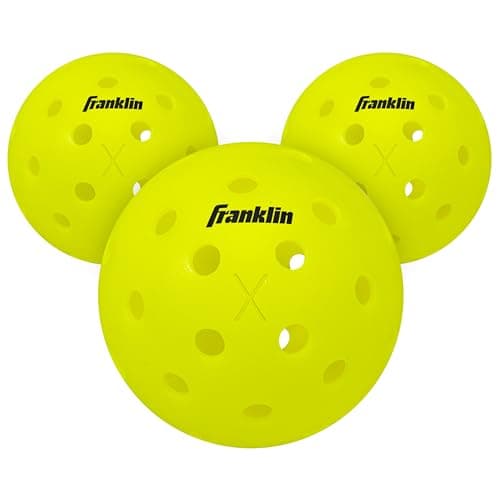 Franklin Sports Pickleball x Performance 40 Outdoor Balls Optic Franklin's outdoor Performance 40 balls, the cheapest honest pick here. | Somebody who just needs a ball today | $9.97 · View on Amazon $11.99 save 17% |
Pickleball Strategy
Best for: A player who has scoring down and wants the strategy that follows
Once the score stops being confusing, the next thing that limits a player is shot selection, and that is what this book is about. Its own subtitle — a guide to 3.5 and beyond — tells you who it is for, which is unusually honest for a sports book and useful for a gift buyer: it is the right present for somebody who has moved past the beginner stage and keeps losing close games. Nobody here has read it cover to cover and we are not going to pretend otherwise; what we can tell you is what it sets out to cover and which level it addresses.
Skip it if: Skip it for a brand-new player, who needs court time rather than tactics. Skip it too if the recipient is already playing competitively; the title positions this as the step up to 3.5, not the step beyond it.
Price as of October 25, 2026. #ad · how this works
Selkirk Sport Pro S1 Ball
Best for: Outdoor practice where rallies need to survive
Learning to keep score requires playing points, and playing points requires balls that survive. The Pro S1 listing specifies a crack-resistant 38-hole outdoor ball, USAPA-approved for tournament play, in a four-pack — which is the right quantity for a session where one ball will go over a fence. Buying a ball that is approved for sanctioned play also removes a variable while you are learning: the bounce and flight are the ones the rules were written around. Our outdoor balls page covers the full set if you want to compare.
Skip it if: Skip it if you play indoors on wood, where an outdoor ball is the wrong tool entirely - the indoor balls page is the right one. Skip it too if you just want volume for a group; the big multipacks on the balls page cost far less per ball.
Price as of October 25, 2026. #ad · how this works
Franklin Sports Pickleball x Performance 40 Outdoor Balls Optic
Best for: Somebody who just needs a ball today
This is the ball to buy when the point is simply to get on a court and start playing points. Franklin is one of the most widely used names in recreational pickleball, this is its outdoor ball in optic yellow, and it costs about as little as a real pickleball can. For learning to call a score, any approved-standard outdoor ball does the job, and spending less on balls and more on court time is the right trade for a new player.
Skip it if: Skip it if you are playing in cold weather, where cheaper outdoor balls crack soonest - our guide to how long pickleball balls last explains why. Skip it too if you need indoor balls; the hole pattern and weight are different.
Frequently asked questions
Why are there three numbers in pickleball scoring?
Because only the serving team can score, the game has to track how far through the serving team's turn you are. The first number is the serving team's score, the second is the receiving team's score, and the third is the server number, 1 or 2. So 5-3-2 means five to the servers, three to the receivers, and the second server is up - which also means a side-out is one lost rally away. Singles drops the third number, because there is only ever one server.
Why is the first serve of a pickleball game 0-0-2?
It is a fairness rule. Serving is an advantage, so the team that serves first in a game gets only one server rather than the usual two before the side-out. Calling 0-0-2 announces that: zero, zero, second server. Some players call it 0-0-start instead, which means the same thing and is arguably clearer in casual play.
Can the receiving team score a point in pickleball?
No. If the receiving team wins the rally, they do not get a point - they get closer to winning the serve. When the serving team's second server loses a rally, it is a side-out and the serve passes over. That is why the scoreboard can sit still through a long passage of play, and it is the single biggest difference from tennis scoring.
Do you have to win by 2 in pickleball?
Yes, under the standard format: games are played to 11 points and must be won by 2, so 11-10 is not a win and the game continues. Tournaments sometimes use games to 15 or 21, also win by 2, which is a format decision made by the event rather than a different rule. At a club, assume 11 win by 2 unless told otherwise.
Which side do you serve from in singles pickleball?
The right when your score is even, the left when it is odd - and zero counts as even, so every singles game starts from the right. It is worth using as a check rather than just a rule: if you are not sure you called the score correctly, look at which side you are standing on. In singles the score and the side have to agree.
Who serves first in pickleball, and how do you decide?
USA Pickleball's own guidance is that any fair method works to decide which side serves first - a coin toss, a paddle spin, a rally for serve. In doubles, the player on the right-hand side of the court serves first for the team that won the choice. After that the sequence follows the server numbers: server 1, then server 2, then a side-out.
What happens if everyone disagrees about the score mid-game?
Call the score before every serve and the problem mostly disappears before it starts - it is listed in USA Pickleball's etiquette basics for exactly this reason. When a disagreement does happen in recreational play, the usual convention is to go back to the last score all four players agree on and continue from there. In a sanctioned match, the referee's score is the score.
Keep exploring
The serve, the two-bounce rule and the faults.
What is the kitchen in pickleball?The non-volley zone, in plain English.
Pickleball ratings explainedWhat 3.0, 3.5 and 4.0 actually mean.
Pickleball court dimensionsEvery official figure, including the service boxes.
What is pickleball?The whole sport in one page.
Best beginner pickleball setsEverything a new player needs in one box.
Pickleball starter kit checklistWhat to buy, in order.
Best pickleball booksStrategy and tactics in print.
Sources
- USA Pickleball — How to Play Pickleball (serving, the two-bounce rule, the Non-Volley Zone "nicknamed the Kitchen, is the 14-foot area around the net (7 feet on each side)", scoring, and calling the score)
- USA Pickleball — Official Rulebook (court 20 x 44 ft; non-volley zone 7 ft from the net on each side; 2.E.3 paddle size 24 in combined length and width, 17 in maximum length; 2.E.4 no weight restriction)
- USA Pickleball — Official Rulebook, full text (searchable edition)
Browse another way