Guide
JOOLA Hyperion CAS 16: A Buyer's Review
Ben Johns' signature paddle, still on the shelf and no longer at flagship money. Here is every figure JOOLA publishes, what the elongated shape actually asks of you, and when to buy something newer.
By Stephen V. · Updated October 2026 · How we pick
What the Hyperion CAS 16 actually is
The Hyperion is JOOLA's elongated flagship shape, and the CAS 16 is the version of it that carried Ben Johns' signature — which for several years meant the paddle of the best player in the sport. That matters commercially more than it does technically: a signature paddle is a paddle a lot of people buy because of whose name is on it, and the Hyperion CAS sold in volume for exactly that reason. It is still a live, purchasable listing today, which is unusual for a paddle of its generation and is the main reason this page exists.
Three things define it. The shape is elongated: 41.9 cm long by 19.0 cm wide in JOOLA's own figures, which is a narrow, long head rather than the squarer standard shape. The core is 16 mm, which JOOLA's own paddle guide describes as the control-and-stability thickness — thicker cores dampen the ball and widen the usable area of the face, thinner cores give more pop. And the face is what JOOLA calls a Carbon Abrasion Surface, a sandblasted carbon finish whose entire purpose is to grip the ball for spin.
The fourth thing, and the one buyers underrate, is the handle: 14 cm, which is long. JOOLA markets it as a Sure-Grip elongated handle suited to two-handed shots, and that is not marketing language to skip over — a long handle is the single feature that decides whether a paddle suits a player with a two-handed backhand. Selkirk's own guide for tennis converts makes the same point, which is why this paddle keeps appearing on our paddles for tennis players page.
The honest limits of this review
Nobody on this site has played with this paddle. There is no testing program behind Popaddle, no lab, and no hitting notes — and a review that invented them would be worth less than one that says so. What follows instead is every number JOOLA publishes for the paddle, read against the rulebook and against the rest of JOOLA's current range, plus a judgment about who the published specification suits.
That is a genuinely useful thing for a buyer, because the specification decides most of what you want to know before you spend a hundred dollars: whether the handle is long enough for your backhand, whether the grip will fit your hand, whether the weight is in the range you are used to. It cannot tell you how the paddle feels, and we will not pretend otherwise. If you want feel, hit one — a local club almost certainly has a Hyperion in a bag somewhere, because a great many were sold.
You will not find a star rating, a score out of ten or a "we tested 24 paddles" claim anywhere on this page. Our how we pick page explains what we do and do not do, and it applies here without exception.
The published specification, number by number
These are JOOLA's own published figures. JOOLA publishes them in metric; the imperial equivalents in brackets are straight unit conversions of those figures, not separate claims.
Two of those numbers are worth a sentence each. The length and width add to 23.98 inches, which sits just inside USA Pickleball's limit of 24 inches combined with a 17-inch maximum length — this is a paddle built right up against the legal edge of the elongated shape, as every elongated flagship is. And the grip at 10.8 cm is 4.25 inches, which is the standard adult circumference. If the recipient has small hands and has complained about paddles feeling fat, 4.25 is not small; our grip size guide covers how to check before you buy.
The weight needs context rather than a sentence. At 235 g, or about 8.3 oz, this is a mid-weight paddle — not one of the light, fast paddles built for hand battles at the net, and not a head-heavy put-away-power paddle either. USA Pickleball sets no weight restriction at all, so the range on the market is wide; the useful comparison is to whatever your recipient already owns, because a swap of more than half an ounce is something a regular player notices immediately.
Who it suits, and who should buy something else
Buy it for a player with a two-handed backhand. That is the clearest recommendation on this page, and it follows directly from the 14 cm handle: a long handle is what makes room for the second hand, and a standard-shape paddle with a short handle does not. The player this describes most often is a tennis convert, since a two-handed backhand is the norm in tennis and the habit comes across intact.
Buy it, second, for a player who wants reach. An elongated head puts more paddle further from the hand, which is worth something on a stretched volley and at the back of the court — and costs something in return, because a narrower head means a narrower sweet spot. That is the honest trade of every elongated paddle, and it is the reason we do not recommend this shape to beginners. Our elongated vs standard guide sets out the geometry properly.
Do not buy it for someone new to the sport. A new player needs the widest, most forgiving face they can get, which means a standard shape — our paddles for beginnerspage is the right page for that recipient, and spending this money on a paddle whose geometry works against them is a poor gift however good the name on it is. Do not buy it, either, for a player who has told you they want more pop; a 16 mm core is the control option by JOOLA's own description, and the paddles for power page is where that recipient lives.
And if the recipient plays sanctioned tournaments, check the current approval status yourself in USA Pickleball's equipment database before buying. The listing states USAPA approval and JOOLA states USAP-A, but a spin-rate limit of 2,100 RPM took effect on October 1, 2026, and a paddle's status under the current certification regime is a thing to verify at the source rather than take from an article — including this one.
What it costs now, and what has replaced it
The interesting thing about the Hyperion CAS 16 in late 2026 is where it sits on price. It launched as a flagship and it is no longer priced like one; JOOLA's current lineup has moved on to its newer Vision-series paddles, and the listings tell that story plainly — the newer models advertise UPA-A certification and an embedded NFC chip, while the Hyperion CAS listing advertises neither. That is not a criticism of the paddle. It is the ordinary consequence of being a generation behind, and it is why a signature flagship is now available at roughly the money a mid-range paddle costs.
So the decision is a simple one. If you want this specific paddle — the elongated shape, the long handle, the name — it is still here and it is cheaper than it was. If what you actually want is JOOLA's current generation, the two Vision-series picks below are where to look, one standard-shape and one signature-shape. And if the budget is the binding constraint, JOOLA's own entry paddle gets you a carbon face and a 16 mm core for a fraction of this. Prices on all four are pulled live and stamped with the date, because paddle pricing at this end of the market moves constantly.
For the wider context, our best JOOLA paddles page covers the range model by model, and our paddle brands ranked page places JOOLA against the rest of the market.
The gear this guide points to
Disclosure: Popaddle earns a commission on qualifying purchases made through the links on this page, at no extra cost to you. Prices are pulled live and can change. How this works.
| # | Product | Best for | Price |
|---|---|---|---|
| 1 | 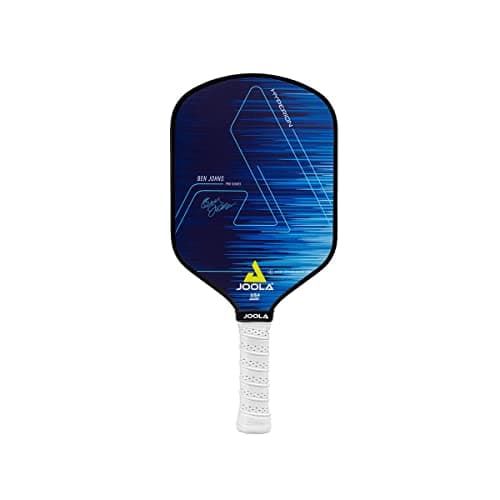 JOOLA Ben Johns Hyperion CAS 16 Ben Johns' signature elongated 16mm paddle, with a sandblasted carbon face and a 14 cm handle. | A two-handed backhand, and a player who wants reach | |
| 2 | 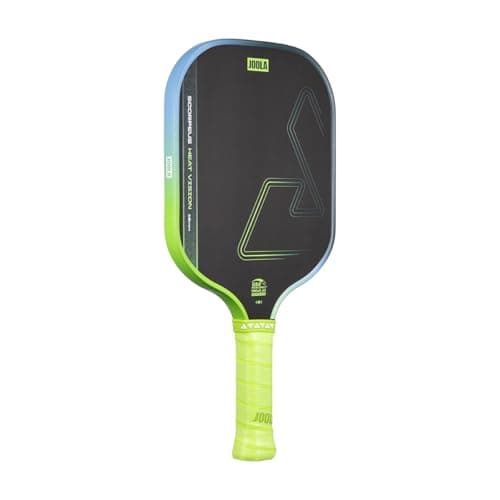 JOOLA SCORPEUS Heat Vision 16mm A standard-shape 16mm Vision-series paddle with a textured carbon face. | A player who wants JOOLA's newest, in a standard shape | |
| 3 | 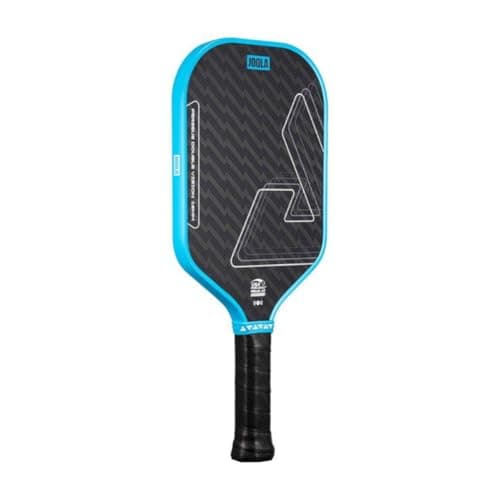 JOOLA Perseus Double Vision 16mm JOOLA's current signature-shape 16mm paddle, with an aramid face rather than carbon. | Someone who wants the current signature paddle, not the previous one | |
| 4 | 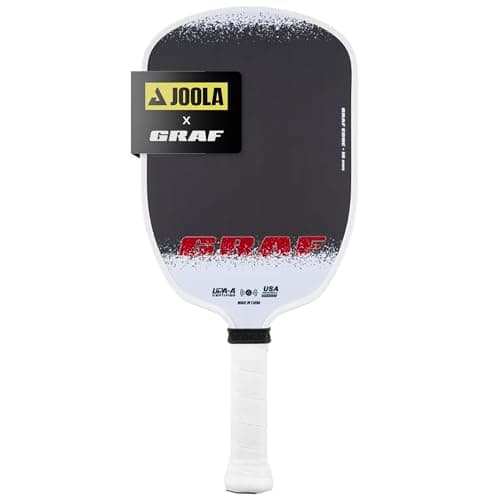 JOOLA GRAF Edge 16mm JOOLA's entry carbon-faced 16mm paddle, at a fraction of the flagship price. | A JOOLA paddle at half the money |
JOOLA Ben Johns Hyperion CAS 16
Best for: A two-handed backhand, and a player who wants reach
Everything above applies to this listing. The published specification is an elongated 41.9 by 19.0 cm head on a 16 mm Response Honeycomb core, with a Carbon Abrasion Surface face and a long 14 cm handle at a standard 4.25-inch grip. It is the right buy for a player with a two-handed backhand or a tennis background, and it is now priced well below where a signature flagship normally sits.
Skip it if: Skip it for a beginner, who needs the wider sweet spot of a standard shape, and for anyone asking for more pop - a 16 mm core is the control option. Skip it too if you specifically want the current generation; the listing does not advertise the UPA-A certification or NFC chip the newer Vision-series paddles do.
Price as of October 25, 2026. #ad · how this works
JOOLA SCORPEUS Heat Vision 16mm
Best for: A player who wants JOOLA's newest, in a standard shape
This is the paddle to buy instead if the elongated shape is the part you are unsure about. The listing specifies a standard shape, a textured carbon fiber surface for spin, a 16 mm core and JOOLA's SK Film for reduced vibration, plus the UPA-A certification and NFC chip that mark the current generation. A standard head is the more forgiving geometry, which makes this the safer gift when you do not know the recipient's backhand.
Skip it if: Skip it if the recipient plays with two hands on the backhand - a standard shape generally means a shorter handle, and that is the one thing the Hyperion does better for that player. Skip it too if the name on the paddle is the point of the gift.
Price as of October 25, 2026. #ad · how this works
JOOLA Perseus Double Vision 16mm
Best for: Someone who wants the current signature paddle, not the previous one
If the appeal of the Hyperion is that it is the signature paddle, this is the current answer to that want. The listing specifies JOOLA's signature paddle shape, a 16 mm core and an aramid surface described as giving a softer, more responsive touch - a different face material from the Hyperion's sandblasted carbon, aimed at feel rather than raw grip. It also carries the UPA-A certification and NFC chip.
Skip it if: Skip it if spin is the priority: an aramid face is sold on touch, and the sandblasted carbon of the Hyperion or the textured carbon of the Scorpeus is the more direct route to grip on the ball. Skip it too on price if the Hyperion's discount is the reason you are here.
Price as of October 25, 2026. #ad · how this works
JOOLA GRAF Edge 16mm
Best for: A JOOLA paddle at half the money
This is the honest budget answer, and it is a better paddle than its price suggests. The listing specifies a carbon fiber face and a 16 mm core - the same two headline specs as the paddle reviewed above - in JOOLA's accessible line, with UPA-A certification and an NFC chip. For a recipient who is not yet sure how seriously they will take the sport, this gets them a real brand's carbon paddle for roughly half the outlay.
Skip it if: Skip it if the recipient has a two-handed backhand, since the Hyperion's long handle is the specific thing they need. Skip it too if they already play several times a week and have outgrown an entry paddle; the money is better spent in the flagship tier.
Price as of October 25, 2026. #ad · how this works
Frequently asked questions
Is the JOOLA Hyperion CAS 16 still worth buying in 2026?
If the elongated shape and the long handle suit you, yes - mainly because it no longer costs flagship money. It is a generation behind JOOLA's current Vision-series paddles, and the listings show it: the newer models advertise UPA-A certification and an NFC chip while this one does not. What has not changed is the geometry, which is the part that decides whether a paddle suits a player. Buy it for the shape and the price, not because it is current.
What is Carbon Abrasion Surface?
It is JOOLA's name for a sandblasted carbon face. The purpose of any textured face is to grip the ball for a moment longer so the player can impart spin, and sandblasting is one way of producing that texture. JOOLA describes the process as multi-stage abrasion. Treat the mechanism as published fact and the performance as something we have not measured - we have not tested this paddle's spin, and neither has anyone else writing without a lab.
Is 16mm the right core thickness?
For most players, yes. JOOLA's own paddle guide describes a 16 mm core as the control and stability option: a thicker core dampens the ball and widens the usable area of the face, which is forgiving of off-center contact. Thinner cores - 14 mm and below - give more pop and reward a player who already finds the middle. Our paddle thickness guide covers the trade in detail, with the same paddle offered in both thicknesses as the example.
Does the Hyperion CAS 16 suit a tennis player?
It is one of the more natural choices for one, because of the 14 cm handle. A two-handed backhand is the norm in tennis and it comes across to pickleball intact, and a long handle is what makes room for the second hand. The elongated head also delivers more reach, which suits a player used to covering a much larger court. Our paddles for tennis players page is built around exactly this group.
How heavy is it?
JOOLA publishes a net weight of 235.3 g, which is about 8.3 oz - mid-weight. USA Pickleball sets no weight restriction, so the market spans a wide range, and the comparison that matters is to the paddle your recipient already uses: a change of more than half an ounce is something a regular player notices in the first ten minutes. Our paddle weight guide explains what lighter and heavier actually buy you.
Is it approved for tournament play?
The Amazon listing states USAPA Approved and JOOLA states USAP-A, but if the recipient plays sanctioned events you should confirm the current status yourself in USA Pickleball's equipment database. A spin-rate limit of 2,100 RPM took effect on October 1, 2026, and certification status is the kind of fact that changes - it belongs checked at the source, not taken from any article including this one.
What should I buy instead if this is too much money?
JOOLA's own entry paddle, the GRAF Edge 16mm, gets you a carbon face and a 16 mm core from the same brand for roughly half the outlay - it is one of the picks above and the top pick on our paddles under $50 page. If you would rather stay near this price but in the current generation, the Scorpeus Heat Vision 16 is the standard-shape option and the more forgiving gift when you do not know the recipient's backhand.
Keep exploring
Ben Johns' current signature paddle, number by number.
Vatic Pro Prism Flash reviewEvery published spec on the direct-to-consumer favorite.
Best JOOLA pickleball paddlesThe range, model by model.
Six Zero Double Black Diamond reviewThe other single-paddle review on this site.
Elongated vs standard paddlesWhat the long head really trades away.
Paddle thickness guide14mm or 16mm, with the same paddle in both.
Best paddles for tennis playersLong handles and two-handed backhands.
Pickleball paddle brands rankedWhere JOOLA sits against the market.
Best paddles under $50If this is more than you wanted to spend.
Pickleball grip size guideHow to check 4.25 inches is right for the hand.
Sources
- JOOLA — Hyperion CAS 16 product specification (height 41.9 cm, width 19.0 cm, depth 16 mm, handle length 14.0 cm, grip circumference 10.8 cm, net weight 235.3 g; Response Honeycomb core, Carbon Abrasion Surface, USAP-A)
- JOOLA — Official Paddle Guide (core thickness: 16mm for control and stability, thinner cores for pop)
- Selkirk Sport — A tennis player's guide to pickleball paddles (longer handle and elongated shape for players carrying a two-handed backhand across from tennis)
- USA Pickleball — Official Rulebook, Section 2 (court 20 x 44 ft, net 36 in at the sidelines and 34 in at the center, net at least 21 ft 9 in post to post; 2.E.3 paddle size 24 in combined, 17 in maximum length; 2.E.4 no weight restriction)
- USA Pickleball — Approved equipment database (current approval status, paddle by paddle)
- USA Pickleball — Update regarding the spin rate test and implementation timeline (2,100 RPM limit, effective 2026-10-01)
Browse another way