Guide
How Many Pickleballs Do I Need?
The answer is three if you are playing, twelve if you are serious, and forty if you are drilling alone. Here is the reasoning behind each number.
By Stephen V. · Updated October 2026 · How we pick
The short answer, by what you are doing
The pattern underneath all of these is simple: the more the session is about repetition rather than playing points, the more balls you need, because the bottleneck stops being skill and starts being logistics.
Why the count depends on indoor or outdoor
Indoor and outdoor pickleballs are genuinely different products, and the difference changes how many you get through. USA Pickleball's Equipment Standards Manual sets the specification both must meet - a diameter of 2.874 to 2.972 inches, a weight of 0.78 to 0.935 ounces, and a bounce of 30 to 34 inches when dropped from 78 inches - but within that, outdoor balls are made of harder plastic with smaller, more numerous holes to resist wind, and indoor balls are softer with fewer, larger holes.
Those constructions fail differently. An outdoor ball, being hard and brittle, cracks - usually suddenly, often in cold weather, and visibly. An indoor ball, being softer, goes out of round and loses its bounce gradually, which means you can be playing with a dead ball for weeks without noticing. If your play is outdoors, expect to replace balls because they broke; indoors, expect to replace them because they got tired. Our guide to how long pickleballs last covers the lifespan question in detail, and indoor versus outdoor pickleballs covers which to buy for which surface.
The practical consequence for a count: if you play on both surfaces, you need two stocks, not one bigger one. A dozen of each is the honest baseline for someone who plays in a gym in winter and outdoors in summer, and mixing them in one tube is how people end up warming up with the wrong ball.
What a ball actually costs you per session
Worth doing this arithmetic once, because it reframes the question. Pickleballs are sold in packs of three, four, six, twelve, twenty-six and forty, and the per-ball price falls substantially as the pack gets bigger. A twelve-pack is usually the point where the discount stops being meaningful and the forty-pack is where it matters again.
Against that, a ball that lasts a handful of sessions of social play is costing you a trivial amount per hour - far less than the court fee, the shoes, or any other line in the sport. This is the cheapest consumable in pickleball and also the one people are oddly reluctant to replace, which is backwards: a cracked or soft ball makes every shot behave unpredictably, which is precisely the condition under which nobody can tell whether their technique is improving.
The honest rule is to buy more than you need and retire balls earlier than feels necessary. If you are squeezing the last week out of a ball that has gone soft, you are saving a few cents and spoiling several hours of play. Prices on every pack size below are pulled live, so you can compare per-ball cost directly at whatever the market is doing today.
And how many paddles should you have?
The companion question, asked almost as often. The answer is shorter.
One each, if you are playing socially. Paddles are personal - grip size, weight and shape preferences diverge quickly - so sharing a paddle is a worse experience than sharing almost any other piece of sports equipment. One good paddle beats two mediocre ones every time.
Plus a spare pair, if you host. Every household that plays eventually has guests turn up without paddles. Two cheap spares in a cupboard is a genuinely useful thing to own, and this is the one situation where a budget set of two is exactly the right purchase rather than a compromise - our sets of 2 page covers that case specifically.
Two identical ones, if you compete.A cracked face or a lifting edge guard between rounds ends a tournament if there is no backup, and a backup that feels different to your main paddle is only half a backup. USA Pickleball's approved equipment database is the place to confirm that both are currently approved for sanctioned play.
What you do not need is a collection. Paddles do wear out - our guide to how long paddles last covers the four tests for telling - but they wear out from being played, and rotating between five paddles mostly means never getting fully used to any of them.
The gear this guide points to
Disclosure: Popaddle earns a commission on qualifying purchases made through the links on this page, at no extra cost to you. Prices are pulled live and can change. How this works.
| # | Product | Best for | Price |
|---|---|---|---|
| 1 | 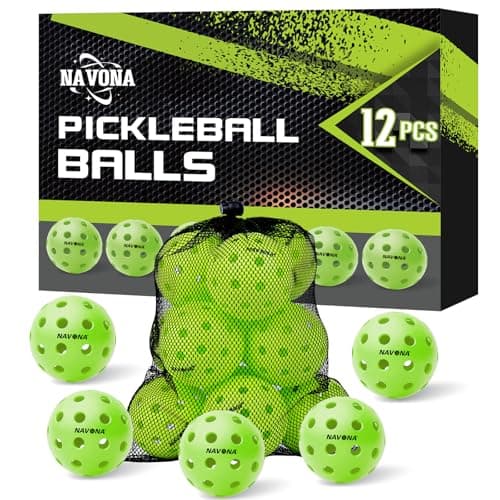 Navona 12 Pack Premium 40 Holes Green Outdoor Pickleball Twelve outdoor balls, listed as meeting USAPA official requirements - the right standing stock for a bag. | Anyone who plays socially or in a league outdoors | |
| 2 | 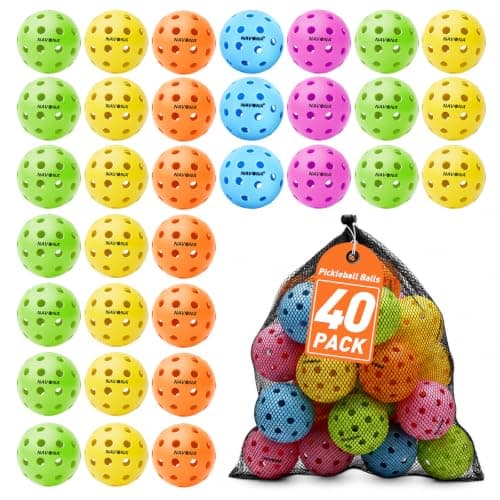 Navona 40 Pack Premium 40 Holes Multicolor Outdoor Pickleball Forty outdoor balls in one box - the pack size that makes repetition practice practical. | Solo practice, partner drills and anyone feeding a machine | |
| 3 |  Franklin Sports X 26 Pickleballs A twelve-pack of USAPA-approved indoor balls from a brand that supplies the sport at every level. | A gym player who needs the indoor equivalent of a standing dozen | $21.99 · View on Amazon $34.99 save 37% |
| 4 | 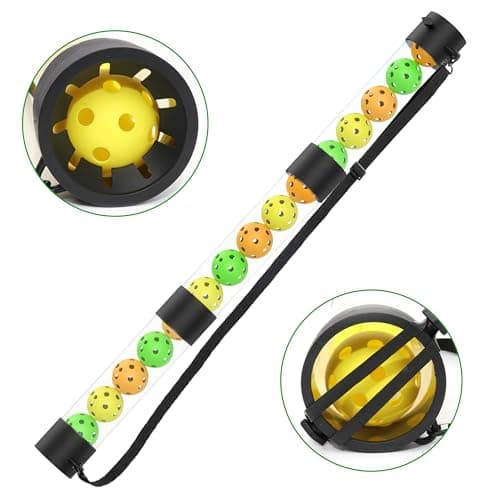 Asyxstar Pickleball Pickup Tube A pickup tube and ball hopper with a strap - collect by pressing down rather than stooping. | Anyone who has just bought forty balls and does not want to bend over forty times |
Navona 12 Pack Premium 40 Holes Green Outdoor Pickleball
Best for: Anyone who plays socially or in a league outdoors
A dozen is the number for most people, and this is the straightforward way to get there. The listing specifies twelve 40-hole outdoor balls meeting USAPA official requirements, which is the correct ball type for the concrete and acrylic that most recreational outdoor play happens on. Twelve fits a standard ball tube, survives a season of social play with balls lost over fences and the occasional crack, and means you arrive at open play as the person who brought balls - which is the most reliable way to get into games. Buy this if you only buy one thing from this page.
Skip it if: Skip it if you play indoors on wood; indoor balls have fewer, larger holes and a different flight, and the indoor pick below is what you want. Skip it too if you are drilling alone - twelve is not enough for that, and the forty-pack is cheaper per ball.
Price as of October 25, 2026. #ad · how this works
Navona 40 Pack Premium 40 Holes Multicolor Outdoor Pickleball
Best for: Solo practice, partner drills and anyone feeding a machine
This is the pick for the use case where the count genuinely changes the activity rather than just the convenience. Practising serves or third-shot drops is volume work, and the difference between a dozen balls and forty is the difference between a drill punctuated by walking and a drill. The listing specifies forty 40-hole outdoor balls meeting USAPA official requirements. It is also the best per-ball price on this page by a clear margin, which makes it the sensible buy even for a household that is simply tired of running low. Pair it with a hopper or tube so collecting them is not the new bottleneck.
Skip it if: Skip it if you never drill and only play social games - a dozen is plenty and takes less storage. Skip it too if your play is indoors; these are outdoor balls.
Price as of October 25, 2026. #ad · how this works
Franklin Sports X 26 Pickleballs
Best for: A gym player who needs the indoor equivalent of a standing dozen
If your pickleball happens on gym wood or cushioned sport court, this is your version of the default pick. The listing specifies the X-26 indoor ball, twelve to a pack, USAPA approved - the 26-hole indoor construction, which is softer with fewer and larger holes than an outdoor ball, and the reason an indoor ball behaves sanely under a gym roof while an outdoor ball feels harsh and skittish. Franklin is one of the names that supplies pickleball at every level from park bins to sanctioned play, and a dozen is the same standing stock argument as above.
Skip it if: Skip it if any meaningful amount of your play is outdoors - an indoor ball is the wrong tool on concrete and in wind. Skip it too if you need bulk for drilling; twelve is a playing stock, not a practice stock.
Asyxstar Pickleball Pickup Tube
Best for: Anyone who has just bought forty balls and does not want to bend over forty times
The companion purchase to any large pack, and the reason this page recommends buying balls in bulk at all. A pickup tube collects balls by being pressed down over them, so a forty-ball practice session ends with a walk rather than forty squats - which is the actual reason solo sessions get cut short. It doubles as storage and as the thing you feed from, since balls at waist height in a tube are far faster to work through than balls on the floor. The listing specifies a retriever and hopper storage format with a strap for carrying.
Skip it if: Skip it if you only own a dozen balls and play social games - there is nothing to collect at that scale. Skip it too if you want something that holds a hundred balls and rolls; our caddies roundup has the wheeled hoppers for coaching volumes.
Price as of October 25, 2026. #ad · how this works
Frequently asked questions
How many pickleballs do I need to play a game?
Three is the practical minimum - one in play and two spares. The thing that interrupts games is not running out of balls over a season, it is losing the only ball over a fence or cracking it on a hard shot and having nothing to continue with. If you play regularly, a dozen is the number to own: it is the standard pack size, it fits a ball tube, and it means you are the person at open play who brought balls.
How many pickleballs do I need to practise alone?
Forty or more, and this is the use case where the count genuinely changes what is possible. Serve and drop practice is repetition work: with four balls you hit four and then walk, and with forty you hit forty and walk once. A pickup tube or hopper is the companion purchase, because at forty balls the collecting rather than the hitting becomes the limit on session length.
Are indoor and outdoor pickleballs really different?
Yes, meaningfully. Both must meet USA Pickleball's specification - 2.874 to 2.972 inches in diameter, 0.78 to 0.935 ounces, and a 30 to 34 inch bounce from a 78 inch drop - but outdoor balls use harder plastic with smaller, more numerous holes to cut through wind, and indoor balls are softer with fewer, larger holes. They also fail differently: outdoor balls crack suddenly, indoor balls go soft and out of round gradually.
How long does a pickleball last?
There is no honest number of hours, because it depends on the surface, the temperature and how hard the group hits. What is reliable is how to tell: an outdoor ball is done when it cracks or when it sounds dull and dead, and an indoor ball is done when it is visibly out of round or has lost bounce. Both are consumables rather than equipment - replacing them earlier than feels necessary is the right call, because an unpredictable ball makes every shot unreadable.
How many pickleball paddles should I have?
One each for social play - paddles are personal, and one good paddle beats two mediocre ones. Add a cheap spare pair if you host, because guests turn up without paddles and that is the one situation where a budget two-paddle set is exactly right. If you compete, own two identical paddles: a cracked face between rounds ends a tournament, and a backup that feels different is only half a backup.
Is it cheaper to buy pickleballs in bulk?
Substantially, and the saving is biggest at the largest pack sizes. A forty-pack is usually well under half the per-ball price of a three-pack. Whether that is the right buy depends on use: if you drill, bulk is obviously correct; if you play social doubles twice a month, a dozen is plenty and takes less storage. Every pack size on this page shows a live price so you can compare per-ball cost directly.
Can I use the same balls indoors and outdoors?
You can, and you will notice. An outdoor ball indoors feels hard and skittish and is unpleasantly loud; an indoor ball outdoors is pushed around by any wind and wears quickly on abrasive surfaces. If you play on both, the honest answer is two separate stocks of a dozen each, kept in separate tubes - mixing them in one container is how people end up warming up with the wrong ball and wondering why everything feels off.
Keep exploring
Sources
- USA Pickleball — Equipment Standards Manual (ball diameter 2.874-2.972 in, weight 0.78-0.935 oz, bounce 30-34 in from a 78 in drop; paddle surface requirements)
- USA Pickleball — Official Rulebook (Section 2: court, net, ball and paddle specifications; no paddle weight or grip-size restriction)
- USA Pickleball — Approved equipment database (which paddles and balls are approved for sanctioned play)
Browse another way