Guide
How to Practice Pickleball Alone
Most of what decides a pickleball point is a repeatable solo skill. Here is what you can drill by yourself with a wall and a bucket of balls, and what you cannot.
By Stephen V. · Updated October 2026 · How we pick
Can you actually practise pickleball by yourself?
Yes, and more of it than most players assume. Pickleball looks like a social game because it is almost always played as doubles, but the shots that decide points are repeatable mechanical actions - and repeatable mechanical actions are exactly what solo practice is for. USA Pickleball's own introduction to the game breaks the sport down into the serve, the return, the two-bounce rule and the non-volley zone; three of those four involve a shot you can hit a thousand times without anyone on the other side of the net.
The honest split is this. Technique, consistency and footwork are solo problems. Decision-making, anticipation and the fast hand battles at the net are partner problems. Players who practise alone and then wonder why they are not winning more usually have the technique and are missing the second half - but players who never practise alone are trying to build technique inside live games, which is the slowest possible way to do it.
One thing worth saying before the drills: warm up. Harvard Health Publishing is explicit that pickleball's "sudden starts and stops and side-to-side moves increase stress on joints, muscles, and ligaments" - and solo practice is in some ways worse for this than a game, because you will do two hundred repetitions of the same motion with no natural breaks between points.
The wall is the best practice partner in the sport
If you take one thing from this page: find a wall. A garage door, a gym wall, a handball or racquetball wall, the back of a building with nothing breakable near it. A wall returns every ball, never gets tired, never gets bored, and gives you something a human partner cannot - a completely consistent return, so the only variable left in the drill is you.
Mark a line on the wall at net height if you can do so without damaging anything - tape works. The net in pickleball is 36 inches at the sidelines and 34 inches at the centre, so a strip of tape at roughly that height turns a blank wall into a target that teaches you the one thing wall practice otherwise does not: height discipline. A dink that would have been a foot above the net is immediately visible as a ball that hits the wall too high.
The drills a wall gives you, in rough order of value: controlled dinks from close range, resets from mid-court, volleys at speed, and reaction work where you stand closer than is comfortable and simply try to keep the ball alive. Twenty minutes of wall dinks, done with attention, is worth more than two hours of social doubles for a player trying to fix a soft game.
The limitation is real and worth naming: a wall returns the ball flat and fast with no spin and no arc, which is nothing like a dink coming over a net. So wall work builds your hands and your consistency, and it does not teach you to read a ball that is dropping. That is what a machine or a partner is for.
Six drills you can do with nobody there
A sensible solo hour: ten minutes of shadow footwork and warm-up, twenty minutes of serves, twenty minutes of drops, ten minutes of wall dinks. That order is deliberate - the serves while you are fresh and your mechanics are clean, the wall work at the end when fatigue makes keeping the ball low genuinely hard, which is when the practice is most like a real third game.
What you actually need to buy, and in what order
Balls, far more than you think. This is the one purchase that is not optional. Solo practice is volume practice, and the whole exercise collapses if you spend half your session picking up four balls. The honest minimum for serve practice is a couple of dozen; forty is better. Balls are also the cheapest thing in the sport per unit of improvement, and our guide to how many pickleballs you need works through the arithmetic by use case.
Something to collect them with. The second purchase, and it is a bigger upgrade than it sounds. Bending down forty times to collect balls is where solo sessions end early - not because you ran out of energy for hitting, but because you ran out of patience for stooping. A tube or a hopper removes that completely, and a hopper doubles as the thing you feed from. Our caddies and hoppers roundup covers the whole field.
A net, if you have no court.If your practice happens on a driveway, a quiet cul-de-sac or a gym with no lines, a portable net is what turns the space into somewhere you can drill a drop or a serve with real height feedback. USA Pickleball's specification is 36 inches at the sidelines and 34 at the centre, and a regulation-height portable net means the shots you groove are the shots you will hit in a game.
A machine, last and only if you are serious. A ball machine is several hundred dollars and it is the only thing that gives you consistent repetition at a chosen pace. It is genuinely transformative for a player grinding on one shot - and genuinely wasted on someone who plays twice a month. Our guide to whether a machine is worth it is the page to read before spending that money, and it is deliberately not a sales pitch.
What you cannot practise alone
Being honest about the ceiling matters, because a player who drills alone for a season and then loses to someone who never practises will conclude that practice does not work. Three things genuinely require another human.
Reading an opponent. Anticipation is pattern recognition built from watching real people set up real shots - shoulder angle, paddle preparation, where their feet are. A wall has no tells and a machine has the same one every time.
Hand battles. The fast exchanges at the net, where four players are volleying at close range and the point is decided in under a second, cannot be simulated. Wall reaction work gets your hands quick; it does not teach you which ball to attack.
Partner communication. Who takes the middle, when to switch, when to poach - doubles strategy is a two-person skill, and it is where most recreational points are actually lost. Our beginner rules guide and scoring guide cover the framework, but the coordination is learned on court with someone.
The right model is that solo practice builds the shots and partner play builds the game. Do both, and expect the solo work to show up in your results a few weeks later rather than immediately.
The gear this guide points to
Disclosure: Popaddle earns a commission on qualifying purchases made through the links on this page, at no extra cost to you. Prices are pulled live and can change. How this works.
| # | Product | Best for | Price |
|---|---|---|---|
| 1 | 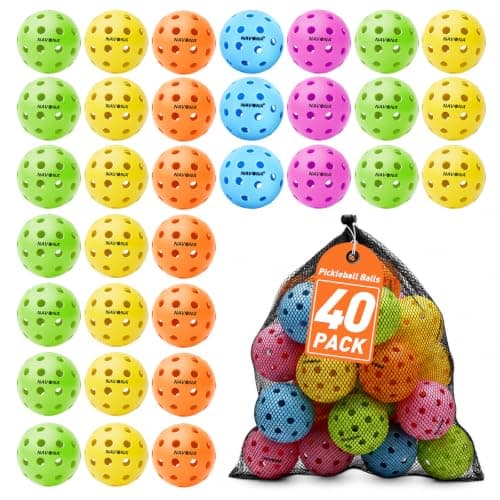 Navona 40 Pack Premium 40 Holes Multicolor Outdoor Pickleball Forty outdoor balls in one box - the purchase that makes solo practice actually work. | Anyone who has decided to practise seriously by themselves | |
| 2 | 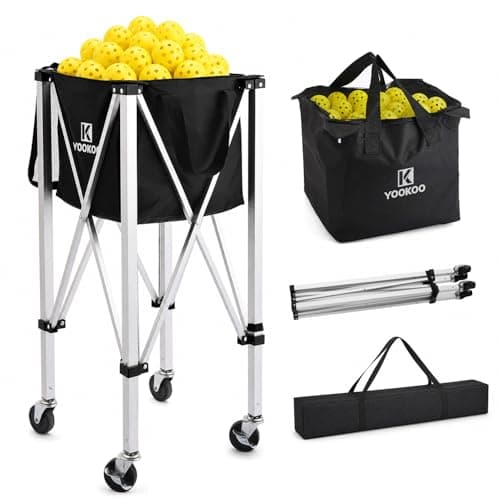 YooKoo Pickleball Hopper for 100 Balls A hopper listed to hold 100 balls, with a bag - feed from it, then sweep them back into it. | A player whose sessions end because of picking balls up, not fatigue | |
| 3 |  BAGAIL Portable Pickleball Net Set with Wheels A portable net listed in both 22 ft regulation and 11 ft half-court sizes, with a ball collector and carry bag. | Practising serves and drops on a driveway or in a gym with no lines | $71.99 · View on Amazon $79.99 save 10% |
| 4 | 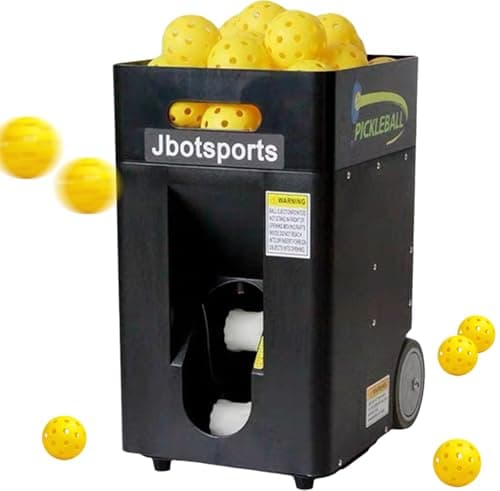 JP02 Portable Pickleball Machine A ball machine with adjustable speed, elevation and frequency, and multiple serve modes. | A committed player grinding on one specific shot | $589.99 · View on Amazon $698.99 save 16% |
Navona 40 Pack Premium 40 Holes Multicolor Outdoor Pickleball
Best for: Anyone who has decided to practise seriously by themselves
This is the first thing to buy and the cheapest, and it changes solo practice more than any other single item. With four balls you serve four times and then walk; with forty you serve forty times and then walk once, which is the difference between a drill and an errand. The listing specifies forty 40-hole outdoor balls meeting USAPA official requirements, which is the right ball type for the concrete and acrylic most outdoor practice happens on. Buy these before you consider a machine - the machine is useless without them anyway.
Skip it if: Skip it if you practise indoors on wood; indoor balls have a different hole count and flight, and our balls roundup covers those. Skip it too if you only ever practise against a wall with one ball.
Price as of October 25, 2026. #ad · how this works
YooKoo Pickleball Hopper for 100 Balls
Best for: A player whose sessions end because of picking balls up, not fatigue
The second purchase, and the one people are most surprised by. A hopper does two jobs at once: it is what you feed from while drilling serves and drops, so the balls are at waist height rather than on the floor, and it is what you collect with afterwards by pressing it down over each ball rather than bending. The listing specifies 100-ball capacity and includes a bag. If you have ever cut a practice session short because you could not face gathering balls one more time, this is the item that fixes that, and it costs a fraction of a machine.
Skip it if: Skip it if you practise only against a wall with a single ball - there is nothing to collect. Skip it too if you want wheels and a cart format; the roundup has those, and they travel differently.
Price as of October 25, 2026. #ad · how this works
BAGAIL Portable Pickleball Net Set with Wheels
Best for: Practising serves and drops on a driveway or in a gym with no lines
This is the pick for the large group of people whose obstacle is not motivation but access - no court within a reasonable drive, or a court that is always busy. The listing specifies a 2-in-1 net offering both the 22-foot regulation width and an 11-foot half-court setup, with wheels, a ball collector and a carry bag. The half-court mode is the quietly useful part for solo work: you do not need a full court to drill a drop or a dink, you need a net at the right height and somewhere to aim. Practising over a regulation-height net means the shots you groove transfer.
Skip it if: Skip it if you already have court access - put the money into balls and a hopper instead. Skip it too if you need a permanent tournament-grade net; the heavier wheeled nets in our roundup are built for that and this is built to be carried.
JP02 Portable Pickleball Machine
Best for: A committed player grinding on one specific shot
The only thing on this page that gives you true repetition - the same ball, at the same pace, as many times as you want, which neither a wall nor a human partner can do. The listing specifies adjustable speed, elevation and frequency plus multiple serve modes including swing and spin, which is what lets you set it to drop balls into your kitchen for drop practice and then switch to drives for reset practice. It is several hundred dollars and it should be the last thing you buy, after you have established that you will actually use it. For a player working seriously on the third-shot drop, nothing else comes close.
Skip it if: Skip it if you play less than weekly - it is a lot of money to spend on a machine that lives in a garage, and our guide on whether machines are worth it says so plainly. Skip it too if you have nowhere to set it up; a machine needs a court you can occupy for an hour.
Frequently asked questions
Can you practise pickleball by yourself?
Yes - most of the technical side of the sport is solo-drillable. Serves, third-shot drops, dinks, resets and footwork can all be practised with nobody there, and the serve in particular is the highest-value solo drill because it is the only shot in the game nobody can rush you on. What you cannot practise alone is reading an opponent, net hand battles and doubles communication, which need another person.
How do I practise pickleball at home?
A wall and one ball covers more than you would expect: dinks close in, resets from further back, and reaction volleys standing uncomfortably close. Tape a line at net height - 36 inches at the sidelines per USA Pickleball's specification - so you get height feedback rather than just contact. Add shadow footwork, which needs no equipment at all. If you have a driveway, a portable net turns it into somewhere you can drill serves and drops properly.
What is the best solo pickleball drill?
Serve practice, by a wide margin. The serve is the only shot in pickleball that is entirely under your control - nobody is hitting it at you, there is no time pressure, and it starts every single point you serve. Put a target in each service box and serve until you can hit deep to both sides on demand. The second best is the hand-fed third-shot drop, because it is the shot that decides recreational points and almost nobody drills it.
How many balls do I need to practise alone?
Far more than for playing. For serve or drop drills, a couple of dozen is the working minimum and forty is comfortable - the point of solo practice is repetition, and repetition dies if you spend half the session collecting. For wall work, one ball is genuinely enough. A hopper or a pickup tube is the companion purchase that makes a large number of balls practical rather than annoying.
Is a pickleball machine worth it for solo practice?
It is the only way to get true repetition at a chosen pace, and it is several hundred dollars. The honest test is frequency: a player drilling two or three times a week on a specific shot will get real value, and someone who plays socially twice a month will not. Buy balls and a hopper first - they cost a fraction as much and remove the actual bottleneck in most people's solo sessions.
Can I practise dinking by myself?
Yes, against a wall, and it is one of the best uses of a wall there is. Stand close, tape a line at net height, and keep soft controlled contacts below it. The caveat is honest: a wall returns the ball flat and fast with no arc, which is nothing like a dink dropping over a net. So wall dinking builds paddle-face control and consistency, and you still need a partner or a machine to practise reading a descending ball.
How long should a solo practice session be?
Forty-five minutes to an hour of focused work beats two unfocused hours, and solo practice fatigues differently from playing - you will do hundreds of repetitions of one motion with no natural breaks. Harvard Health Publishing's pickleball guidance is worth taking seriously here: warm up first, and stop when your form degrades rather than when you run out of balls. A good structure is footwork and warm-up, then serves while fresh, then drops, then wall work.
Keep exploring
Read this before spending several hundred dollars.
Best pickleball caddies and hoppersThe purchase that keeps sessions going.
Best nets and machinesThe full field, including portable nets.
Best pickleball ballsIndoor, outdoor, and how many.
How many pickleballs do I need?The arithmetic, by use case.
Sources
- USA Pickleball — How to Play Pickleball (the court, the two-bounce rule, the non-volley zone "nicknamed the Kitchen", and serving)
- USA Pickleball — Official Rulebook (Section 2: court, net, ball and paddle specifications; no paddle weight or grip-size restriction)
- USA Pickleball — Equipment Standards Manual (ball diameter 2.874-2.972 in, weight 0.78-0.935 oz, bounce 30-34 in from a 78 in drop; paddle surface requirements)
- Harvard Health Publishing — Practical pointers for pickleballers (warming up; "sudden starts and stops and side-to-side moves increase stress on joints, muscles, and ligaments")
Browse another way