Guide
Pickleball Ratings Explained
Skill levels and ratings are two different things, and almost every argument about them comes from mixing them up. Here is USA Pickleball's own version of both.
By Stephen V. · Updated October 2026 · How we pick
Skill level and rating are two different things
This is the distinction that resolves most confusion, and USA Pickleball states it on its own skill-levels page: the level descriptions it publishes are a guide to what play looks like at each stage, and "These definitions aren't official ratings."
USA Pickleball describes the skill levels as being like a handicap in golf: a way to know where you stand and how to improve. A rating is the competitive instrument — it exists so that event organizers can place players in fair brackets. Both use similar-looking numbers, which is exactly why people argue about them.
What each skill level actually means
USA Pickleball publishes a skill assessment sheet for each level, breaking play down by forehand, backhand, serve and return, dink, third shot, volley and strategy. The table below is a condensed version of its own descriptions — the full sheets are on its site and worth reading if you are trying to place yourself honestly.
Two things stand out when you read these in sequence. First, the thing that separates levels is not power — it is consistency and shot selection. Second, the soft game arrives at 3.5 and dominates from 4.0: dink patience, drop shots, comfort at the non-volley line. If you want the rule behind that, our kitchen explainer covers the non-volley zone, and paddles for intermediate players is the gear page aimed at exactly the 3.0-to-4.0 transition.
How ratings work, and what DUPR is
A rating is a single number estimating current playing ability from verified match results. USA Pickleball notes that most systems use a scale from 2.0 for a beginner to 8.0 for a professional, and that DUPR is the official exclusive rating system across USA Pickleball-owned events — though it also sanctions tournaments using DUPR or UTR.
Getting one is mechanical rather than mysterious. USA Pickleball's own description: create a free profile with the provider, play in verified matches such as sanctioned tournaments, leagues or club sessions that submit results, log the results and have opponents confirm them. After several verified results the algorithm publishes an initial singles and/or doubles rating, and it updates automatically as more results come in.
Three features of how it behaves surprise people. Singles and doubles are rated separately by most providers, so a strong doubles player can carry a modest singles number and nothing is wrong. Early ratings are provisional and move quickly until there is a larger body of results. And the big one: DUPR moves on performance versus expectation, not on wins and losses. USA Pickleball gives the example directly — if you are expected to win 11-3 and you win 11-8, your rating goes down; if you are expected to lose 11-5 and you lose 11-8, it goes up.
That is the part worth internalizing, because it changes what a rating is for. It is not a trophy cabinet. It is an estimate of your current level that gets more accurate the more competitive matches you play, and playing people slightly better than you is the fastest way to make it accurate.
Do you need a rating?
Mostly not. USA Pickleball is straightforward about it: not all play requires a rating, many clubs and casual events do not ask for one, but leagues and tournaments often use ratings for division placement. If you play open rec sessions at a local court, a self-assessed skill level is all anybody will ever ask you for.
Where a rating earns its keep is the moment you want competitive matches to be competitive. Walking into a bracket two levels above your ability is not a good day out, and neither is winning a division by default. That is the problem a rating solves, and it is why tournament entry increasingly asks for one.
The practical advice if you are rating-curious: be honest in your self-assessment first. USA Pickleball's level descriptions are detailed enough to place yourself reasonably, and the most common error is self-rating high on the strength of a good forehand while the assessment sheets are mostly about consistency, patience and unforced errors. Read the 3.5 and 4.0 sheets side by side and the gap is obvious.
What changes about your equipment as you move up
Less than the marketing implies, and in a specific direction. Reading USA Pickleball's assessment sheets in order, what develops across levels is dink patience, drop shots, resets and comfort at the non-volley line — the soft game. Power barely features. So the equipment arc for an improving player generally runs toward control and consistency, not toward the hardest-hitting paddle available.
In specification terms that usually means a thicker core as you move up through 3.0 and 3.5: JOOLA's own paddle guide describes a 16mm core as the control-and-stability option and thinner cores as the ones built for pop, and the assessment sheets reward exactly the former. A textured carbon face is the other common step, because it adds bite on the ball for the shaped dinks and drops that appear at 3.5 and above. Our thickness guide and are expensive paddles worth it cover both of those honestly, including the case for not upgrading.
One rule change worth knowing if you are heading toward sanctioned play: USA Pickleball has published a spin rate test with a 2,100 RPM limit, effective 1 October 2026, and the approved equipment database is the only place to check a paddle's current status. If you are buying a paddle to play tournaments with, check it there rather than trusting a listing.
The picks below are organized by the band they suit, which is the honest way to do it: one paddle for the player working out of the beginner levels, one for the 3.5 transition, one flagship, and the book that names the level it is written for.
The gear this guide points to
Disclosure: Popaddle earns a commission on qualifying purchases made through the links on this page, at no extra cost to you. Prices are pulled live and can change. How this works.
| # | Product | Best for | Price |
|---|---|---|---|
| 1 | 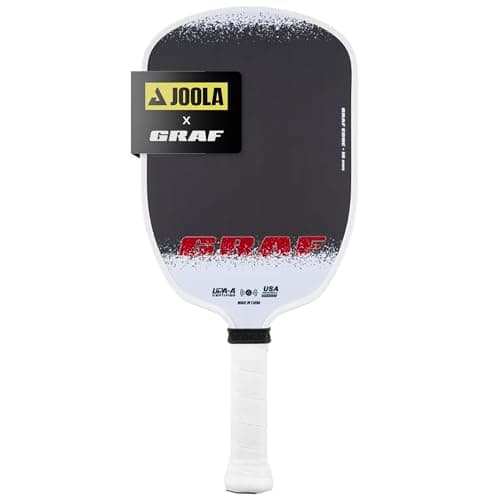 JOOLA GRAF Edge 16mm A carbon-faced 16mm paddle from a major brand at the bottom of the brand-name range. | A player working out of the beginner levels on a budget | |
| 2 | 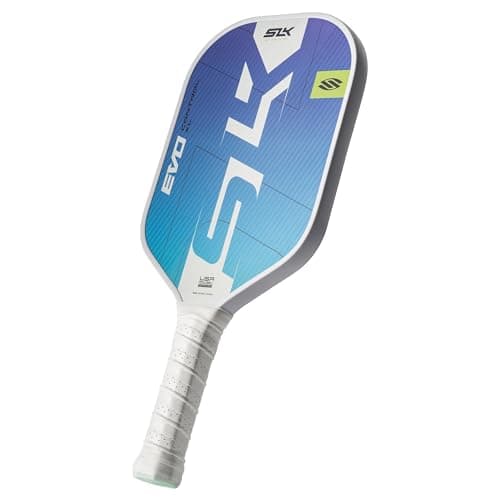 Selkirk SLK Evo Control XL Carbon Fiber Selkirk's carbon-fiber control paddle in the XL shape, aimed at the soft game. | A player whose dinks are becoming the point rather than a pause | |
| 3 | 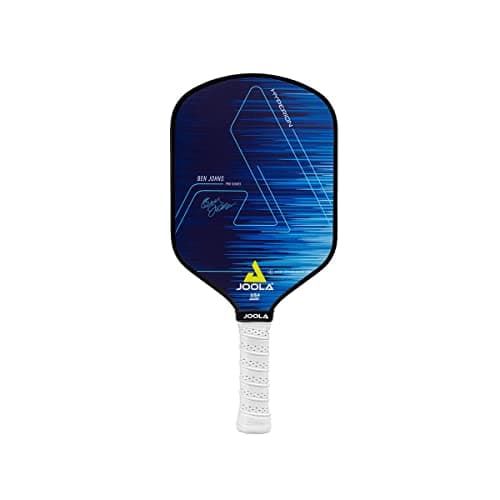 JOOLA Ben Johns Hyperion CAS 16 Ben Johns' signature elongated 16mm paddle, and the most-recognized paddle in the sport. | A player who already has the shots and wants the paddle the pros use | |
| 4 | 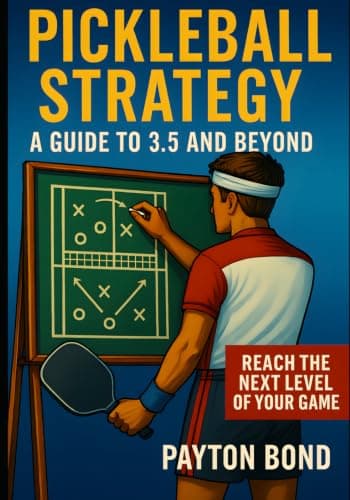 Pickleball Strategy A strategy book whose subtitle names its level: a guide to 3.5 and beyond. | A player stuck at 3.0 who keeps losing close games |
JOOLA GRAF Edge 16mm
Best for: A player working out of the beginner levels on a budget
At 2.5 and 3.0 the assessment sheets are about getting serves in, controlling depth and reducing unforced errors - all of which a forgiving paddle helps with and none of which needs an expensive one. The GRAF Edge listing specifies a carbon fiber face and a 16mm core, which is the control-and-stability thickness in JOOLA's own guide, from a brand that makes paddles for serious players. It is the cheapest honest way to stop your equipment being the limiting factor, which is the only thing a paddle can do for a player at this level.
Skip it if: Skip it if you already play with a mid-range carbon paddle, where this is sideways rather than up. Skip it too if you need a specific grip circumference; the pricier paddles below publish more fit detail.
Price as of October 25, 2026. #ad · how this works
Selkirk SLK Evo Control XL Carbon Fiber
Best for: A player whose dinks are becoming the point rather than a pause
3.5 is where USA Pickleball's own description shifts toward dink patience, recognizing attackable balls and moving as a team - and that is a control brief, not a power one. The SLK Evo Control listing specifies a carbon fiber face in the XL shape, giving a larger, more forgiving hitting area, which is what you want while you are learning not to pop balls up at the non-volley line. Selkirk also publishes real grip-size and weight guidance, which makes buying the right one online less of a lottery than it usually is.
Skip it if: Skip it if you are still playing mostly from the baseline and hitting drives, where a control paddle will feel flat. Skip it too if you want an elongated shape for reach; this is a larger face rather than a longer one.
Price as of October 25, 2026. #ad · how this works
JOOLA Ben Johns Hyperion CAS 16
Best for: A player who already has the shots and wants the paddle the pros use
At 4.0 and above, USA Pickleball's sheets describe a player who places dinks with offensive intent, executes third shots consistently and counter-attacks - someone with shots to express, which is when a flagship paddle starts to earn its price. The Hyperion CAS 16 is the paddle most associated with the top of the professional game and it is built on an elongated shape with a 16mm core and a carbon abrasion surface. Our full review goes through JOOLA's published specification figure by figure, and we claim no hitting test of our own anywhere on it.
Skip it if: Skip it if you are below 3.5 - an elongated paddle with a small sweet spot punishes the off-center contact that defines earlier levels, and you will play worse with it. Skip it too if you are heading for sanctioned play without checking the approved equipment database first.
Price as of October 25, 2026. #ad · how this works
Pickleball Strategy
Best for: A player stuck at 3.0 who keeps losing close games
The honest answer to "what should I buy to get better" at this stage is usually not a paddle. The assessment sheets say the gap between 3.0 and 3.5 is consistency and shot selection, and those are coaching problems rather than equipment problems. This book is explicitly positioned at that line - its subtitle is a guide to 3.5 and beyond - which makes it the right present for a player who has plateaued. Nobody here has read it cover to cover, and we would rather say that than imply a review we have not done.
Skip it if: Skip it for a complete beginner, who needs court hours and not tactics. Skip it too for a 4.5 player, where a book pitched at the 3.5 transition is behind them.
Price as of October 25, 2026. #ad · how this works
Frequently asked questions
What is the difference between a pickleball skill level and a rating?
A skill level is a description you assess yourself against; a rating is a number an algorithm produces from verified match results. USA Pickleball is explicit about this on its own skill-levels page: "These definitions aren't official ratings." Skill levels (2.5 to 5.5+) help you find the right rec group; ratings (most systems run 2.0 to 8.0) exist so leagues and tournaments can place you in a fair division.
What does a 3.5 pickleball player look like?
USA Pickleball's 3.5 assessment sheet describes consistent depth and control on the forehand, a backhand with improved mechanics and moderate consistency, most serves and returns placed with varying depth and speed, dinks with developing patience and a beginning understanding of which balls are attackable, and awareness of a partner's position with the ability to move as a team. Unforced errors are moderate rather than frequent. In short: the soft game has arrived and is starting to matter.
What is DUPR and do I need it?
DUPR is the official exclusive rating system used across USA Pickleball-owned events, and USA Pickleball also sanctions tournaments using DUPR or UTR. You need it if you want to enter rated competition; you do not need it for club or casual play, and USA Pickleball says as much. Getting one means creating a free profile, playing verified matches, and having results submitted and confirmed - after several of those, an initial rating is published.
How does a DUPR rating go up?
By performing better than the system expected, which is not the same as winning. USA Pickleball gives the example directly: if you are expected to win 11-3 and you win 11-8, your rating moves down; if you are expected to lose 11-5 and you lose 11-8, it moves up. Beyond that, playing a steady volume of recent verified matches makes the rating more accurate and less volatile, and USA Pickleball notes DUPR Verified Events count 50% more toward ratings.
Are singles and doubles ratings separate?
Yes - most providers calculate them separately, and USA Pickleball says so. That is worth knowing before you are alarmed by a gap: a strong doubles player who rarely plays singles can carry a much lower singles number, and that is the system working rather than failing. It also means the two numbers answer different questions about your game.
Should my paddle change as my rating goes up?
Usually toward control, not toward power. Reading USA Pickleball's assessment sheets in order, what develops across levels is dink patience, drop shots, resets and comfort at the non-volley line. A thicker core suits that - JOOLA's own paddle guide calls 16mm the control-and-stability option and thinner cores the ones built for pop - and a textured carbon face adds the bite that shaped dinks need. Our are-expensive-paddles-worth-it guide covers the case for not upgrading at all.
Why do people self-rate too high?
Because the assessment sheets are mostly about consistency and errors, and most players judge themselves on their best shot. Someone with a genuinely strong forehand can read the 4.0 forehand line and stop there, while the rest of the 4.0 sheet asks for consistent third shots, comfort at the non-volley zone, effective poaching and a limited number of unforced errors. Reading the 3.5 and 4.0 sheets side by side is the cure - the gap between them is almost entirely about how often you miss.
Keep exploring
The gear page for the 3.0-to-4.0 jump.
Best paddles for advanced playersWhat 4.5 and up tends to buy.
What is the kitchen in pickleball?The rule the soft game is built on.
How to keep score in pickleballThree numbers, and why.
14mm vs 16mm paddlesThe spec that changes as you improve.
Are expensive paddles worth it?The honest answer before you upgrade.
Best pickleball booksStrategy in print, by level.
JOOLA Hyperion CAS 16 reviewThe flagship, specification by specification.
Sources
- USA Pickleball — Player Skill Levels (2.5 Beginner, 3.0 Advanced Beginner, 3.5 Intermediate, 4.0 Advanced Intermediate, 4.5 Advanced, 5.0 Expert, 5.5+ Expert Pro, with a skill assessment sheet for each; "These definitions aren't official ratings")
- USA Pickleball — Pickleball Player Ratings ("Most systems use a scale from 2.0 (beginner) to 8.0 (professional)"; DUPR is the official exclusive rating system for USA Pickleball-owned events; separate singles and doubles ratings; ratings move on performance versus expectation)
- USA Pickleball — Official Rulebook (court 20 x 44 ft; non-volley zone 7 ft from the net on each side; 2.E.3 paddle size 24 in combined length and width, 17 in maximum length; 2.E.4 no weight restriction)
- USA Pickleball — Approved equipment database (current approval status, paddle by paddle)
- USA Pickleball — Update regarding the spin rate test and implementation timeline (2,100 RPM limit, effective 2026-10-01)
- JOOLA — Official Paddle Guide (core thickness: 16mm for control and stability, thinner cores for pop)
Browse another way