Best Gear
The Best Pickleball Paddles for Spin
Spin comes from a gritty, unpainted face that grabs the ball for a fraction longer — here is which paddles actually have one, and the rule change coming in October 2026.
By Stephen V. · Updated September 2026 · How we pick
Spin is the single most requested upgrade in pickleball, and it is also the one most often sold dishonestly. The mechanism itself is simple: when the ball meets a rough surface, friction holds it on the face for a fraction longer, and that extra contact time is what lets a player brush up the back of the ball and make it dip, kick or curve. A slick, painted face lets the ball skid off; a gritty, unpainted one grabs it. That is the whole story, and everything else on a spin paddle's spec sheet is either supporting that or marketing.
Which is why the phrase to look for is "raw carbon." A raw carbon face is left unpainted so the weave itself is the hitting surface, and that texture is what generates grip. Painted carbon paddles exist in large numbers and are often perfectly good paddles, but the paint is a smoother layer sitting on top of the thing you actually wanted. Several listings on this page name their fiber grade — Toray T700 comes up repeatedly — and while grade alone does not determine spin, a manufacturer that names it is usually a manufacturer that is not hiding the face under a coat of paint.
Now the important part, and the reason this page is worth reading in 2026 rather than a spin roundup written two years ago: USA Pickleball is changing how spin is regulated. The governing body has published a spin rate test with a stated "Maximum Spin Rate: 2,100 RPM," and has said that "beginning October 1, 2026, all paddles submitted for certification must achieve a measured spin rate of 2,100 RPM or less to receive USA Pickleball approval." Until that date, paddles meeting the existing surface roughness and coefficient of friction standards may continue to be certified under the old rules. In practical terms: paddles already approved stay approved, but the ceiling on how much grip a newly certified paddle may have is now an explicit number rather than a texture measurement. If your player competes in sanctioned events, that is worth knowing before spending on a paddle marketed purely on spin.
The older standard is still the one most listings are built around, and it is stricter than people assume. The Equipment Standards Manual states that a paddle's hitting surface "shall not contain holes, indentations, rough texturing, or any objects or features that allow a player to impart excessive spin on the ball," and sets the allowable roughness at an average of no greater than 30 micrometers peak-to-valley on one measure and 40 micrometers on the other, "with all readings to be taken in six different directions." The manual also explicitly prohibits treating a face with "sand, rubber or vinyl compounds or any material that causes additional spin," and bans "sandpaper characteristics" outright. So a legal spin paddle is working inside a narrow, measured band — which is exactly why the difference between the best and worst legal paddles is real but not enormous.
Two more variables matter, and neither is as decisive as the face. Shape: an elongated paddle puts more mass further from the hand, which produces more head speed at the tip and therefore more spin for the same swing, at the cost of a smaller and less forgiving sweet spot. Core thickness: thinner cores around 14mm are poppier and more powerful, thicker 16mm cores are softer and hold the ball marginally longer, which most players find easier to brush. Neither choice is wrong, and both appear on this page. If you have no idea which the recipient prefers, 16mm in a standard shape is the safer coin-flip.
One genuinely honest caveat that spin roundups usually omit: the texture wears out. A raw carbon face is a consumable surface. It loses grit with use, it is degraded by dirt and by dragging the paddle on the court, and no amount of care makes it last forever. A paddle bought for spin will produce noticeably less of it after a heavy season than it did out of the box. That is not a defect and it is not a reason to avoid raw carbon — it is a reason to keep the paddle clean, to keep it in its cover, and to be realistic about the fact that you are buying a surface with a service life rather than a permanent property.
Here is how these picks were chosen. There is no testing lab behind this site, nobody measured RPM on a rig, and there is not one invented star rating on this page. What was done instead: prefer paddles whose listings state a raw or explicitly textured carbon face over ones that merely say "carbon," favor brands with a real presence in the sport over marketplace no-names, confirm every listing was genuinely purchasable with live stock before it earned a slot, and cover the range from a cheap first spin paddle up to tour-level equipment so the page is useful at any budget. Where a listing claims high grit or extreme spin, that is repeated here as the listing's claim rather than as a measurement of ours. Prices are never typed into this copy — the live figure renders beside each pick with the date it was pulled.
Disclosure: Popaddle earns a commission on qualifying purchases made through the links on this page, at no extra cost to you. Prices are pulled live and can change. How this works.
| # | Product | Best for | Price |
|---|---|---|---|
| 1 | 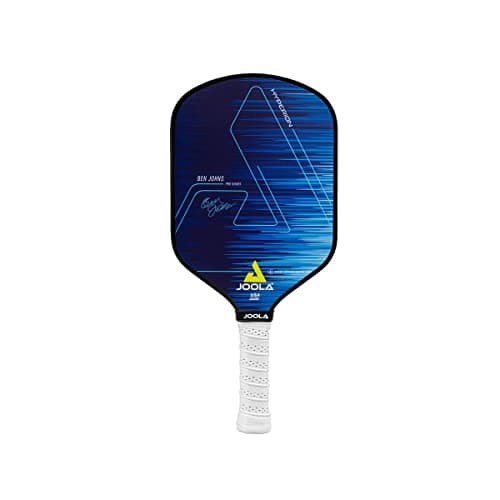 JOOLA Ben Johns Hyperion CAS 16 The best-known spin paddle in the sport, with a face named for the abrasion that creates grip. | The safest spin paddle to buy for someone else | |
| 2 | 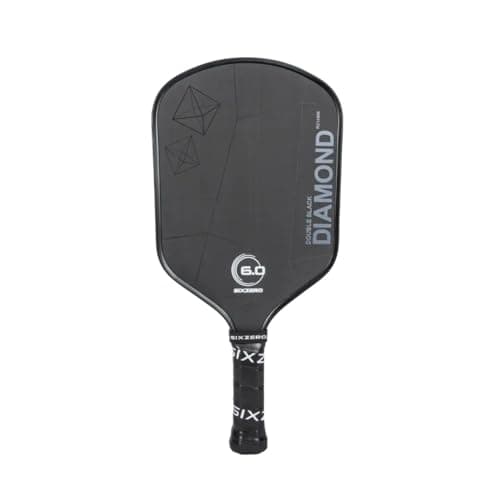 Six Zero Double Black Diamond Control 16mm A thermoformed raw Toray T700 paddle built around control, from the direct-to-consumer brand that made its name on it. | A committed player who wants spin without giving up touch | |
| 3 | 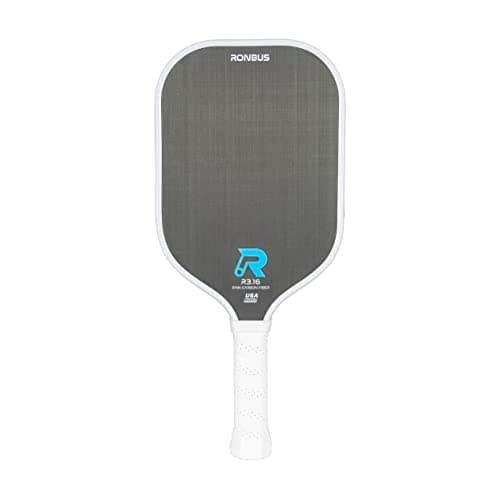 Ronbus R3.16 Raw Toray T700 Carbon Fiber 16mm A raw Toray T700 face on a 16mm honeycomb core, from a brand that sells direct and prices accordingly. | Real raw carbon without a tour-brand price | |
| 4 | 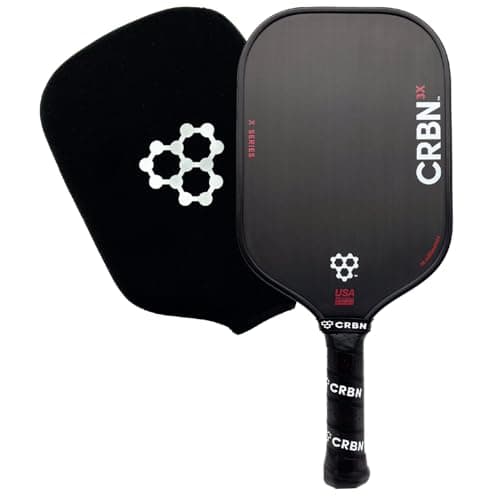 CRBN X Series Power 14mm Carbon Fiber A 14mm carbon paddle from a pickleball-only brand, built for pace rather than touch. | A hard hitter who wants spin on top of pace | |
| 5 | 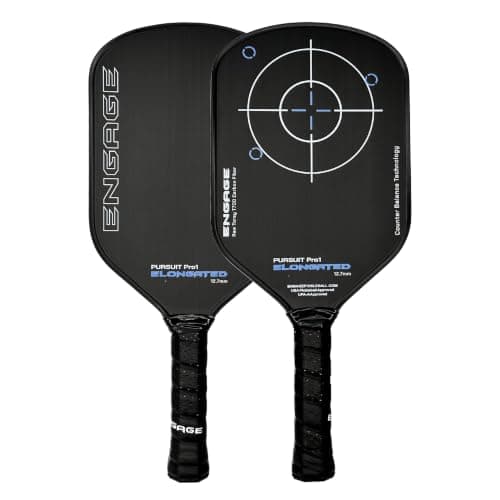 Engage Pursuit Pro1 Elongated 15.2mm An elongated raw carbon paddle whose listing sells spin and control as its headline properties. | A player who wants maximum head speed at the tip | $103.99 · View on Amazon $129.99 save 20% |
| 6 | 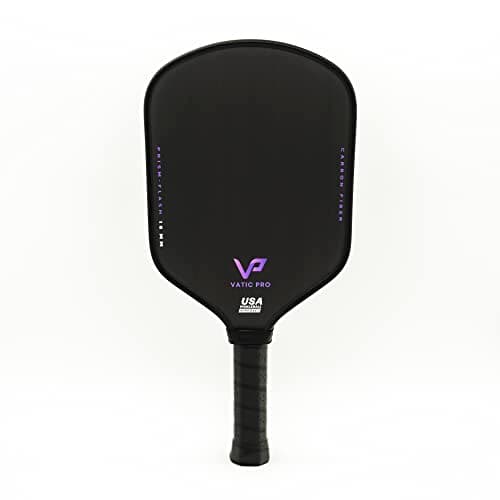 Vatic Pro Prism Flash Carbon Fiber 16mm A 16mm carbon paddle with foam-injected walls, so mishits stay playable. | A player who wants spin but still needs forgiveness | |
| 7 | 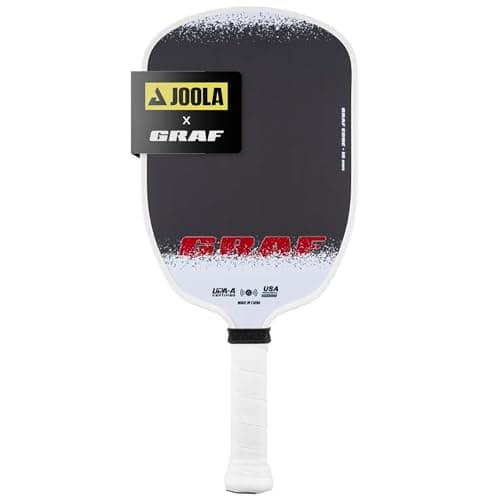 JOOLA GRAF Edge 16mm A 16mm carbon paddle from a tour brand at roughly a third of tour-brand money. | A first spin paddle, or a second paddle for a guest |
The picks in detail
JOOLA Ben Johns Hyperion CAS 16
Best for: The safest spin paddle to buy for someone else
If you are buying one spin paddle and want the lowest chance of getting it wrong, start here. JOOLA is arguably the most visible paddle brand in professional pickleball, and the Hyperion line carries Ben Johns's name, which means the recipient almost certainly knows what it is before they finish unwrapping it. The listing names a "Carbon Abrasion Surface with High Grit & Spin," a 16mm polypropylene honeycomb core, a Sure-Grip elongated handle and USAPA approval — a thick core for a softer, longer contact, an elongated handle that suits two-handed backhands, and a face whose entire selling point is the grit this page is about. It is not the cheapest paddle here and it is not the most exotic, but it is the one that satisfies both a serious player and a nervous gift buyer at the same time.
Skip it if: Skip it if your player has elbow trouble — an elongated, high-grit, tour-oriented paddle is a demanding combination, and the tennis-elbow roundup linked below is the right page for them instead.
Price as of October 25, 2026. #ad · how this works
Six Zero Double Black Diamond Control 16mm
Best for: A committed player who wants spin without giving up touch
The Double Black Diamond is the paddle that put Six Zero on the map, and it approaches spin from the control end rather than the power end. Six Zero describes the Control model as a 16mm premium honeycomb polymer core under a Toray T700 raw carbon face, thermoformed so the face and edge technology run the length of the handle and fuse into a single piece, with what the brand calls a permanent textured surface and an elongated, tapered handle suited to a two-handed backhand. That combination — raw T700 grit on a thick, control-oriented core — is why it gets recommended by players who want to shape the ball rather than blast it. It is the most expensive paddle on this page and it makes no apology for it.
Skip it if: Skip it if the recipient is a power player who wants pop off the face, since a 16mm control build deliberately damps that, and skip it as a blind gift for a casual player — this is a lot of money for someone who plays occasionally. There is a full review of this paddle linked at the foot of the page.
Ronbus R3.16 Raw Toray T700 Carbon Fiber 16mm
Best for: Real raw carbon without a tour-brand price
Ronbus is one of the clearest examples of what direct-to-consumer pricing does to this category: the listing states the same headline ingredients as paddles costing considerably more — a raw Toray T700 carbon fiber face over a 16mm polypropylene honeycomb core — without the sponsorship budget baked into the price. For a player who has decided they want raw carbon and does not care whose logo is on it, this is the efficient way to get there. It is also the pick to reach for when the paddle is a first serious upgrade from a starter set, because it delivers the actual mechanism this page is about rather than a painted approximation of it. The listing covers several models in the R-series line, so check which variant you are ordering.
Skip it if: Skip it as a surprise gift for someone who cares about brand recognition — Ronbus is well regarded among players who research their own gear and invisible to everyone else, so it lands better as a requested purchase than as a wrapped one.
Price as of October 25, 2026. #ad · how this works
CRBN X Series Power 14mm Carbon Fiber
Best for: A hard hitter who wants spin on top of pace
CRBN exists only for pickleball, which buys it real credibility with players who follow the sport closely, and the X Series Power is the counterweight to the control paddles on this page. The listing specifies a 14mm carbon fiber build in the X Series Power line — the thinner core is the poppier, more powerful one, so the ball leaves the face faster and flatter. Pairing that with a carbon face means a player can drive the ball hard and still brush it, which is the combination aggressive players are usually chasing when they say they want spin. This is the pick for someone whose game is built on putting the ball away rather than dinking it back, and who already knows how to control a lively paddle.
Skip it if: Skip it for a beginner or an improving player. A thin, powerful core is unforgiving on mishits and can make the soft game harder to learn, and a 16mm option from earlier on this page will do more for their results.
Price as of October 25, 2026. #ad · how this works
Engage Pursuit Pro1 Elongated 15.2mm
Best for: A player who wants maximum head speed at the tip
Engage has been making pickleball paddles since long before the current boom, and this listing is unambiguous about what it is for: an elongated 15.2mm paddle with a raw carbon fiber face, USA Pickleball approved, built around what the brand calls SpinCore Technology and a Vortex Barrier Edge. The listing describes the raw carbon as having an inner application layer that gives it lasting texture and friction, and it credits a repositioned Flex Zone and optimized twist weight for keeping off-center hits stable. The elongated shape is the specific reason it earns a slot alongside the standard-shape picks — moving mass toward the tip increases head speed through the contact zone, and more head speed on a gritty face is more spin for the same effort. It also adds reach, which players who like to poach at the net appreciate. Choose it for someone with a developed swing who wants the shape working for them as well as the surface.
Skip it if: Skip it for anyone still building consistency. Elongated paddles have a smaller, higher sweet spot, so off-center hits are more frequent and more punishing, and a standard shape will feel better and score more points for a developing player.
Vatic Pro Prism Flash Carbon Fiber 16mm
Best for: A player who wants spin but still needs forgiveness
The Prism Flash has an almost cult following among players who research their own next paddle, and it is on this page as the sensible middle option. The listing states a 16mm carbon fiber build with foam-injected walls and an included paddle cover: the carbon face gives the grip this page is about, the 16mm core holds the ball marginally longer for easier brushing, and the foam in the perimeter is what keeps a slightly off-center ball behaving instead of dying. That last part matters more than spin specs do for most club players, because a paddle that punishes every mishit costs more points than a marginally grippier face wins. The included cover is also the thing that keeps a raw face from being ruined in a bag, which directly protects the spin you paid for.
Skip it if: Skip it if you want the absolute maximum grip on the market — this is a well-balanced paddle rather than a spin specialist, and the raw T700 picks above are grittier by design.
Price as of October 25, 2026. #ad · how this works
JOOLA GRAF Edge 16mm
Best for: A first spin paddle, or a second paddle for a guest
This is the pick that answers "can I get a real spin paddle without spending a lot," and the answer is a qualified yes. The listing describes a 16mm carbon fiber paddle built for increased spin and control, in JOOLA's Agassi shape, UPA-A certified and USAP approved — so it is a genuine brand-name, tournament-legal paddle at the price of a decent bag. It will not out-grip the raw T700 paddles higher up this page and it does not pretend to, but next to the painted fiberglass paddle that came in someone's starter set it is a completely different experience. Buy it as a first step up, as a spare for visitors, or as the paddle you give someone who is not yet sure how far into this they are going.
Skip it if: Skip it if the recipient already plays several times a week on a decent paddle, because this will feel like a lateral move rather than an upgrade. At that point the money is better spent on one of the raw carbon picks above.
Price as of October 25, 2026. #ad · how this works
Frequently asked questions
What actually makes a pickleball paddle spin the ball?
Friction, and almost nothing else. A rough face holds the ball on the surface a fraction longer, which lets the player brush up the back of it and impart rotation. A smooth, painted face lets the ball skid away before that can happen. Everything else — shape, core thickness, weight — changes how easily a player can generate the swing, but the face is the mechanism.
What is raw carbon, and is it worth paying for?
Raw carbon simply means the carbon fiber face is left unpainted, so the weave itself is the hitting surface. It is worth paying for if spin is genuinely the goal, because paint is a smoother layer covering the texture you wanted. It is not worth paying for if the player is still learning consistency, since a forgiving core and a friendly shape will win them more points than a grittier surface will.
What is the 2,100 RPM rule?
It is USA Pickleball's new spin rate test. The governing body has published a maximum spin rate of 2,100 RPM and stated that beginning October 1, 2026, all paddles submitted for certification must measure at or below that figure to be approved. Until then, paddles meeting the existing surface roughness and coefficient of friction standards can still be certified under the old rules. Paddles already approved are not retroactively banned by that timeline.
How rough is a paddle allowed to be?
Stricter than most people assume. USA Pickleball's Equipment Standards Manual says a hitting surface must not contain holes, indentations, rough texturing or any feature that lets a player impart excessive spin, and sets the roughness limits at an average of no more than 30 micrometers peak-to-valley on one measure and 40 on the other, with readings taken in six different directions. Treating a face with sand, rubber or vinyl compounds is prohibited outright, as are sandpaper characteristics.
Does a paddle lose its spin over time?
Yes, and any page that does not tell you this is selling rather than informing. A raw carbon face is a consumable surface: grit wears down with use, dirt fills it in, and scraping the paddle on the court accelerates both. A spin paddle produces measurably less grip after a heavy season than it did new. Keeping it clean and stored in a cover is the practical way to slow that down.
Is 14mm or 16mm better for spin?
16mm is the marginally easier one to brush with, because a thicker, softer core holds the ball on the face slightly longer. 14mm is poppier and more powerful, which suits a player who wants pace as well as rotation. The difference is real but small compared with whether the face is raw or painted, so decide the face question first and treat thickness as a preference.
Should I buy an elongated paddle for more spin?
Only for a player with a developed, consistent swing. Elongated shapes move mass toward the tip, which raises head speed through contact and does produce more spin for the same effort, plus useful extra reach. The cost is a smaller, higher sweet spot and more punishing mishits. For anyone still building consistency, a standard shape wins more points than the extra spin does.
Keep exploring
The wider carbon roundup, including painted-face options and sets.
Six Zero Double Black Diamond reviewA closer look at the control-first raw carbon paddle on this page.
Carbon vs fiberglass paddlesWhy the face material decides how much spin a paddle can produce.
Pickleball paddle brands, rankedWhich brands are worth the money, and which only exist on marketplaces.
Best paddles for tennis elbowThe opposite priority - a muted face and a damped core.
Best paddles for tennis playersSpin paddles with the long handle a tennis convert wants.
Elongated vs standard paddlesWhy so many spin paddles are elongated.
Sources
Browse another way