Guide
Vatic Pro Prism Flash: A Buyer's Review
The direct-to-consumer paddle people keep finding on Amazon and cannot place against Selkirk or JOOLA. Here is every number Vatic Pro publishes, the ones it does not, and who the paddle is actually for.
By Stephen V. · Updated October 2026 · How we pick
What the Prism Flash actually is
Vatic Pro is a direct-to-consumer paddle brand, which is the single most useful thing to understand before reading a spec sheet. There is no pro tour endorsement budget and very little retail distribution; the business model is to sell a thermoformed, raw-carbon paddle at roughly the price a mainstream brand charges for its mid-range model. The Prism is the line that built the brand's reputation, and the Flash is one of the shapes it comes in.
Four things define the paddle, all of them published by Vatic Pro. The face is raw TORAY T700 carbon fiber with what the company calls heat-compressed texturing — raw carbon being the finish that grips the ball for spin rather than the painted or clear-coated surfaces that do not. The core is 16mm of what Vatic Pro describes as optimized C7 polymers and high-grade performance honeycomb. The build has foam-injected edge walls and a unibody construction. And a paddle cover is included, which is a small thing that mainstream brands at this price usually charge extra for.
The fifth thing is the shape, and it is the reason this specific model needs a page. "Flash" is a shape name within the Prism line, not a separate paddle: Vatic Pro publishes a Flash with a standard handle and a Flash LH with a long handle, and the two have slightly different head dimensions. Buying the wrong one is the most likely way to be disappointed by this paddle, which is why the numbers below matter more than any adjective.
The honest limits of this review
Nobody on this site has played with this paddle. There is no testing program behind Popaddle, no lab, no hitting notes and no instrumented spin measurements — and a review that invented them would be worth less than one that admits their absence. What follows instead is every figure Vatic Pro publishes for the Prism, read against the rulebook and against the paddles this site already carries, plus a judgment about who that published specification suits.
That is genuinely useful, because the specification settles most of what you need to know before spending a hundred dollars: whether the handle is long enough for a two-handed backhand, whether the grip will fit the hand it is going to, whether the head is the forgiving shape or the reaching one. It cannot tell you how the paddle feels off the face, and we will not pretend otherwise. Vatic Pro sells a demo paddle directly, which is the honest answer to the feel question.
You will not find a star rating, a score out of ten or a "we tested 24 paddles" claim anywhere on this page. Our how we pick page explains exactly what we do and do not do, and it applies here without exception.
The published specification, number by number
These are Vatic Pro's own published figures for the PRISM line, taken from the company's product page. Where a figure differs between the two Flash variants, both are given.
Three of those lines deserve a sentence each. The Flash head measures 16.2 by 7.7 inches, which adds to 23.9 inches — inside USA Pickleball's limit of 24 inches combined with a 17-inch maximum length, as any paddle sold for play must be. More interestingly, 7.7 inches is a reasonably wide head rather than a narrow elongated one, so the standard Flash is closer to a hybrid shape than to the long-and-skinny geometry its stablemates use.
The grip is the figure worth buying on. At 4.125 inches around, it is slimmer than the 4.25 inches that most adult paddles ship with — not dramatically, but enough to matter for a smaller hand. Selkirk's own grip-size guidance is the method to check yours with, and its tie-breaker is the relevant one here: when you are between sizes, buy the smaller handle and build it up with an overgrip, because you can add thickness and you can never remove it. A 4.125-inch handle is the easier one to adjust in either direction.
And then the gap. Vatic Pro does not publish a static weight for the Prism, which is a genuine omission rather than a nitpick: USA Pickleball sets no weight restriction, the market spans a wide range, and a regular player notices a swap of more than about half an ounce inside ten minutes. If you are switching from a paddle you like, that missing number is the one you would most want.
Who it suits, and who should buy something else
Buy it for a player who wants raw carbon and foam walls at mid-range money. That is the whole proposition of a direct-to-consumer brand, and on the published specification Vatic Pro delivers it: a raw T700 face with heat-compressed texturing and foam-injected edge walls are the features a mainstream brand puts on its flagship, and here they arrive at roughly what a mainstream mid-range paddle costs. Vatic Pro's own range confirms the positioning — the Prism sits at the bottom of a four-paddle lineup whose top models are only slightly dearer.
Buy it, second, for a smaller hand. The 4.125-inch grip is the quiet advantage on this page: most paddles at this price are 4.25 inches around, and a handle you cannot close your fingers on costs you wrist mobility and makes you grip harder, which is where touch shots and spin come from. Our paddles for small hands page sets out that problem properly, and this paddle solves part of it from the factory.
Buy the Flash LH, specifically, for a two-handed backhand. The long-handle variant runs a 5.75-inch handle against the standard 5.3, and a long handle is the single feature that decides whether a paddle suits a player who puts a second hand on it — usually someone who arrived from tennis. Our paddles for tennis players page is built around that group.
Do not buy it as a gift for someone brand new. A raw carbon face is a spin tool for a player who already makes consistent contact, and a 16mm core at this money is wasted on someone still learning where the middle of the paddle is — our paddles for beginners page is the right page for that recipient. Do not buy it, either, if the recipient plays sanctioned tournaments and you have not checked the specific model in the competitive contextthat applies to them: Vatic Pro's product page does not state a certification, a spin-rate limit of 2,100 RPM took effect on October 1, 2026, and USA Pickleball's equipment database is the only place that answer is current.
What it costs, and how it compares
The Prism sits in the hundred-dollar bracket, and the useful observation is that it costs the same whether you buy it from Amazon or from Vatic Pro directly — both were at the same list figure when this page was published. That is unusual and it is good news for a buyer, because it means the convenient purchase is not the expensive one. Every price on this page is pulled live and stamped with the date it was checked, so if that changes you will see it rather than read a stale number.
Against the mainstream brands at the same money, the trade is specification versus support. A Selkirk SLK or a JOOLA at this price buys you a widely stocked paddle, a conventional warranty route, a model you can hold in a shop and a resale market. The Prism buys you more paddle on paper — raw T700 carbon, foam edge walls, a cover in the box — and less of everything around it. Which of those matters more is a genuine preference rather than a right answer, and it is why the alternatives below are both mainstream.
Against the rest of Vatic Pro's own range, the Prism is the entry point. The V-Sol Pro sits one step up at a modest premium with a foam core, and the listing for it includes a cover too. If you have decided on the brand and want its current flagship rather than the paddle that made its name, that is the one to compare against. For the wider market context, our paddle brands ranked page places Vatic Pro against Selkirk, JOOLA, CRBN and the rest, and our best Selkirk paddles page covers the most direct mainstream alternative model by model.
What we would want to know before buying
Three questions, in the order they matter. First: standard handle or long handle? If the player puts two hands on the backhand, the LH is the only correct answer and the standard Flash will frustrate them. If they do not, the standard handle gives marginally more head width, which is the more forgiving trade.
Second: 16mm or 14mm? Vatic Pro offers both, and the general principle holds across brands — JOOLA's own paddle guide describes a 16mm core as the control-and-stability option, with thinner cores giving more pop. Our paddle thickness guide covers the trade in full. For most buyers, and certainly for anyone buying a gift, 16mm is the safer choice.
Third: what does the player use now, and how heavy is it? This is the question the missing weight figure makes awkward, and the practical workaround is to weigh their current paddle on a kitchen scale before you buy. If they are coming off something notably light or notably heavy, a paddle whose weight you cannot look up is a risk — and a reason to buy a model that publishes one instead. That is not a knock on how this paddle plays, which we have not assessed. It is a knock on the spec sheet, and it is the honest reason this review stops short of calling the Prism Flash a safe gift for someone else's hand.
The gear this guide points to
Disclosure: Popaddle earns a commission on qualifying purchases made through the links on this page, at no extra cost to you. Prices are pulled live and can change. How this works.
| # | Product | Best for | Price |
|---|---|---|---|
| 1 | 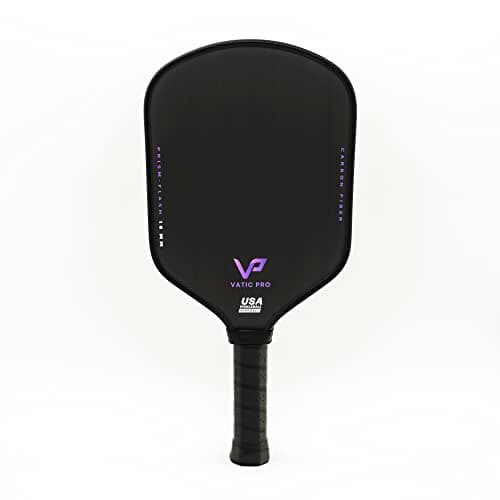 Vatic Pro Prism Flash Carbon Fiber 16mm A 16mm raw T700 carbon paddle with foam-injected edge walls and a cover in the box. | A player who wants raw carbon and a slimmer grip at mid-range money | |
| 2 | 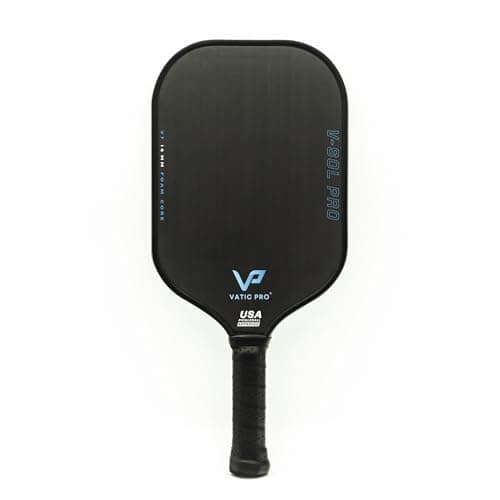 Vatic Pro V-Sol Pro V7 16mm Foam Core Vatic Pro's 16mm foam-core V-Sol Pro, a modest premium above the Prism, cover included. | Someone who has decided on Vatic Pro and wants the newer model | |
| 3 | 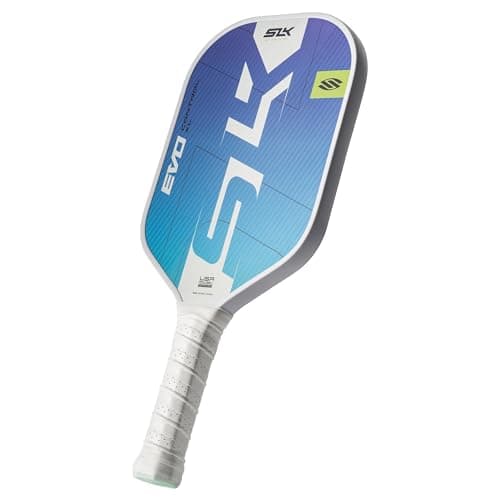 Selkirk SLK Evo Control XL Carbon Fiber A thermoformed carbon-faced widebody from Selkirk's SLK line, in the same price bracket. | A buyer who wants a widely stocked brand at the same money | |
| 4 | 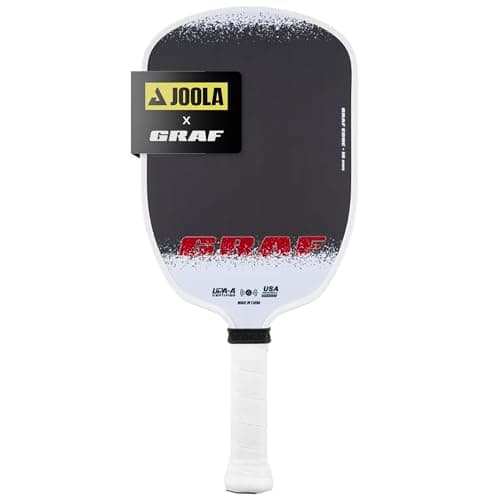 JOOLA GRAF Edge 16mm JOOLA's entry carbon-faced 16mm paddle, from a brand with full retail presence. | A carbon-faced paddle for roughly half the money |
Vatic Pro Prism Flash Carbon Fiber 16mm
Best for: A player who wants raw carbon and a slimmer grip at mid-range money
Everything above applies to this listing. The published specification is a 16mm optimized-C7 honeycomb core under a raw TORAY T700 carbon face with heat-compressed texturing, in a 16.2 by 7.7 inch head on a 5.3-inch handle, with a 4.125-inch grip, an anti-abrasion TPU edge guard and a paddle cover included. It is the right buy for a player who already makes consistent contact, wants spin from the face rather than pop from the core, and would rather have specification than retail presence.
Skip it if: Skip it for a beginner, who gets more from a forgiving wide-body paddle than from a raw carbon face. Skip it too if you are replacing a paddle whose weight you know and like - Vatic Pro does not publish a static weight for this one, and that is the figure you would want.
Price as of October 25, 2026. #ad · how this works
Vatic Pro V-Sol Pro V7 16mm Foam Core
Best for: Someone who has decided on Vatic Pro and wants the newer model
This is the paddle to compare against if the brand is settled and the question is which model. The listing specifies a 16mm foam core and includes a paddle cover, and it sits one step above the Prism in Vatic Pro's own range at a small premium. Buy it if you want the brand's current engineering rather than the paddle that built its reputation, and if the extra outlay is immaterial to you.
Skip it if: Skip it if you want the cheapest route into raw carbon - the Prism is the value pick in this range and the difference between them is not something we have measured. Skip it too if you need a published static weight; the same gap applies across the range.
Price as of October 25, 2026. #ad · how this works
Selkirk SLK Evo Control XL Carbon Fiber
Best for: A buyer who wants a widely stocked brand at the same money
This is the honest alternative for the buyer who read the section above and decided that support matters more than specification. The listing specifies a T700 CarbonFusion face and a Rev-Control honeycomb core, thermoformed, with a large sweet spot, and XL is a widebody shape in Selkirk's own taxonomy - which means a wider, more forgiving face than the Prism's. You also get a brand with real retail distribution, a conventional warranty route and a resale market, which is worth something on a paddle you may not keep.
Skip it if: Skip it if raw carbon and foam walls are specifically what you are shopping for - that is the Prism's whole argument and this does not make it. Skip it too if you need a slim grip; this is a conventional adult handle.
Price as of October 25, 2026. #ad · how this works
JOOLA GRAF Edge 16mm
Best for: A carbon-faced paddle for roughly half the money
If the hundred-dollar bracket is more than you wanted to spend, this is where to look. The listing specifies a carbon fiber face and a 16mm core - the same two headline specs as the paddle reviewed above - in JOOLA's accessible line, with UPA-A certification and an NFC chip stated on the listing. For a recipient who is not yet sure how seriously they will take the sport, this gets them a real brand's carbon paddle for about half the outlay, and nobody has to guess a grip size.
Skip it if: Skip it if the player already plays several times a week and generates their own spin - an entry paddle is the wrong tier for them. Skip it too if you want raw rather than finished carbon; that distinction is the Prism's selling point and this is not it.
Price as of October 25, 2026. #ad · how this works
Frequently asked questions
Is Vatic Pro a good brand?
It is a legitimate direct-to-consumer paddle brand with a published specification that compares well against mainstream paddles at the same price - raw TORAY T700 carbon, a 16mm honeycomb core, foam edge walls and a cover in the box. What it does not have is wide retail distribution, a shop you can hold one in, or the resale market a Selkirk or JOOLA has. We have not tested their paddles, so we will not tell you one plays better than another; what we can say is that the spec sheet is real and the price is the same on Amazon as it is direct.
What is the difference between the Prism Flash and the Flash LH?
The handle, mostly. Vatic Pro publishes a 5.3-inch handle on the standard Flash and a 5.75-inch handle on the Flash LH, with slightly different head dimensions to match - 16.2 by 7.7 inches versus 16.375 by 7.625. If the player puts two hands on the backhand, buy the LH: a long handle is what makes room for the second hand, and no amount of grip tape fixes a handle that is too short. If they do not, the standard Flash gives marginally more width, which is the more forgiving shape.
How much does the Vatic Pro Prism Flash weigh?
Vatic Pro does not publish a static weight for the Prism, and that is worth saying plainly rather than estimating. USA Pickleball sets no weight restriction at all, so paddles on the market span a wide range, and a regular player notices a change of more than about half an ounce within ten minutes of picking one up. If you are replacing a paddle you like, weigh the old one on a kitchen scale and understand that you are buying this one without the matching number.
Is 16mm or 14mm better on the Prism?
For most buyers, 16mm. The principle is the same across brands: JOOLA's own paddle guide describes a 16mm core as the control-and-stability option, because a thicker core dampens the ball and widens the usable part of the face, while thinner cores give more pop and reward a player who already finds the middle. Vatic Pro offers the Prism in both. Buy 14mm only if the player has told you they want more pop and knows the trade they are making.
Does the Prism Flash come with a cover?
Yes - Vatic Pro states that a paddle cover is included, and the Amazon listing says the same. It is a small thing that is worth noting because mainstream brands in this price bracket usually sell the cover separately. A cover is genuinely useful on a raw carbon face, too: raw carbon is the finish that grips the ball, and keeping it out of the bottom of a bag with keys and a water bottle is how it stays that way.
Is the Prism Flash approved for tournament play?
Vatic Pro's product page does not state a certification, so check the specific model in USA Pickleball's equipment database before a sanctioned event. This matters more than it used to: a spin-rate limit of 2,100 RPM took effect on October 1, 2026, and raw-carbon spin-oriented faces are exactly the category that limit addresses. Approval attaches to a model and revision rather than to a brand, and the database is the only place the answer is current - not this page.
What should I buy instead if this is a gift?
Something that does not require you to know the recipient's preferences. A raw carbon face, a 4.125-inch grip and an unpublished weight are three variables to guess at, and gifts go wrong on exactly that kind of specificity. A widebody paddle from a mainstream brand - the Selkirk SLK Evo Control XL above is the closest alternative at the same money - or a two-paddle set if they do not play yet, is the safer present. Buy the Prism for yourself, or for someone who has asked for it by name.
Keep exploring
Ben Johns' current signature paddle, number by number.
Best Selkirk pickleball paddlesThe mainstream alternative, model by model.
JOOLA Hyperion CAS 16 reviewThe same treatment for a signature flagship.
Six Zero Double Black Diamond reviewAnother direct-to-consumer paddle, reviewed the same way.
Pickleball paddle brands rankedWhere Vatic Pro sits against the market.
Best carbon fiber paddlesRaw, finished and everything between.
Paddle thickness guide14mm or 16mm, and what each one buys.
Best paddles for small handsWhy a 4.125-inch grip is worth noticing.
Pickleball grip size guideHow to measure before you spend.
Sources
- Vatic Pro — PRISM product page (14mm and 16mm; Optimized C7 Polymers honeycomb core; raw TORAY T700 carbon fiber face with heat-compressed texturing; Flash 16.2 x 7.7 in, Flash LH 16.375 x 7.625 in; handles 5.3 in standard / 5.75 in long; 4.125 in grip; anti-abrasion TPU edge guard; foam edge walls; two polyurethane grip inserts; includes paddle cover)
- Vatic Pro — full paddle range and list prices (PRISM, Saga, V-Sol Pro, V-Sol Tour)
- JOOLA — Official Paddle Guide (core thickness: 16mm for control and stability, thinner cores for pop)
- Selkirk Sport — how to know your pickleball grip size (measure from the middle crease of the palm to the tip of the ring finger; when between sizes, go smaller and build up with an overgrip)
- Selkirk Sport — the ultimate guide to pickleball paddle shapes (standard/widebody shapes spread the hitting area; elongated shapes trade sweet-spot width for reach)
- USA Pickleball — Official Rulebook (2.E.3 paddle size: 24 in combined length and width, 17 in maximum length; 2.E.4 no weight restriction; no grip-size restriction)
- USA Pickleball — Approved equipment database (which paddles are approved for sanctioned play)
- USA Pickleball — Update regarding the spin rate test and implementation timeline (2,100 RPM limit, effective 2026-10-01)
Browse another way