Guide
Do You Need a Pickleball Bag?
Nobody needs one to play. But there are four specific problems a bag solves, and if your recipient has any of them, it is the best practical gift in the category.
By Stephen V. · Updated October 2026 · How we pick
The honest answer first
No. You do not need a pickleball bag to play pickleball. The sport's appeal is partly that the barrier to entry is almost nothing: a paddle, a ball, and a court with a net. USA Pickleball's own introduction to the game reflects that — the equipment list is short, and a bag is not on it. Most people start out carrying a paddle in one hand and a couple of balls in a pocket, and that works perfectly well for a while.
So why is a bag one of the most-bought items in the category, and why is it the single most clicked gift on this site? Because "need" is the wrong frame for a gift. A bag is not equipment, it is logistics — and the moment a player goes from occasionally hitting a ball to playing twice a week, the logistics get annoying in four very specific ways. If your recipient has any of those four problems, a bag is the best practical gift in the whole category. If they have none of them, buy something else and come back to this in a year.
This page is the should-you question. If you have already decided yes and want to know which one, our pickleball bag roundup is the page you want, and the picks at the bottom of this one are drawn from it.
The four problems a bag actually solves
Here is the whole case, in the order players tend to encounter it. Read these as a checklist: each one your recipient recognizes moves a bag up your shortlist.
- Wet or dirty shoes in the car. This is the one that converts people. A player who changes into court shoes has to put the dirty pair somewhere, and the options are a plastic grocery bag or the passenger seat. A bag with a dedicated ventilated shoe compartment solves it permanently, which is why that single feature justifies the premium on the bags that have it.
- Paddles rattling around loose. A paddle face is the part that wears, and the fastest way to scuff one is to let it slide around a car trunk against keys and water bottles. A bag with paddle sleeves — or, at minimum, a paddle cover — keeps the hitting surface off everything else.
- Balls disappearing. Balls live in pockets, get left on benches and roll under car seats. A bag with a zip pocket for balls means the player arrives with the balls they thought they had, which matters more on a public court where nobody has brought spares.
- Nowhere for everything else.Keys, phone, wallet, water, a towel, an overgrip, a visor. The reason tennis bags exist is that racquet sports accumulate small items, and pickleball is no different. Selkirk's own list of essentials for sweaty players runs to eight items, which is seven more than fit in a pocket.
Notice what is not on that list: performance. A bag does not make anybody play better, and any listing that implies otherwise is selling you something. It makes playing less annoying, which for a regular player is worth more.
Who genuinely does not need one
Three recipients, and it is worth being honest about them because a bag given to the wrong person is an expensive shelf item.
The complete beginner. Somebody who has played twice does not yet know whether they are going to keep playing, and a bag is an item that only makes sense once the habit exists. A starter set or a pack of balls is the better gift at that stage.
The player who walks to a court two streets away. If the journey is five minutes on foot with one paddle, the whole logistics problem evaporates. A sling bag might still appeal, but a full backpack is more bag than the trip requires.
The player who already has a tennis bag. Racquet-sport bags are substantially interchangeable, and a player who already carries one has solved the problem. Buy them socks, an overgrip, or a towel instead — all of which are consumable and always welcome.
Which format: backpack, sling, or duffel
Three shapes, and the choice is about the journey rather than the player. Get this right and the bag gets used; get it wrong and it stays in a cupboard.
A backpack is the default and the right answer for most recipients. It carries multiple paddles, it has room for shoes, water and a towel, and it leaves both hands free. This is the format to buy for anyone who drives to a court, plays more than once a week, or changes shoes when they get there.
A sling or crossbody is for the minimalist: one paddle, a couple of balls, a phone and a key. It is lighter, faster to get in and out of, and far less bag to store. If your recipient has ever described a backpack as overkill, this is the format they actually want.
A duffel makes sense for a player who hauls equipment for a group — a club organizer, a coach, somebody who brings the balls and the spare paddles. It is the least common gift of the three and the most specific.
One practical note on sizing claims. Listings advertise paddle capacity in their own titles ("fits 4+ paddles" and similar), and those numbers come from the manufacturer rather than from anyone counting. They are repeated as claims on the picks below and on our bag roundup, never converted or compared between brands.
Why it works so well as a gift
Here is the argument for buying one even though nobody needs one. A bag sits in the category of things people are glad to own and reluctant to buy: it is not exciting, it does not improve anybody's game, and a player weighing fifty dollars will nearly always spend it on a paddle instead. That is exactly what makes it a good present. You are buying the thing they have been putting up without.
It also has the two properties that matter most in a gift with no sizing risk. There is no fit to get wrong — unlike shoes or a paddle, where grip size and width decide whether the present works — and it is visible. A bag gets carried to the court, which means the gift is seen and used in public every week rather than consumed once. Our what to get a pickleball player guide ranks the whole field on exactly those terms, and a bag comes near the top of it.
The picks below are three of the formats in one place: the backpack to buy as a default, the cheapest honest way in, and the sling for a recipient who wants less bag. Prices are live with the date they were pulled, because bags are discounted constantly.
The gear this guide points to
Disclosure: Popaddle earns a commission on qualifying purchases made through the links on this page, at no extra cost to you. Prices are pulled live and can change. How this works.
| # | Product | Best for | Price |
|---|---|---|---|
| 1 | 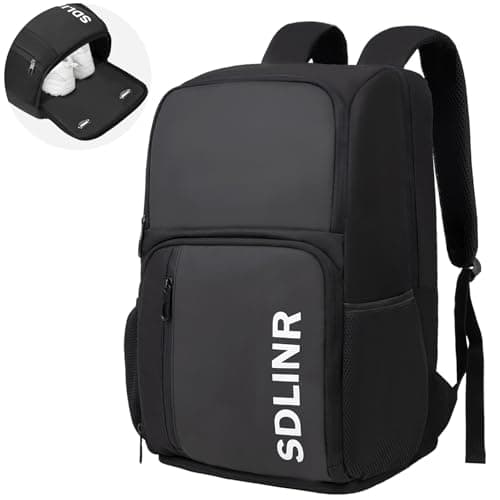 SDLINR Large Pickleball Bag Backpack Fits 4+ Paddles for A full backpack whose listing states it fits four or more paddles — the format that solves all four problems at once. | A regular player who drives to the court and changes shoes | |
| 2 | 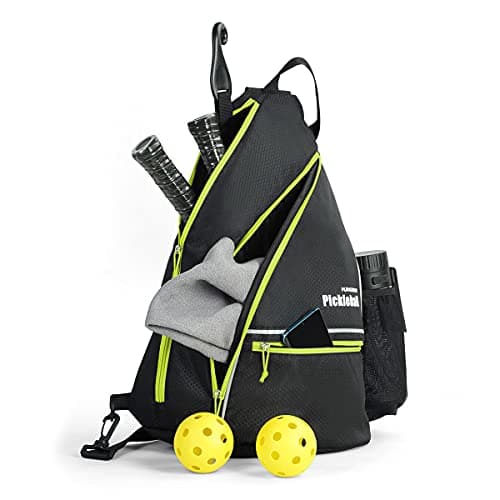 Mangrove Pickleball Bag The lowest-priced bag on this site — enough structure to keep paddles and balls together. | Testing whether a bag gets used at all, or a secondary gift | $19.99 · View on Amazon $22.99 save 13% |
| 3 | 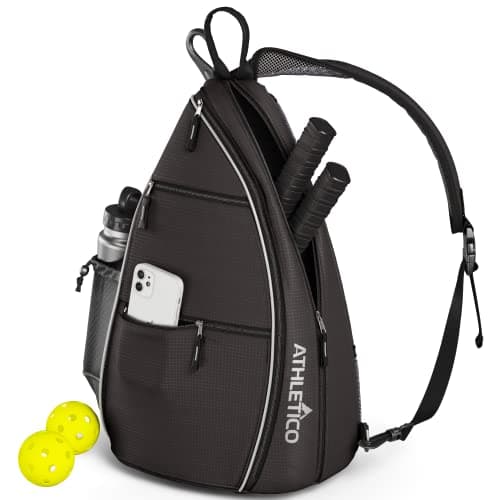 Athletico Sling Bag A crossbody sling — far less bag, and the right answer for a player who has called a backpack overkill. | One paddle, a couple of balls, and a short walk to the court |
SDLINR Large Pickleball Bag Backpack Fits 4+ Paddles for
Best for: A regular player who drives to the court and changes shoes
If your recipient plays more than once a week and drives there, this is the shape to buy. A backpack carries paddles in sleeves rather than loose, has room for shoes, water and a towel, and leaves both hands free walking from the car. The listing's paddle capacity is the manufacturer's own claim rather than anything verified here, but the useful point is the format: this is a proper bag rather than a tote with a logo on it. It sits in the middle of the bag price range, which is where most of the value in this category lives.
Skip it if: Skip it if the journey is a five-minute walk with one paddle — that recipient wants the sling below and will find a backpack is more bag than the trip needs. Skip it too for a complete beginner who has played twice; a starter set is the better gift until the habit exists.
Price as of October 5, 2026. #ad · how this works
Mangrove Pickleball Bag
Best for: Testing whether a bag gets used at all, or a secondary gift
This is the sensible purchase when you are not sure a bag will get used. It is the cheapest honest option: somewhere for the paddles, somewhere for the balls, and a strap. For a player who currently carries everything in a grocery bag, it is a straight upgrade at a price that works as an add-on to a bigger present rather than as the present itself. It also makes a reasonable spare for a household where two people play and only one has a bag.
Skip it if: Skip it if they change shoes at the court — at this price there is no dedicated ventilated shoe compartment, which is the single feature that converts people to proper bags. Skip it too if the bag is the main gift for a significant occasion; a budget bag is practical rather than impressive.
Athletico Sling Bag
Best for: One paddle, a couple of balls, and a short walk to the court
A surprising number of players genuinely do not want a backpack. They carry one paddle, they walk or cycle to a local court, and they want something they can sling on and forget. This is that bag: light, quick to get in and out of, nothing to store. Buying a sling for this recipient rather than a big backpack is the difference between a gift that gets used every session and one that lives in a closet, which is why format matters more than features here.
Skip it if: Skip it if they carry shoes, multiple paddles, or equipment for other people — a sling has neither the volume nor the compartments, and the backpack above is the right call. Skip it too if you want the gift to look substantial; a sling is a modest-looking object even when it is exactly the right one.
Price as of October 5, 2026. #ad · how this works
Frequently asked questions
Is a pickleball bag different from a tennis bag?
Mostly in the paddle sleeves. A pickleball bag is sized for paddles rather than racquets, so the sleeves are shorter and wider, and the better ones add a ventilated shoe compartment and a ball pocket. Beyond that, racquet-sport bags are substantially interchangeable, which is why a player who already carries a tennis bag does not need a second one. Buy them a consumable instead.
What size bag should I get?
Match the journey, not the player. A backpack for someone who drives to a court and changes shoes; a sling for someone who walks over with one paddle; a duffel only for an organizer who carries equipment for a group. Paddle-capacity numbers in listings are manufacturer claims and are not standardized between brands, so treat them as a rough guide to size rather than a specification.
Does a paddle need its own cover inside the bag?
It is a cheaper fix for the more urgent problem. The paddle face is the part that wears, and a cover stops it rubbing against keys, zips and water bottles whether or not there is a bag around it. If you only have a small budget, a paddle cover protects the expensive item; a bag organizes everything. Our accessories page covers the sleeve and case options.
How much should a pickleball bag cost?
The useful spread runs from a basic carry bag at stocking-stuffer money to a proper backpack with a ventilated shoe compartment in the mid range. Above that you are paying for brand and materials rather than for a problem being solved. Because bags are discounted constantly, every price on this site renders live with the date it was pulled rather than being typed into the copy. Our guide to how much to spend on a pickleball gift covers where a bag sits against the rest of the category.
Will a player who already has a bag want another?
Usually not, and this is the main reason to check before buying. A bag is a durable item that solves a problem once. If they already carry one, the gifts that still land are the consumables — balls, overgrips, socks, towels — or an upgrade in a category where they are making do, which is most often shoes.
Keep exploring
The roundup, once you have decided yes.
What to get a pickleball playerWhere a bag ranks against everything else.
Best pickleball accessoriesPaddle covers, cases and the small stuff.
Pickleball starter kit checklistWhat a new player needs before a bag.
Best pickleball towelsOne of the eight things that end up in a bag.
How much to spendWhere a bag sits in the budget.
Best beginner pickleball setsThe better gift for someone who has played twice.
Sources
Browse another way