Best Gear
The Best 14mm Pickleball Paddles
Thirteen, fourteen or sixteen millimeters is the single biggest decision in a paddle, and it costs nothing. Here is what a 14mm core actually changes, who should buy one, and the eight worth buying.
By Stephen V. · Updated November 2026 · How we pick
The verdict: buy the JOOLA Ben Johns Perseus Pro IV 14mm. It is the 14mm version of the signature line most players can already name, its listing publishes UPA-A certification and USAP approval, and it is the paddle on this page most players shopping a thin core are actually looking for. The budget pick is the Paddletek Phoenix Genesis 2 14mm at well under half of it, from a brand that has made paddles since long before the sport was fashionable. If you want the newest construction rather than the best-known name, the CPX Hyper+ is a full-foam core at a little more than the top pick.
First, what 14mm actually means, because this is a number with a job rather than a spec-sheet decoration. The figure is the thickness of the paddle's core - the honeycomb or foam layer between the two faces. JOOLA's own paddle guide puts the trade plainly: a 16mm core is the control-and-stability choice, and thinner cores deliver pop. A thinner core flexes less and returns more of the ball's energy, so the ball comes off faster for the same swing. A thicker core absorbs more, which is why it feels softer, holds a dink better and forgives an off-center hit. Neither is better. They are two different paddles for two different complaints.
So who should buy 14mm? The player whose complaint is that they have to work for put-aways. If they are already controlling the ball, already comfortable at the kitchen line, and the frustration is that their drives and overheads do not finish points, a thinner core hands that back. The player who should not buy 14mm is the one whose balls sail long, or who mis-hits toward the edge of the face regularly - a thinner core makes both of those worse, and our 16mm roundup is the right page for them. This is the single most useful thing to know before spending anything, and it is free: core thickness costs nothing either way.
What 14mm costs you, stated before the picks rather than buried under them. A thinner core has a smaller effective sweet spot, because there is less material to damp the vibration from a ball struck away from center, and the ball leaving faster means less time to shape a soft shot. In practice that is two things: more balls going long on resets, and more buzz through the arm on edge hits. Modern 14mm paddles fight both with foam - either injected around the perimeter or, on two picks here, filling the whole core - which stiffens the edge of the face so off-center balls lose less speed. That is the single biggest change in paddle construction in the last few years, and it is why a current 14mm paddle is a more forgiving object than a 14mm paddle from four years ago.
Shape matters as much as thickness and interacts with it. Selkirk's shape guide describes standard and widebody outlines as spreading the hitting area, and elongated outlines as trading sweet-spot width for reach. Put an elongated shape on a thin core and you have compounded the same trade twice: maximum reach and pace, minimum forgiveness. That combination is right for a confident singles player and wrong for almost everyone else. Three picks below publish an elongated shape and the rest are standard or unpublished, and each pick says which. If you are buying for someone else and cannot ask, a standard shape on a 14mm core is the safer of the two.
The other specification to settle before you buy is grip size, and it is the one nobody checks. Selkirk's guidance is to measure from the middle crease of the palm to the tip of the ring finger, and when you fall between sizes, to size down and build the handle up with an overgrip - material can be added to a handle and never removed. Two Paddletek picks below publish a 5.25-inch handle and the JOOLA publishes an elongated shape with a long handle, which is what makes a two-handed backhand practical for a player arriving from tennis. USA Pickleball's rulebook sets no grip-size restriction at all and caps the paddle at 17 inches of length and 24 inches of combined length and width, so none of this is a legality question - it is purely a fit one.
How the order works and what the prices do. The picks run from the paddle that suits the most buyers at this thickness to the most specialized, not from cheapest to priciest, and the spread is wide - the budget pick is about a third of the most expensive paddle here. Every number renders live from this site's price layer and carries its own "Price as of" date under its own button, which matters in paddles more than in most categories: thin-core flagships get discounted hard when a successor is announced, and a figure typed into an article six weeks ago is worse than no figure at all. Several well-known 14mm paddles are absent from this page for one reason: their listings were reporting low stock when it was written, and this site does not feature a pick a reader may not be able to buy.
The honesty section. Nobody on this site has hit with any of these paddles. There is no lab, no testing program, and not one rating, swing weight, spin number or durability claim below is ours. Every core thickness, face material, shape, handle length, certification and foam claim is repeated from the live retail listing it describes, and where a brand publishes no static weight - which includes most of this page - this page does not supply one. The context on thickness, shape, grip and legality is sourced to JOOLA, Selkirk and USA Pickleball at the foot of the page. If the paddle is for sanctioned tournament play, verify the exact model's current status in USA Pickleball's approved equipment database rather than relying on a listing or on us.
Disclosure: Popaddle earns a commission on qualifying purchases made through the links on this page, at no extra cost to you. Prices are pulled live and can change. How this works.
| # | Product | Best for | Price |
|---|---|---|---|
| 1 | 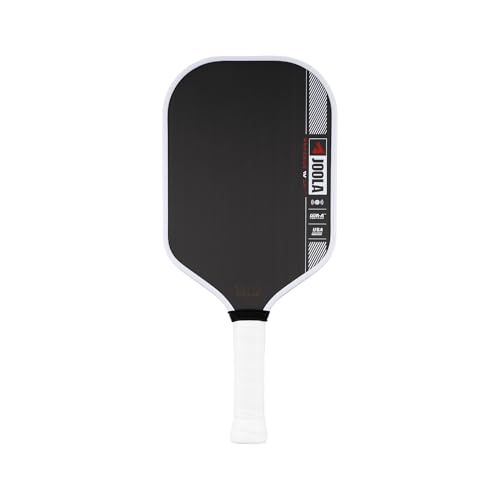 JOOLA Ben Johns Perseus Pro IV 14mm The 14mm version of JOOLA's current Ben Johns signature flagship - elongated, UPA-A certified, NFC chipped. | Most buyers at this thickness, and anyone who wants the thin core of a line they already know | $99.95 · View on Amazon $149.95 save 33% |
| 2 | 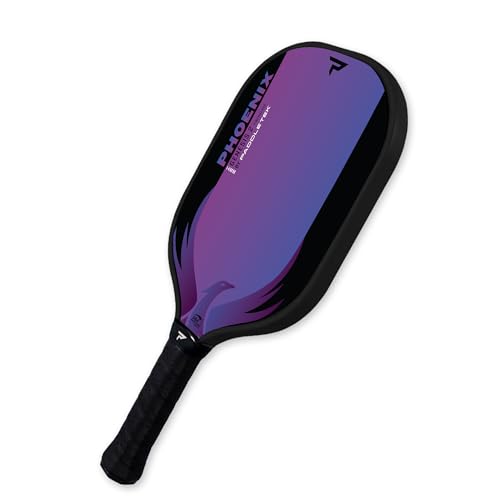 Paddletek Phoenix Genesis 2 14mm A 14mm fiberglass-faced paddle from an established brand, at well under half the top pick. | A player trying a thinner core for the first time, or anyone who wants the cheapest honest 14mm | |
| 3 | 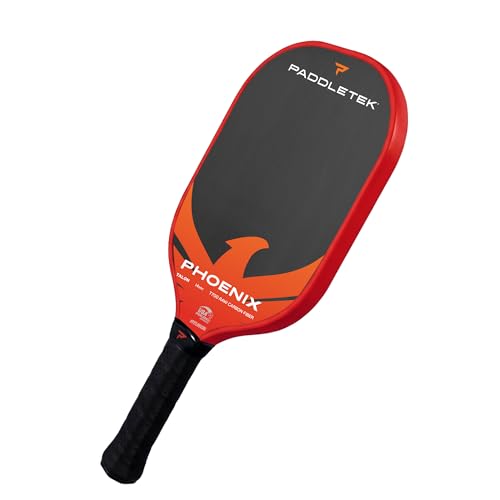 Paddletek Phoenix Talon 14mm A raw carbon 14mm paddle with a published 5.25-inch handle, from a long-established brand, at well under the flagships. | An improving player who wants a raw carbon face at a sensible price | |
| 4 | 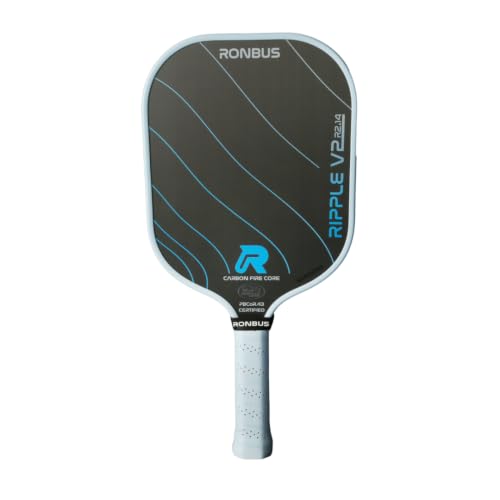 Ronbus Ripple V2 R2.14 A 14mm paddle built on Ronbus' 4th-generation FIRE core, at well under the price of the top pick. | A player who follows paddle releases and wants new core technology rather than a known name | |
| 5 | 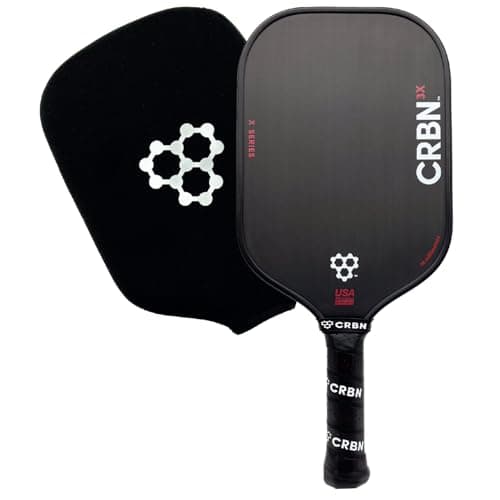 CRBN X Series Power 14mm Carbon Fiber A 14mm carbon fiber paddle with foam-injected edges, from a brand whose whole catalog is competition paddles. | An aggressive player who drives and finishes, and has asked for a power paddle | |
| 6 | 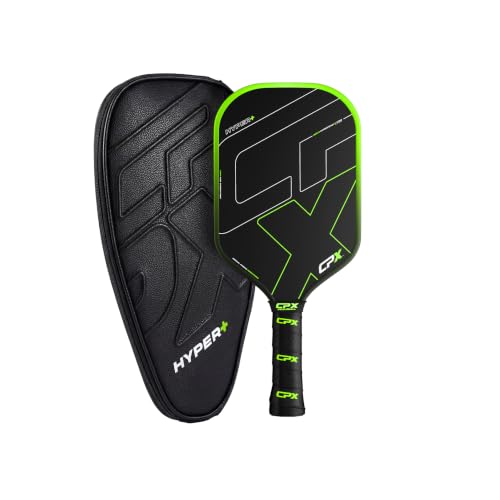 CPX Hyper+ Full Foam 14mm A 14mm full-foam core rather than a honeycomb one - the construction most of the category is moving toward. | A player who wants the newest construction idea in the category rather than an established name | $99.99 · View on Amazon $149.99 save 33% |
| 7 | 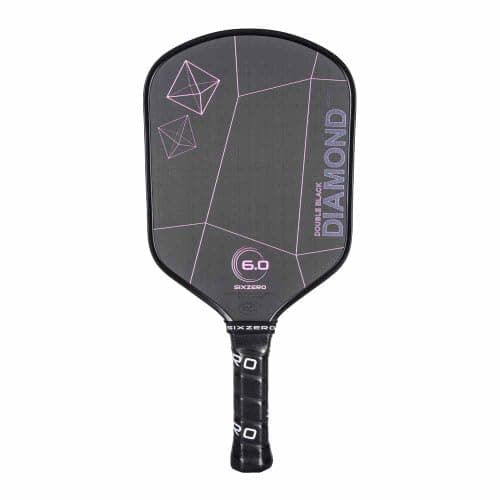 Six Zero Double Black Diamond Control 14mm The 14mm version of the Double Black Diamond Control - a thin core built and sold as a control paddle. | A player who wants a thin core without giving up the soft game | |
| 8 | 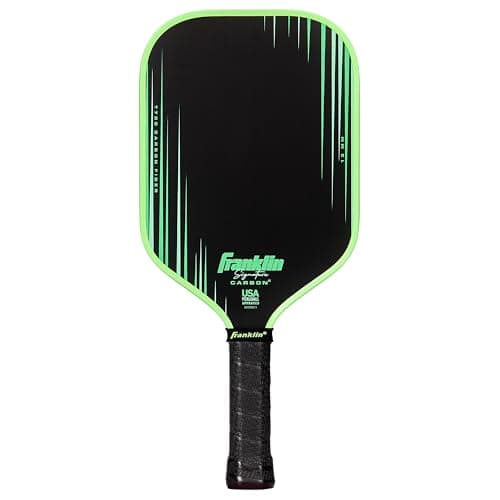 Franklin Sports Signature Carbon 13mm Elongated A 13mm elongated carbon paddle - a millimeter thinner than everything else here, and the page says so. | A player who has tried 14mm and wants to go further, or who wants maximum reach on a thin core | $84.99 · View on Amazon $99.99 save 15% |
The picks in detail
JOOLA Ben Johns Perseus Pro IV 14mm
Best for: Most buyers at this thickness, and anyone who wants the thin core of a line they already know
This is the paddle most people shopping a 14mm core are looking for, whether or not they can name it. The listing specifies a 14mm Perseus Pro IV with Tech Flex Power construction, an elongated shape for power and spin, a Propulsion Core JOOLA publishes as increasing power and touch, UPA-A certification, USAP approval and an NFC chip. The thing worth understanding is that this is the same paddle as the 16mm Pro IV in a thinner core, so the choice between them is purely the thickness decision at the top of this page - same shape, same face, same certification, different trade. If the player's complaint is that they have to work for put-aways, this is the one of the pair to buy. We have a full write-up of the line with every figure JOOLA publishes.
Skip it if: Skip it if the player mis-hits regularly, because an elongated shape on a thin core compounds the same trade twice and this is a lot of money for the least forgiving combination on the page. Skip it too if they already own the 16mm Pro IV - that is the same paddle with the other trade, and owning both is a preference rather than an upgrade.
Paddletek Phoenix Genesis 2 14mm
Best for: A player trying a thinner core for the first time, or anyone who wants the cheapest honest 14mm
This is the budget pick and the right way to find out whether a thin core suits you. The listing specifies a Paddletek Phoenix Genesis 2 at 14mm with a fiberglass composite face, published for easy power and soft feel, USAPA approved, with a 5.25-inch handle. The fiberglass face is the honest trade: raw carbon grips the ball harder and generates more spin, and fiberglass is softer and cheaper and pairs oddly well with a thin core, because the face gives back some of the touch the core takes away. Paddletek has been making paddles far longer than most of the brands on this page, and a published handle length at this price is more specification than the category usually offers. Spending under half the top pick to discover your preference is the sensible order of operations.
Skip it if: Skip it if spin is what they are after, because a fiberglass face is not a raw carbon one and the Paddletek Talon below is the same brand's carbon-faced 14mm. Skip it too if the paddle is a significant gift; this is the correct amount of money and it will not feel like the main present, and our paddle sets page is where the gift-shaped options are.
Price as of November 22, 2026. #ad · how this works
Paddletek Phoenix Talon 14mm
Best for: An improving player who wants a raw carbon face at a sensible price
Buy this one if the specification sheet is what you are shopping for. The listing specifies a Paddletek Phoenix Talon at 14mm with a raw carbon fiber face, balanced control and spin, a polypropylene honeycomb core, USAPA approval and a 5.25-inch handle. Raw carbon is the face that gives a paddle its bite on the ball, and it is the material difference between this and the budget pick above - at a price that still sits well under the flagship picks. The published handle length matters more than it looks: 5.25 inches is enough for a two-handed backhand, which is the shot a player arriving from tennis is most likely to want. For an improving player who knows what they want and does not need a famous name on it, this is the right paddle on this page.
Skip it if: Skip it if you need a published shape or static weight, neither of which this listing supplies - the JOOLA picks publish considerably more about their geometry. Skip it too if brand recognition matters for a gift; Paddletek is respected by people who read paddle reviews and quieter than JOOLA or Selkirk on a shelf.
Price as of November 22, 2026. #ad · how this works
Ronbus Ripple V2 R2.14
Best for: A player who follows paddle releases and wants new core technology rather than a known name
This is the pick for the reader who already knows what thermoformed and foam-injected mean. The listing specifies a Ronbus Ripple V2 with a 4th-generation FIRE core, sold across the R1.14, R2.14, R4.14 and R5.14 shapes, in the R2.14 configuration. Ronbus sells almost entirely to players who research paddles rather than to gift buyers, and the honest description of what you are buying is a current-generation core from a specialist brand for meaningfully less than a signature flagship. What you give up is the recognition and the published certification detail the JOOLA carries; what you keep is the construction. The numbered shape codes are the brand's own range language - R1 through R5 are different outlines in the same line.
Skip it if: Skip it as a surprise gift, because Ronbus means nothing to anyone who does not follow paddle releases and recognition is part of what a present does. Skip it too if you want the listing to tell you the shape in plain words; it publishes a model code rather than "elongated" or "standard", and our shape guide explains why that distinction matters.
Price as of November 22, 2026. #ad · how this works
CRBN X Series Power 14mm Carbon Fiber
Best for: An aggressive player who drives and finishes, and has asked for a power paddle
Buy this one for the player whose game is pace. The listing specifies a CRBN X Series Power carbon fiber paddle at 14mm with foam-injected edges. Both halves of that matter here. The 14mm core is the pop side of JOOLA's own published trade, and the foam-injected edge is the fix for what a thin core costs you - it stiffens the perimeter of the face so a ball struck away from center loses less speed, which is exactly the weakness a thin core has. CRBN makes competition paddles and nothing else, and the result is a paddle built around a single intention rather than a range of buyers. For a player who already controls the ball and wants more out of their drives, that focus is the point.
Skip it if: Skip it for anyone whose balls already sail long, because a thin core and a power build will make that worse rather than better - the control-oriented picks below are the fix. Skip it too if you need a published shape or weight; this listing names the series and the thickness and not much else.
Price as of November 22, 2026. #ad · how this works
CPX Hyper+ Full Foam 14mm
Best for: A player who wants the newest construction idea in the category rather than an established name
This is the pick for the player who tracks where paddle construction is going. The listing specifies a CPX Hyper+ Series full-foam paddle with Hyperfoam X Core technology in a green 14mm. Note the difference from every other pick here: most paddles use a polypropylene honeycomb core with foam injected around the perimeter, and this publishes foam filling the whole core. The published intention of a full-foam build is to behave more consistently across the face, which addresses the specific weakness of a thin core, and it is the direction several specialist brands have moved. The honest framing is that you are buying a construction approach rather than a measurable figure, because nobody in this band publishes a comparable number for it.
Skip it if: Skip it if you want a brand the recipient will have heard of, because CPX is a specialist name and this is a lot of money for an unfamiliar one as a gift. Skip it too if you want published certification detail; the JOOLA and Paddletek listings state their approval status explicitly and this one does not.
Six Zero Double Black Diamond Control 14mm
Best for: A player who wants a thin core without giving up the soft game
Buy this one if the thickness decision feels like a compromise you do not want to make. The listing is a Six Zero Double Black Diamond Control paddle at 14mm with a black edge guard, and the significant word is Control: this is a thin core from a model line built and named around the soft game rather than around pace. That combination is unusual, and it is the right answer for a specific player - someone whose dinks and resets are good, who does not want to give that up, and who still wants the ball to leave faster when they decide to finish. It is the most expensive paddle on this page. We have a full specification write-up of the Double Black Diamond, which also covers the 16mm version of the same paddle for comparison.
Skip it if: Skip it if the budget is a real constraint, because this is the top of the page on price and the Paddletek Talon publishes a raw carbon face for a little over half of it. Skip it too if the player's actual complaint is mis-hitting; no 14mm paddle is the forgiving option, and the 16mm version of this same paddle is the honest answer there.
Price as of November 22, 2026. #ad · how this works
Franklin Sports Signature Carbon 13mm Elongated
Best for: A player who has tried 14mm and wants to go further, or who wants maximum reach on a thin core
This pick is on a 14mm page with an asterisk, and the asterisk is the point: the listing publishes 13mm, not 14mm, and calling it a 14mm paddle would be wrong. It is here because it is the logical next step for a player who has decided thinner suits them. The listing specifies a Franklin Sports Signature Carbon pickleball paddle at 13mm in an elongated shape. Thirteen millimeters on an elongated outline is the most aggressive combination in this site's registry - maximum pop, maximum reach, least forgiveness - and Franklin is a mainstream brand with real distribution rather than a boutique one, which makes it an unusually accessible way to buy that configuration. Our paddle thickness guide covers the 13mm-versus-16mm question with this paddle as the reference point.
Skip it if: Skip it if you specifically want 14mm, because this is not that and this page is not going to blur the difference. Skip it too for any newer player; the thinnest core on the narrowest shape is the hardest paddle here to hit well, and a widebody 16mm would make them play better.
Frequently asked questions
Is a 14mm or 16mm pickleball paddle better?
Neither - they solve opposite complaints, and the choice costs nothing either way. JOOLA's own paddle guide describes a 16mm core as the control-and-stability option and thinner cores as the ones that deliver pop. Pick by the frustration you actually hear: if balls sail long or mis-hits are common, buy 16mm. If the player controls the ball well but has to work for put-aways, buy 14mm. Our 16mm roundup is the other half of this page, and our thickness guide works through the question with the same paddle in both thicknesses as the example.
Who should not buy a 14mm paddle?
Beginners, and anyone whose balls go long. A thinner core returns more of the ball's energy and has less material to damp the vibration of an off-center hit, so it rewards a player who already controls depth and punishes one who does not. For a new player, a thicker core and a wider face will make them play better, not worse - and it costs the same. If you are buying a gift and cannot ask about their game, 16mm is the safer guess by a wide margin.
Does a 14mm paddle have a smaller sweet spot?
All else equal, yes - there is less core material to damp vibration from a ball struck away from center, so the ball leaves slower and the arm feels more of it. What changes the arithmetic is foam. Most current paddles inject foam around the perimeter to stiffen the edge of the face, and two picks on this page publish a full-foam core, which is the same idea taken further. That is the single biggest reason a current 14mm paddle is a more forgiving object than a 14mm paddle from a few years ago. It still is not as forgiving as 16mm.
Are 14mm paddles legal for tournament play?
Yes - USA Pickleball's rulebook sets no core-thickness restriction at all. What it does cap is size: 17 inches of maximum length and 24 inches of combined length and width, with no weight restriction and no grip-size restriction. Several listings on this page publish USAP approval and the JOOLA publishes UPA-A certification as well, but a retail listing is not a reliable source for current status. If sanctioned play matters, check the exact model in USA Pickleball's approved equipment database, which is the only place that is current.
What is the difference between foam-injected and full-foam?
Foam-injected means a polypropylene honeycomb core with foam added around the perimeter, which stiffens the edge of the face. Full-foam means foam filling the whole core instead of honeycomb. The CRBN pick here publishes foam-injected edges and the CPX pick publishes a full-foam core, and the published intention of both is the same - to make the face behave more consistently away from its center, which is the specific weakness of a thin core. Neither claim is independently measured, and this page reports both as what they are: manufacturer descriptions.
Which 14mm paddle should I buy if I am not sure?
The Perseus Pro IV 14mm if the budget is real and the player is committed, because it is the thin core of the line most players already know. The Paddletek Phoenix Genesis 2 if you are not sure a thinner core suits them at all - it is well under half the price and the right way to find out before spending more. And if you cannot ask about their game, buy 16mm instead; a thin core is a preference and a thick one is a safe default.
How were these chosen, and have you played with them?
No. Nobody on this site has hit with any of these paddles, there is no testing program behind Popaddle, and no rating, weight, spin figure or durability claim here is ours. The shortlist is every paddle in this site's registry whose own listing publishes a core of 14mm or thinner and that was confirmed in stock with a live price when this page was written - which is why several well-known 14mm paddles are absent, their listings were reporting low stock. Every specification is repeated from the listing it describes; the context on thickness, shape, grip and legality is sourced to JOOLA, Selkirk and USA Pickleball below.
Keep exploring
The other half of this decision - the control-and-forgiveness shelf.
Pickleball paddle thickness guideThe 13mm, 14mm and 16mm question worked through with the same paddle in two cores.
Best pickleball paddles for powerSorted by what the paddle is for rather than by how thick it is.
Best elongated pickleball paddlesThree picks here are elongated - whether that shape suits you is a separate decision.
Best pickleball paddles under $200The same flagship shelf cut by price instead of by core thickness.
Six Zero Double Black Diamond reviewEvery published figure on this page's control pick, in both thicknesses.
JOOLA Perseus Pro IV reviewThe full specification on the top pick's line, 14mm and 16mm.
Sources
- JOOLA — Official Paddle Guide (core thickness: 16mm for control and stability, thinner cores for pop)
- USA Pickleball — Official Rulebook, Section 2 (2.E.3 paddle size: 24 in combined length and width, 17 in maximum length; 2.E.4 no weight restriction)
- USA Pickleball — Approved equipment database (current approval status, paddle by paddle)
- Selkirk Sport — the ultimate guide to pickleball paddle shapes (standard/widebody shapes spread the hitting area; elongated shapes trade sweet-spot width for reach)
- Selkirk Sport — how to know your pickleball grip size (measure from the middle crease of the palm to the tip of the ring finger; when between sizes, go smaller and build up with an overgrip)
Browse another way