Best Gear
The Best Elongated Pickleball Paddles
An elongated paddle trades a wide sweet spot for reach and leverage. Here is which one earns that trade at each price - and the honest case for not buying one.
By Stephen V. · Updated November 2026 · How we pick
The verdict first. Buy the Engage Pursuit Pro1 Elongated: a raw carbon fiber elongated paddle with USA Pickleball approval, sitting just above the hundred-dollar line, and the elongated paddle on this page that suits the widest range of players. The budget pick is the Franklin Sports Signature Carbon 13mm Elongated, the cheapest paddle in this site's registry whose own listing publishes an elongated shape. If this is a serious upgrade for a serious player, the JOOLA Perseus Pro IV at the bottom is the one they have already read about.
Here is what you are actually buying, because the shape is a genuine trade and the marketing never frames it as one. Selkirk's own shape guide puts it plainly: standard and widebody outlines spread the hitting area across the face, while elongated shapes trade sweet-spot width for reach. A longer paddle head sits further from your hand, which gives you more leverage on a drive and a few extra inches at the net and on a stretch volley. The same geometry narrows the face, so the forgiving middle of the paddle is smaller and an off-center ball is punished harder. That is the whole deal: reach and leverage in, forgiveness out.
So who should buy one. Players coming from tennis, who are used to a long lever and a swing that finds the middle of a strung racquet. Singles players, who cover ground and value reach over everything. Anyone whose game is built on driving the third ball, where the extra leverage is free power. And tall players, for whom a paddle that reaches further is simply a better fit. Who should not: anyone still learning where the sweet spot is, anyone whose main complaint is mis-hits, and anyone who plays doubles at the kitchen line and wins points with hands rather than reach. For those players, the wide face on our 16mm roundup is a better purchase at any price.
The limit that shapes this category is a rule, not a preference. USA Pickleball's rulebook caps a paddle at 17 inches in length and allows 24 inches of combined length and width, so the longest legal paddle is 17 inches end to end - and because the two numbers trade against each other, a longer paddle is necessarily a narrower one. Most elongated paddles in circulation sit near 16.5 inches. That ceiling is why the elongated shape cannot keep getting longer, and it is also why a sleeve or cover sized for a widebody paddle will not always take one of these; if you are buying a bag at the same time, check the bag's stated capacity.
What the money buys as you go up this page, and what it does not. The specifications that change between the budget pick and the top of the page are the face fabric, the core thickness, the edge construction and the endorsement - raw carbon versus a painted face, 13mm versus 15.2mm versus 16mm, a vibration-damping edge barrier or not. The specification that does not change is the shape, which is the thing you came for. The practical consequence is that the cheapest pick here delivers the actual geometry you are shopping for, and everything above it is paying for feel, finish and brand. That is a reasonable thing to pay for; it is not a different paddle shape.
Grip size decides more of this purchase than the shape does. Selkirk's guidance is to measure from the middle crease of the palm to the tip of the ring finger and, when you are between sizes, to go smaller and build the handle up with an overgrip, because material can be added to a handle and never removed. Elongated paddles compound this: several of the picks below publish a longer handle, which is what makes a two-handed backhand possible and also what makes a too-thick grip harder to live with. Buy an overgrip in the same order and the handle becomes adjustable.
And the honesty section. Nobody on this site has hit with any of these paddles; there is no testing program behind Popaddle and not one invented rating, swing weight, spin figure or durability claim below. Every shape, core thickness, face material, handle feature and certification is repeated from the live retail listing it describes, and where a brand publishes no weight - which is most of them - this page does not invent one. Prices move weekly in this category, so every number is pulled live from this site's price layer and carries its own "Price as of" date under its own button. If tournament legality matters, verify the exact model in USA Pickleball's approved equipment database rather than trusting any article.
Disclosure: Popaddle earns a commission on qualifying purchases made through the links on this page, at no extra cost to you. Prices are pulled live and can change. How this works.
| # | Product | Best for | Price |
|---|---|---|---|
| 1 | 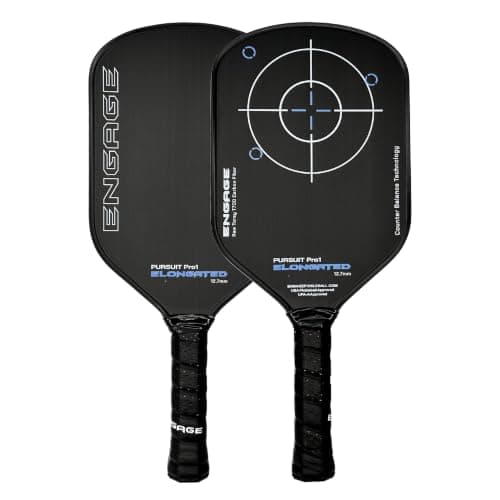 Engage Pursuit Pro1 Elongated 15.2mm A USA Pickleball approved raw carbon elongated paddle with SpinCore and a vibration-damping edge barrier. | Most players who want the elongated shape, at the lowest price it comes properly built | $103.99 · View on Amazon $129.99 save 20% |
| 2 | 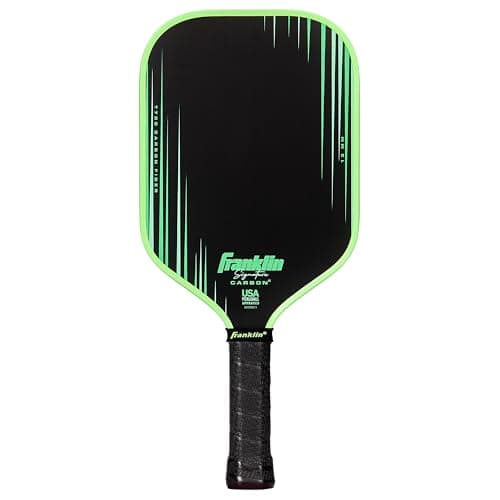 Franklin Sports Signature Carbon 13mm Elongated The lowest-priced paddle in this registry whose own listing publishes an elongated shape, with a carbon face. | The cheapest way to find out whether the elongated shape suits you | $84.99 · View on Amazon $99.99 save 15% |
| 3 | 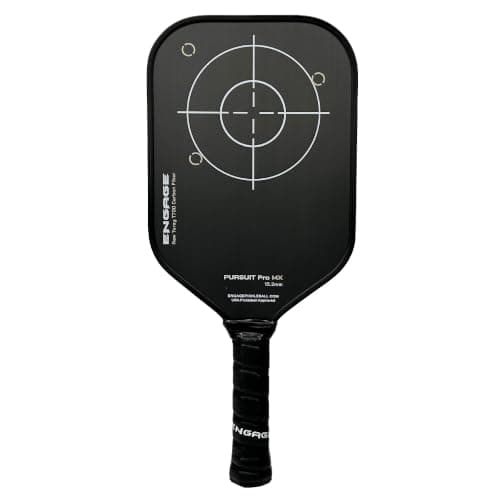 Engage Pursuit Pro MX 15.2mm An elongated raw carbon paddle built on a 16mm Control Pro core, with the same vibration-damping edge. | A player who wants the reach of a long paddle without the ball running away | |
| 4 | 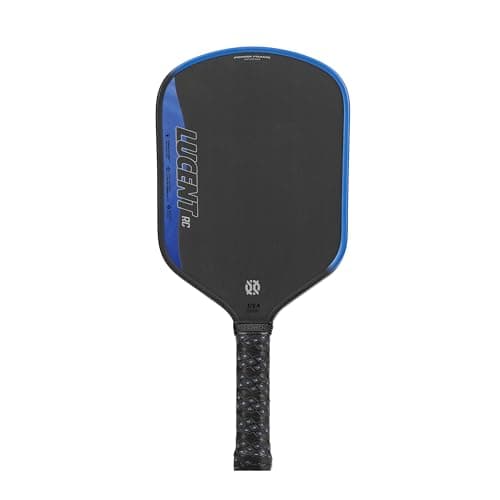 Onix Lucent Raw Carbon An elongated raw carbon paddle with a Hexcell core and a tennis-style grip, from a brand sold everywhere. | A gift for a regular player who shops in sporting-goods stores | $100.50 · View on Amazon $119.99 save 16% |
| 5 | 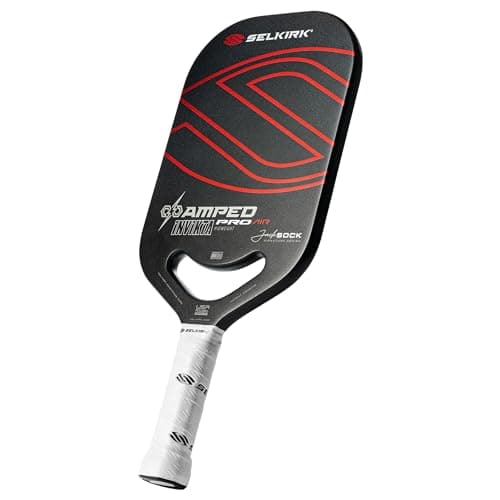 Selkirk Sport Amped Pro Air (Invikta) Selkirk's Invikta shape - the elongated outline in its own range - with an X5+ honeycomb core. | A player who wants one paddle to cover power, spin and touch | $49.99 · View on Amazon $99.99 save 50% |
| 6 | 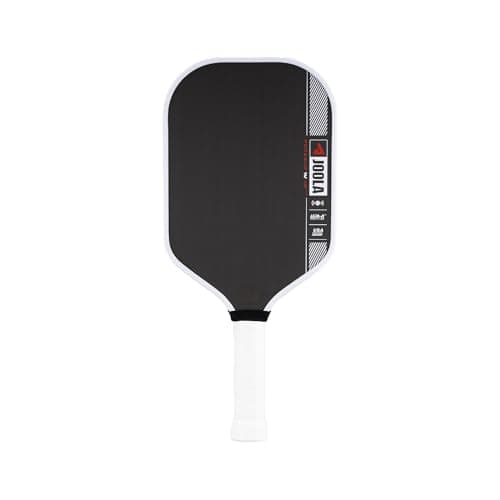 JOOLA Ben Johns Perseus Pro IV 16mm JOOLA's current Ben Johns signature paddle - elongated, 16mm, built and marketed for power and spin. | An established player who drives the third ball and has asked for a flagship | |
| 7 | 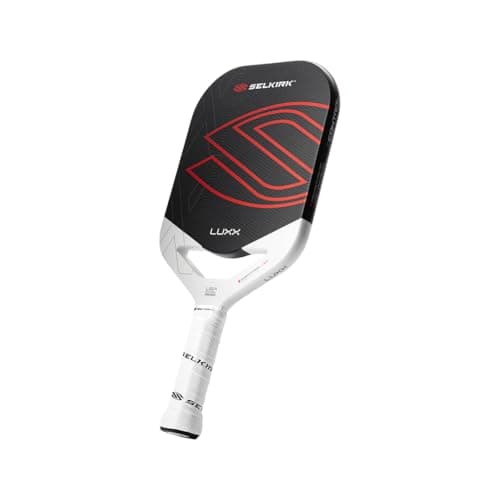 Selkirk Sport LUXX Control (Invikta) The Invikta elongated shape at the top of Selkirk's line, with published 2,000-RPM spin technology and a secure grip. | A player who has decided spin is the whole game and wants the top of a range they trust | $199.99 · View on Amazon $279.99 save 29% |
The picks in detail
Engage Pursuit Pro1 Elongated 15.2mm
Best for: Most players who want the elongated shape, at the lowest price it comes properly built
This is the elongated paddle to buy if you are buying one paddle. The listing specifies an elongated shape in a 15.2mm thickness, a raw carbon fiber face, SpinCore technology, a Vortex Barrier edge built to limit vibration, and USA Pickleball approval. Raw carbon is the face construction that gives these paddles their bite on the ball, and the edge barrier addresses the one real complaint about long paddles: a narrow head transmits more buzz into the arm on an off-center hit, and damping at the edge is the sensible place to deal with it. Engage sells to players rather than to gift buyers, which shows in what the listing publishes and does not.
Skip it if: Skip it if the recipient is new to the sport - the shape costs them forgiveness they still need, and the wide-faced paddles on our 16mm page are the better first purchase at any price. Skip it too if brand recognition is the point of the gift; Engage is a respected name among players and an unknown one across a dinner table.
Franklin Sports Signature Carbon 13mm Elongated
Best for: The cheapest way to find out whether the elongated shape suits you
Buy this one first if you are not sure the shape is for you, which is the right instinct. The listing specifies a Signature Carbon pickleball paddle in a 13mm thickness with an elongated shape, from Franklin - a brand whose balls are on more public courts than anyone else's and whose name a recipient will recognize. The 13mm core is the thinner, livelier side of the range, which pairs logically with the leverage of a long head: this is a paddle built to hit the ball hard. At this price it is the cheapest honest route into the geometry, and if the shape turns out not to suit, you have spent the least possible to find out.
Skip it if: Skip it if control is the complaint you are trying to fix - a thin core and a narrow face are the two specifications that make a ball fly, stacked on top of each other, and a 16mm widebody is the opposite prescription. Skip it too if they already own a carbon paddle in this bracket; this is a shape experiment, not an upgrade.
Engage Pursuit Pro MX 15.2mm
Best for: A player who wants the reach of a long paddle without the ball running away
This is the pick that resolves the central tension of the category. The listing specifies an elongated shape, a raw carbon fiber face, a 15.2mm paddle with a 16mm Control Pro "Black" core, Vortex Barrier edge technology to limit vibration, and a standard weight. JOOLA's paddle guide explains why that core specification matters: a thicker core is the control-and-stability choice, where thinner cores deliver pop. Putting the control core inside the long shape is the configuration for a player who wants the reach and the leverage but keeps hitting through the back of the court. For a tennis convert who already generates plenty of their own power, this is often the smarter of the two Engage picks.
Skip it if: Skip it if you want free power - this is deliberately the damped, controlled version of an aggressive shape, and the Franklin pick above or the Perseus below will feel livelier. Skip it too if the thickness numbers on the listing bother you; it publishes both 15.2mm and a 16mm core specification, and if you want one unambiguous figure the other picks here are clearer.
Price as of November 22, 2026. #ad · how this works
Onix Lucent Raw Carbon
Best for: A gift for a regular player who shops in sporting-goods stores
Buy this one when the gift needs a name the recipient already trusts. The listing specifies an elongated shape, a Hexcell core, a carbon fiber face, a tennis-style pickleball paddle grip and USAPA approval. The tennis-style grip is the detail worth noticing, because it is a deliberate match for exactly the player the elongated shape suits best: someone arriving from tennis who wants a familiar handle under a familiar lever. ONIX is also one of the three names that a non-player will have seen on a shelf, which is worth real money in a present - a paddle that looks like a serious brand is received differently from one that does not, however good the specification sheet.
Skip it if: Skip it if you are optimizing the materials list - the picks above publish more about the construction for similar money, and "Hexcell core" is a brand name rather than a thickness. Skip it too if they have small hands and you cannot check the grip: a tennis-style handle is not a thin handle, and a grip that is too big is the fastest way to a paddle that gets left in the bag.
Selkirk Sport Amped Pro Air (Invikta)
Best for: A player who wants one paddle to cover power, spin and touch
This is the pick for the player who does not want to specialise. The listing specifies an all-court paddle for every skill level, with power, spin and an X5+ honeycomb core, in the Invikta Jack Sock colorway - and Invikta is the name Selkirk gives the elongated outline in its own published shape taxonomy, which is why it belongs on this page rather than on a widebody one. Selkirk is the other brand besides JOOLA and ONIX that a non-player recognizes, and its range is unusually legible: shapes are named consistently across price tiers, so a player who gets on with an Invikta can move up or down the range later without re-learning the geometry. For a present to someone who plays weekly and has not asked for anything specific, that legibility is the argument.
Skip it if: Skip it if you want the core thickness published - this listing names the core material and not a millimetre figure, and three picks on this page do give you the number. Skip it too if they are a committed control player; the all-court brief here is a compromise by design, and the Pursuit Pro MX above is the paddle built to damp the ball down.
JOOLA Ben Johns Perseus Pro IV 16mm
Best for: An established player who drives the third ball and has asked for a flagship
This is the paddle the serious player on your list has already read about. The listing specifies an elongated shape for power and spin, a 16mm core, Tech Flex Power construction, a Propulsion Core the brand publishes as increasing power and touch, UPA-A certification, USAP approval and an NFC chip. The combination worth understanding is the 16mm core inside an elongated head: the thick core hands back some of the forgiveness the narrow shape takes away, which is why flagship long paddles increasingly ship at this thickness rather than thinner. It is also the current generation of the most-recognised signature line in the sport, so as a milestone gift for someone who plays several times a week it lands in a way no specification sheet does. We have a full write-up of this paddle if you want the published figures in one place.
Skip it if: Skip it for a recreational doubles player who mis-hits regularly - this is a lot of money for a narrow face, and they will play better with the top pick on our 16mm page. Skip it too if they already own the previous flagship; the Hyperion is a different paddle, not an inferior one, and the upgrade is not worth this outlay.
Price as of November 22, 2026. #ad · how this works
Selkirk Sport LUXX Control (Invikta)
Best for: A player who has decided spin is the whole game and wants the top of a range they trust
This is the top of the page, and the reason to be here is brand plus shape rather than a number you can check. The listing specifies the Invikta outline - Selkirk's elongated shape - a secure grip and 2,000-RPM spin technology, positioned for every skill level. The RPM figure is the brand's own published claim about its surface rather than an independent measurement, and this page reports it as exactly that. What you are genuinely buying at this price is the finish, the materials and the top rung of a range whose shape naming stays consistent, which matters to a player who wants to stay inside one brand's language as their game changes. For a retirement, a significant birthday or a milestone for someone whose week revolves around court time, that is a defensible splurge.
Skip it if: Skip it for anyone who would rather have the same money as shoes, balls, a bag and court time - plenty of strong players would, and it is worth a moment's thought before you spend this. Skip it too if what they actually want is a wide, forgiving face: no amount of money makes an elongated paddle forgiving, and that is the one thing this shape cannot be sold.
Frequently asked questions
What is an elongated pickleball paddle?
It is a paddle whose head is longer and correspondingly narrower than a standard or widebody one. Selkirk's own shape guide describes the trade directly: standard and widebody shapes spread the hitting area across the face, while elongated shapes trade sweet-spot width for reach. USA Pickleball's rulebook is what forces the trade - a paddle may be up to 17 inches long with 24 inches of combined length and width, so every inch of extra length has to come out of the width.
Who should actually buy one?
Tennis converts, singles players, players who win points by driving the third ball, and tall players who want the extra reach. The common thread is a swing that already finds the middle of the face reliably and a game that values reach or leverage over forgiveness. If the person you are buying for mis-hits regularly, plays doubles at the kitchen line, or is still learning, the elongated shape costs them more than it gives and a widebody is the better paddle.
Do elongated paddles have more power?
They have more leverage, which usually feels like more power on a drive. The head sits further from your hand, so the same arm speed moves the face faster at the point of contact. What that does not do is make the paddle easier to hit with: the same geometry narrows the sweet spot, so the shots you strike well go harder and the shots you strike badly go worse. Core thickness pulls in the other direction - JOOLA's guide describes a 16mm core as the control-and-stability choice - which is why several flagship elongated paddles now ship at 16mm.
How long is an elongated paddle, exactly?
Most sit near 16.5 inches, and the rulebook ceiling is 17 inches of length with 24 inches of combined length and width. Beyond that, the honest answer is that very few listings publish their dimensions - including most of the ones on this page - so this page states the shape each brand publishes and does not invent inches. If the paddle has to fit a specific bag sleeve or cover, measure the bag and buy from a listing that publishes its dimensions.
Is an elongated paddle legal for tournaments?
The shape is legal as long as the paddle is inside the 17-inch length and 24-inch combined limits, which every mainstream elongated paddle is. What needs separate checking for sanctioned play is whether the specific model is currently approved, and the only reliable source for that is USA Pickleball's approved equipment database - not a retail listing and not this page. Models get re-certified, and surface rules have changed recently enough that a listing can be out of date without being dishonest.
Can a two-handed backhand player use these?
Yes, and the shape is often chosen for exactly that. Several elongated paddles publish a longer handle, which is what makes room for a second hand - the Hyperion listing on our JOOLA page names a Sure-Grip elongated handle specifically. If a two-handed backhand is the reason for the purchase, prioritise the handle length the listing publishes over the face specification, and plan on an overgrip: Selkirk's guidance is to size the grip down and build it up, because a handle can be thickened and never thinned.
How were these chosen, and have you played with them?
No. Nobody on this site has hit with any of these paddles, there is no testing program behind Popaddle, and no rating, weight or spin figure here is ours. The shortlist is every paddle in this site's registry whose own listing publishes an elongated shape - or, for Selkirk, the Invikta outline that its own published shape guide defines as elongated - and that carries a live price. Every specification is repeated from the listing it describes; the context about shape, grip and legality is sourced to Selkirk, JOOLA and USA Pickleball at the foot of the page.
Keep exploring
The full comparison before you commit to a shape.
Best 16mm pickleball paddlesThe same registry sorted by core thickness, where the wide faces live.
Best pickleball paddles for tennis playersThe buyer this shape suits most often, with the handle notes.
Best pickleball paddles for powerIf leverage is what you are really shopping for.
Best pickleball paddles under $200The price band most of this page sits in.
JOOLA Perseus Pro IV reviewEvery published figure on the flagship elongated paddle here.
Best pickleball paddles with the biggest sweet spotThe honest alternative if forgiveness matters more than reach.
Sources
- USA Pickleball — Official Rulebook, Section 2 (2.E.3 paddle size: 24 in combined length and width, 17 in maximum length; 2.E.4 no weight restriction; no grip-size restriction)
- USA Pickleball — Approved equipment database (which paddles are approved for sanctioned play)
- Selkirk Sport — the ultimate guide to pickleball paddle shapes (standard/widebody shapes spread the hitting area; elongated shapes trade sweet-spot width for reach)
- Selkirk Sport — how to know your pickleball grip size (measure from the middle crease of the palm to the tip of the ring finger; when between sizes, go smaller and build up with an overgrip)
- Selkirk Sport — pickleball paddle weight guide
- JOOLA — Official Paddle Guide (core thickness: 16mm for control and stability, thinner cores for pop)
Browse another way