Best Gear
The Best Pickleball Paddles for Tennis Players
A lifetime of tennis is an asset on a pickleball court — as long as the paddle does not fight it. These are the shapes and handles that let a racket player feel at home.
By Stephen V. · Updated September 2026 · How we pick
A large share of the people picking up pickleball for the first time are tennis players, and they arrive with something no beginner has: a swing. Years of topspin, a two-handed backhand, a feel for where the sweet spot is on a long racket. The best gift you can give that person is a paddle that does not throw all of it away. Most starter paddles do exactly that — short handle, wide face, no grit — and the first thing a tennis player says about them is that they feel like a ping-pong bat. This page is the fix.
What a tennis player needs from a paddle is not mysterious, and Selkirk — a paddle maker with a whole product line aimed at converts — spells it out. Its guidance is a longer handle "for a familiar grip, which is especially useful for two-handed backhands," an "elongated shape to mimic the racket's sweet spot," a "heavier weight for a feel similar to tennis rackets," and "high spin capability to utilize topspin and backspin in shots." Selkirk also notes that "about 80% of tennis players use a two-handed backhand when transitioning to pickleball because it gives them more power and increased stability." That single statistic explains why almost every pick on this page has an elongated handle: a standard pickleball handle barely fits one hand, and a two-hander with no room for the second hand is miserable.
The rules are why elongated paddles exist. USA Pickleball allows a paddle's combined length and width to reach 24 inches, with length capped at 17 inches, and it places no restriction on thickness or weight. Makers can therefore spend the allowance on length rather than width, which is what an elongated paddle does: a longer, narrower face with a longer handle. The cost is a slightly smaller sweet spot, concentrated higher on the face — which, as it happens, is roughly where a tennis player expects it to be anyway.
Two more things a tennis player will care about that a beginner will not. First, the face. Raw carbon fiber has a gritty texture that grips the ball, and it is what makes topspin and slice transfer from tennis to pickleball; a smooth fiberglass starter paddle produces almost none. Every pick below has a carbon face. Second, thickness. A 16mm core is the control choice and the one to default to; a 13mm or 14mm core is livelier and suits a player who wants more pace. JOOLA's paddle guide describes 16mm as offering control, precision and stability and 14mm as suiting players who prioritize power and faster gameplay. We include both, and say which is which.
Here is what every pick was judged against, in order. First, an elongated shape or an explicitly elongated handle on the listing — this is the non-negotiable for a tennis player. Second, a carbon face for spin. Third, a mix of thicknesses so the page covers both the control-minded and the power-minded convert. Fourth, a spread from a recognized name that arrives with credibility, through the direct-to-consumer brands, to a value option. Fifth, every product had to be a live, in-stock listing with a real price before it earned its slot; the price beside each pick is pulled from Amazon with the date it was checked, never typed here.
Two honesty notes. Nobody here hit with these paddles, there is no testing lab and no invented star rating anywhere on this site; construction claims are quoted from listings or from the sources at the bottom of the page. And a tennis player who has already been playing pickleball for a season will have formed opinions of their own — if that describes your recipient, ask what they play before you buy, or gift around the paddle with a bag, shoes or balls. This page is at its best for the tennis player who is new to pickleball, or who is still using the starter paddle someone handed them.
Disclosure: Popaddle earns a commission on qualifying purchases made through the links on this page, at no extra cost to you. Prices are pulled live and can change. How this works.
| # | Product | Best for | Price |
|---|---|---|---|
| 1 | 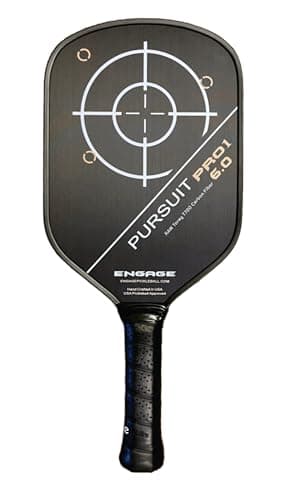 Engage Pursuit Pro1 Elongated 15.2mm Elongated, raw carbon for spin, and a stated midweight — the three things a tennis player asks for, on one listing. | The tennis player with a two-handed backhand and a topspin forehand | |
| 2 | 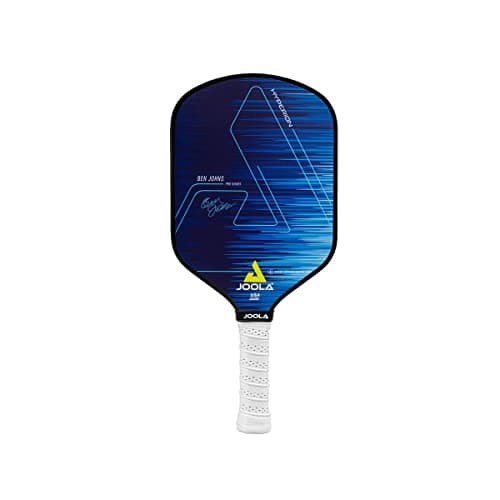 JOOLA Ben Johns Hyperion CAS 16 Ben Johns's JOOLA signature paddle — elongated handle, high-grit carbon surface, 16mm control core. | A gift that a tennis player will recognize the way they recognize a racket brand | |
| 3 | 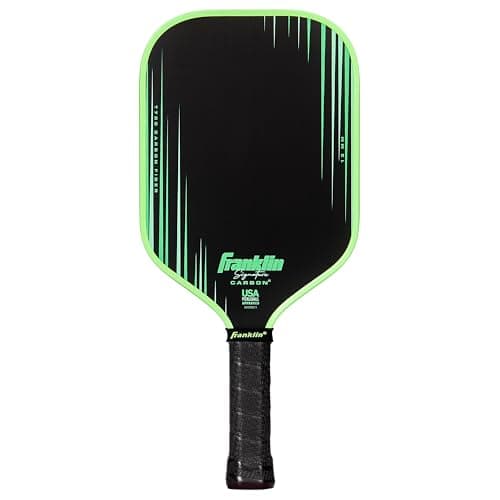 Franklin Sports Signature Carbon 13mm Elongated An elongated 13mm carbon paddle from the brand most recreational players already own something from. | The tennis player who hits hard and wants a livelier paddle | |
| 4 | 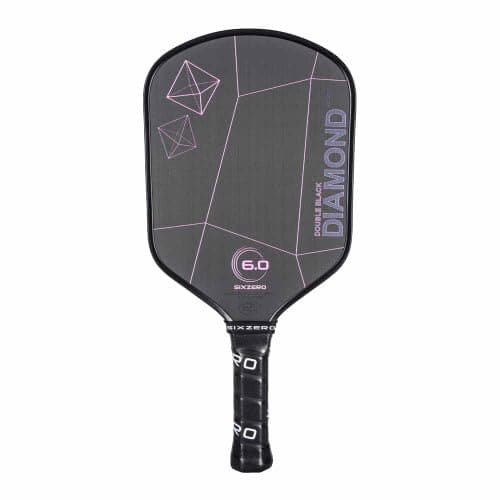 Six Zero Double Black Diamond Control 14mm The 14mm version of Six Zero's thermoformed Toray T700 raw carbon paddle, with an elongated tapered handle. | The serious convert who wants a premium build with extra pop | |
| 5 | 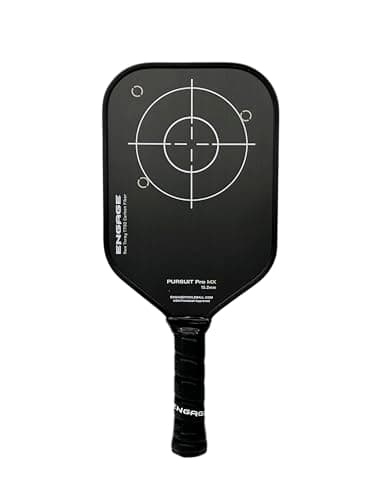 Engage Pursuit Pro MX 15.2mm An elongated raw-carbon Engage with a control core and an edge design the listing says limits vibration. | The tennis player who has ever had tennis elbow | $129.99 · View on Amazon $259.99 save 50% |
| 6 | 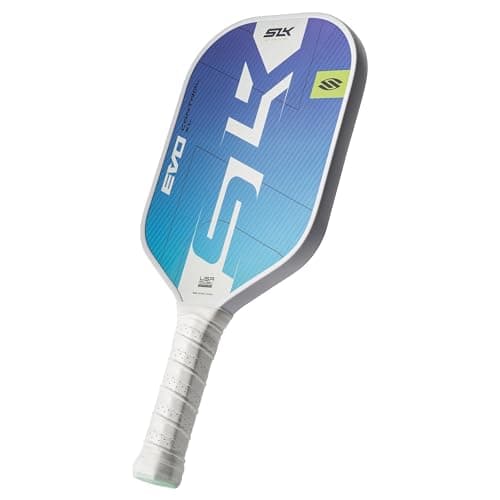 Selkirk SLK Evo Control XL Carbon Fiber Selkirk's SLK Evo Control in the XL shape, with a carbon fiber face — the brand that writes the tennis-player guide, at its entry price. | A longer-shaped Selkirk at the lowest price on this page |
The picks in detail
Engage Pursuit Pro1 Elongated 15.2mm
Best for: The tennis player with a two-handed backhand and a topspin forehand
This is the paddle that ticks every box on Selkirk's list without being a Selkirk. The listing describes an elongated shape, a raw carbon fiber face for extreme spin, a MachPro core for power and control, and — rarely stated on a listing — a weight range of 7.8 to 8.2 ounces, which is the heavier side of midweight and about as close as a pickleball paddle gets to feeling like something with mass in the hand. The elongated handle gives a second hand room for a backhand, the raw carbon lets topspin and slice actually take, and the weight gives a tennis player the plow-through they are used to. Engage is a long-established American maker with real standing in the sport, so the paddle carries credibility as well as specification.
Skip it if: Skip it if the recipient plays a lot of doubles at the kitchen line and has said they want a bigger sweet spot; an elongated face is less forgiving on off-center hits than a standard one. It is also among the pricier picks on this page.
Price as of September 17, 2026. #ad · how this works
JOOLA Ben Johns Hyperion CAS 16
Best for: A gift that a tennis player will recognize the way they recognize a racket brand
Tennis players are used to signature rackets, and this is pickleball's equivalent. The listing describes a Carbon Abrasion Surface with high grit for spin, a Sure-Grip elongated handle, a 16mm polypropylene honeycomb core and USAPA approval, on a paddle that carries the name of the sport's most visible professional. JOOLA is also a brand a tennis player may already know from table tennis, which makes it an easy gift to explain. The elongated handle is the feature that matters most for a convert, and the 16mm core makes this the control-leaning choice on the page — the right default for a tennis player who has not said they want extra pop.
Skip it if: Skip it if specification per dollar is the priority; the Engage above states its weight and the Franklin below is cheaper, and both are elongated. JOOLA sells several Hyperion generations, so if the recipient has named one, match it exactly.
Price as of September 17, 2026. #ad · how this works
Franklin Sports Signature Carbon 13mm Elongated
Best for: The tennis player who hits hard and wants a livelier paddle
This is the thin-core pick, and it suits a particular kind of tennis player: the one whose game is built on pace. The listing is a Franklin Sports Signature Carbon paddle, 13mm and elongated. A thinner core is the livelier, faster-responding end of the spectrum — JOOLA's guide describes thin cores as suiting players who prioritize power — and paired with an elongated face it gives a big-swinging player a paddle that rewards the swing rather than damping it. Franklin is the most familiar name in mainstream American pickleball, which makes this an easy gift to hand over, and it sits below the tour-brand picks on price.
Skip it if: Skip it for a player who wants touch and forgiveness — a 13mm core gives less dwell time on the face than a 16mm one, and the soft game is harder to learn on it. For a tennis convert still finding the kitchen-line rhythm, 16mm is the friendlier choice.
Price as of September 17, 2026. #ad · how this works
Six Zero Double Black Diamond Control 14mm
Best for: The serious convert who wants a premium build with extra pop
Six Zero publishes the Double Black Diamond's construction in full: a Toray T700 raw carbon face over a honeycomb polymer core, thermoformed so face and edge run the length of the handle as a single fused piece, with an elongated, tapered handle. That handle is the reason it is on this page — it is built for a two-handed backhand — and the 14mm version is here rather than the 16mm because a thinner core suits the tennis player who wants more speed off the face. Six Zero is a direct-to-consumer brand with a strong following among players who research their own gear, so this is the pick for a convert who has already gone down the rabbit hole. Our Six Zero Double Black Diamond review covers the 14mm versus 16mm decision in detail.
Skip it if: Skip it if the recipient is brand-new to pickleball — this is a serious player's paddle at a serious price, and a tennis player still learning the game will get more from a forgiving 16mm paddle. Buy the 16mm version instead if control matters more than pop.
Price as of September 17, 2026. #ad · how this works
Engage Pursuit Pro MX 15.2mm
Best for: The tennis player who has ever had tennis elbow
Tennis players know tennis elbow, and a paddle that damps vibration is a thoughtful choice for anyone who has felt it. The listing describes an elongated shape, a raw carbon fiber face, a 15.2mm build with a 16mm Control Pro "Black" core, standard weight, and Vortex Barrier Edge technology that the manufacturer says limits vibration. Those are manufacturer claims, not medical ones, and a paddle does not treat a tendon — but between two elongated paddles, the one built to send less shock up the arm is the better gift for a player with a history. It appears on our tennis-elbow paddle page for the same reason, and here it is the control-leaning sibling of the top pick.
Skip it if: Skip it for the player who wants the liveliest possible paddle; this is the Control variant, and the Pro1 above or the 14mm Six Zero are the picks for pace. As with any paddle, a sore arm is a reason to see a clinician, not just to change equipment.
Selkirk SLK Evo Control XL Carbon Fiber
Best for: A longer-shaped Selkirk at the lowest price on this page
Selkirk is the maker whose guidance this page is built on, and the SLK line is its accessible range. The listing is explicit that this is the Evo Control model with a carbon fiber face in the XL shape, which is Selkirk's longer format. Control models are built around a softer, more damped feel rather than raw pop, and for a tennis player who is new to pickleball that is a genuine advantage: the soft game is the part of pickleball tennis does not prepare you for, and a control paddle makes it easier to learn. It is the least expensive pick here, from a name every player recognizes, which makes it the safest gift on the page.
Skip it if: Skip it for a hard hitter who wants the paddle to add pace, or for a player who has already outgrown a control-oriented paddle; the Engage Pro1 and the 14mm Six Zero are the picks for that player.
Price as of September 17, 2026. #ad · how this works
Frequently asked questions
Why do tennis players need a different pickleball paddle?
They do not strictly need one, but a standard starter paddle wastes what they bring. Selkirk's guidance for converts is a longer handle for a familiar grip and two-handed backhands, an elongated shape to mimic a racket's sweet spot, a heavier weight for a familiar feel, and a face with high spin capability so topspin and slice carry over. A short-handled, wide, smooth starter paddle has none of those, which is why the first reaction is so often that it feels like a ping-pong bat.
What does "elongated" mean on a paddle listing?
A longer, narrower face with a longer handle. USA Pickleball caps combined length plus width at 24 inches and length at 17 inches, so an elongated paddle spends the allowance on length. The gains are reach, leverage and room for a second hand on the handle; the cost is a slightly smaller sweet spot, sitting higher on the face. Our elongated versus standard paddle guide goes through the trade-off in full.
Should a tennis player buy a 14mm or 16mm paddle?
Default to 16mm. JOOLA's paddle guide describes 16mm as the control-and-stability thickness and 14mm as the power-and-pace one. The part of pickleball that tennis does not prepare a player for is the soft game at the kitchen line, and a thicker core makes that easier to learn. Buy 13mm or 14mm only for a convert who has specifically asked for more pop, or who has been playing long enough to know they want it.
Will a heavier paddle feel more like a tennis racket?
Somewhat, and Selkirk recommends a heavier weight for converts for that reason — but pickleball paddles live in a narrow band. Selkirk's own weight guide puts midweight at roughly 7.6 to 8.4 ounces and heavy at above that, and the Engage Pursuit Pro1 on this page states 7.8 to 8.2 ounces on its listing. That is the top of midweight, and about as substantial as a mainstream paddle gets. Nothing on this page approaches the weight of a tennis racket, and nothing should.
Can a tennis player use a two-handed backhand in pickleball?
Yes, and most do — Selkirk cites that about 80% of tennis players use one when they transition, for the power and stability it gives. The only equipment requirement is a handle long enough for the second hand, which is why every pick on this page is elongated or has an explicitly elongated handle on its listing. A standard-handle paddle is the main reason converts abandon the two-hander.
Are these paddles legal for tournaments?
Every pick is sold as USA Pickleball approved on its listing or by its manufacturer, and all of them sit inside the size rules — combined length and width no more than 24 inches, length no more than 17 inches, no limit on thickness or weight. If the person you are buying for plays sanctioned events, approval is essential, and the brands here are all established enough that it is standard across their ranges.
What else does a tennis player need to switch?
Court shoes are the big one — tennis shoes are actually a good match for pickleball, since both sports demand lateral support, and our pickleball shoes versus tennis shoes guide explains where they differ. Beyond that, a tin of outdoor balls and a bag that fits paddles rather than rackets round out the switch. If the paddle is not the gift, those are the three things a convert will use most.
Keep exploring
What actually changes when a tennis player crosses over.
Elongated vs standard paddlesThe shape trade-off, in plain English.
Pickleball shoes vs tennis shoesWhy a tennis player's shoes mostly work.
Best paddles for spinFor the topspin-obsessed.
Best paddles for advanced playersOnce the convert has become a regular.
Sources
- Selkirk Sport — The Best Pickleball Paddles for Tennis Players
- JOOLA — Official Paddle Guide (core thickness and paddle shapes)
- USA Pickleball — Official Rulebook, Section 2 (rule 2.E.3 paddle size, 2.E.4 paddle weight)
- Selkirk Sport — Pickleball Paddle Weight Guide
- Six Zero — Double Black Diamond product specification
Browse another way