Guide
Elongated vs Standard Pickleball Paddles
Every paddle fits inside the same 24-inch rule; shape is how a maker spends it. Here is what a longer face actually buys, what it costs, and which shape suits the person you are buying for.
By Stephen V. · Updated September 2026 · How we pick
One rule, three shapes
Pickleball paddles come in a surprising variety of outlines for a sport whose rules are so specific about them. USA Pickleball allows a paddle's combined length and width, including edge guard and butt cap, to reach 24 inches, with length capped at 17 inches. That single sum is the reason shape exists as a decision: every inch a maker adds to the length has to come out of the width, and vice versa. A paddle cannot be both long and wide.
So the industry has settled on a handful of ways to spend the allowance, and the names are roughly consistent across brands. Standard (sometimes traditional) is the balanced default. Widebody spends the allowance on width. Elongated spends it on length. Hybridsits between standard and elongated. Selkirk's own shape guide gives concrete examples from its range: a widebody at 15.95 by 8 inches with a 5.6-inch handle, an elongated at 16.5 by 7.45 inches with a 5.8-inch handle, a standard at 15.75 by 8 inches with a 5.25-inch handle, and a hybrid at 16.5 by 7.375 inches with a 5.25-inch handle. Other brands' numbers differ slightly; the pattern does not.
For a gift buyer, this is the second of the three paddle specs worth understanding, after core thickness and alongside weight. It is also the one that most depends on the recipient, because shape is about how someone moves and swings, not how good they are.
Standard and widebody: the forgiving shapes
A standard or widebody paddle puts its material where the ball is most likely to land. The result is a larger sweet spot — the area of the face where a hit feels solid and goes where it was aimed — and a paddle that is quicker to move in hand, because its weight sits closer to the grip. Selkirk's guide summarizes the widebody's wider face as enhancing "stability, particularly on off-center hits," and describes it as ideal for beginners and intermediate players. JOOLA says the same thing about its standard Scorpeus shape, which "expands the sweet spot, delivering added stability on blocks, resets, and counters."
That list of shots — blocks, resets, counters — is most of what a doubles player does at the kitchen line, which is why a standard shape suits most recreational players and nearly all new ones. It is also the right shape for an older player, whose reaction time makes a bigger sweet spot worth more than reach, and it is what most of the picks on our seniors page and beginner page are.
The cost is reach and leverage. A standard paddle is shorter, so a ball just out of range stays out of range, and its shorter handle leaves no room for a second hand. A player who hits a two-handed backhand will feel cramped on one, which brings us to the other shape.
Elongated: the reach shape
An elongated paddle spends the rules' allowance on length: a longer, narrower face and, almost always, a longer handle. Selkirk's guide describes the long face as "ideal for reaching difficult shots and increasing swing momentum," with a sweet spot "slightly smaller than widebody options," and pitches it at advanced players who want reach without giving up control. JOOLA describes its elongated Perseus as built to extend reach and cover deep or sharply angled volleys.
Three kinds of player want this shape. The first is the tennis player. Selkirk's guidance for converts is an elongated shape to mimic a racket's sweet spot and a longer handle for two-handed backhands, and it notes that about 80% of tennis players use a two-handed backhand when they transition to pickleball. The second is the singles player, who covers more court alone and values every inch of reach. The third is the power player, because a longer face swung through the ball carries more momentum — the "plow-through" players talk about.
The costs are real. The sweet spot is smaller and sits higher on the face, so an off-center hit is punished more; the paddle is slower to move in hand, because more of its weight is out toward the tip; and a beginner on an elongated paddle tends to mis-hit more and enjoy it less. It is the shape to buy for a specific player, not a default. Our tennis-player paddle roundup is built entirely from it.
Hybrid: the compromise, and why it is a good gift
A hybrid takes the elongated paddle's length and gives some width back, usually with a standard-length handle. Selkirk's guide is candid that its hybrid options "sacrifice a bit of the sweet spot for extra reach" and aims them at intermediate-to-advanced players balancing reach with forgiveness; JOOLA describes its hybrid Kosmos as blending the reach of the Perseus with the maneuverability of the Scorpeus into "a balanced option." Some elongated paddles with rounded corners — the Six Zero Double Black Diamond is one — play closer to a hybrid than their length suggests.
For a gift buyer who knows the recipient is past the beginner stage but does not know how they play, a hybrid is the shape least likely to be wrong. It will not feel cramped to a tennis convert and it will not feel unwieldy to a doubles regular. That is a lower ceiling than the right specialist shape, and a much higher floor than the wrong one.
Handle length, and which shape to buy
Handle length travels with shape but deserves its own sentence, because it is the part of a paddle a player's hands notice first. Elongated paddles carry the longest handles — Selkirk's example is 5.8 inches against 5.25 for its standard — and that extra half-inch or more is what makes a two-handed backhand possible. A player who hits one on a short handle has their top hand half on the face. If the person you are buying for hits with two hands, handle length matters more than any other spec on this page. Grip circumference is a separate measurement, covered in our grip size guide.
Here is the decision, by recipient.
- Beginner, older player, or club doubles regular: standard or widebody. The bigger sweet spot and quicker feel are what they need.
- Tennis convert or two-handed-backhand hitter: elongated, with a long handle. This is the one case where shape is close to non-negotiable.
- Singles player or power player: elongated, for reach and plow-through.
- Intermediate player whose style you do not know: hybrid.
- Experienced player who already owns a paddle they love: buy the same shape, or gift around the paddle. Shape is a preference they have already formed.
The four paddles below cover the range: a standard-shape doubles paddle, a rounded-corner elongated paddle, a fully elongated power-and-spin paddle, and a longer-format value option. Each is a live listing in this site's registry with a real price, and each says who it suits and who should skip it.
The gear this guide points to
Disclosure: Popaddle earns a commission on qualifying purchases made through the links on this page, at no extra cost to you. Prices are pulled live and can change. How this works.
| # | Product | Best for | Price |
|---|---|---|---|
| 1 | 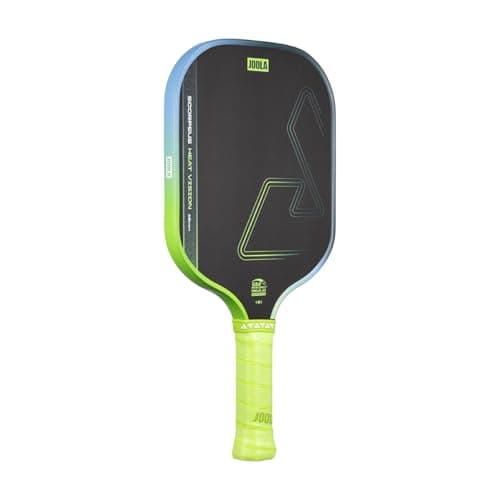 JOOLA SCORPEUS Heat Vision 16mm JOOLA's standard-shape paddle — the wider profile its guide says expands the sweet spot for blocks, resets and counters. | The doubles player who wants the biggest sweet spot | |
| 2 | 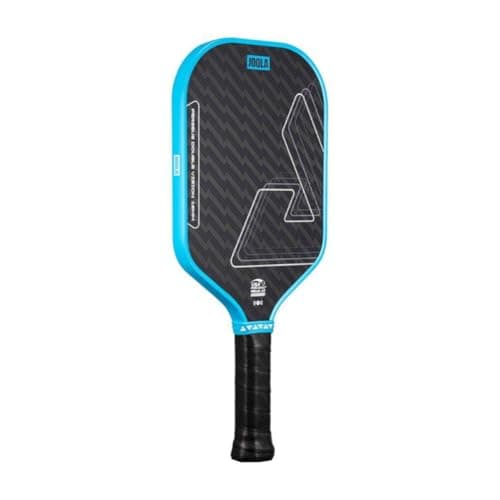 JOOLA Perseus Double Vision 16mm JOOLA's elongated Perseus profile with rounded top corners, built to extend reach, with an aramid face for a softer touch. | The touch player who wants reach at the kitchen line | |
| 3 | 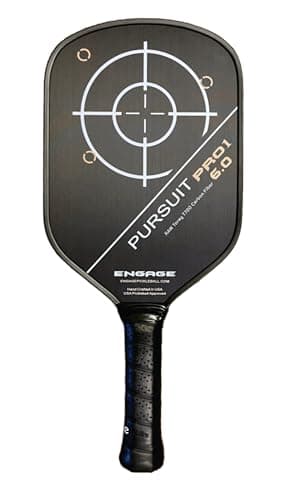 Engage Pursuit Pro1 Elongated 15.2mm Engage's elongated raw-carbon paddle, listed for extreme spin with a stated 7.8 to 8.2 ounce standard weight. | The tennis convert, the singles player, the two-handed backhand | |
| 4 | 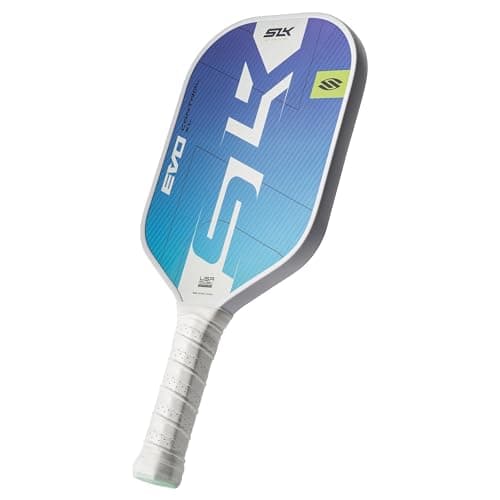 Selkirk SLK Evo Control XL Carbon Fiber Selkirk's SLK Evo Control in its XL shape, with a carbon fiber face — a control paddle in a longer format from the brand that wrote the shape guide. | A longer Selkirk shape at the lowest price here |
JOOLA SCORPEUS Heat Vision 16mm
Best for: The doubles player who wants the biggest sweet spot
This is the standard shape as JOOLA builds it: the listing describes a standard shape, a textured carbon fiber face, a 16mm core, SK film for reduced vibration and USAP approval, and JOOLA's guide credits the wider profile with a bigger sweet spot and more stability on the kitchen-line shots that make up most doubles play. It is the pick for a beginner past their first paddle, an older player, or any club doubles regular — the three groups this page steers toward standard.
Skip it if: Skip it for a two-handed backhand or a player who wants reach; the standard handle is the shorter one, and the elongated paddles below are the fit for that player.
Price as of September 17, 2026. #ad · how this works
JOOLA Perseus Double Vision 16mm
Best for: The touch player who wants reach at the kitchen line
JOOLA's guide describes the Perseus as an elongated profile with rounded corners at the top, designed to extend reach and cover deep or sharply angled volleys — the reach shape aimed at a control player rather than a slugger. The listing adds an aramid surface for a softer, more responsive touch, SK film for reduced vibration, a 16mm core and USAP approval. It is the elongated paddle for a player whose game is drops and dinks and who wants a little more length to get to them.
Skip it if: Skip it for a power player who wants a gritty raw-carbon face, and for anyone who wants the most forgiving sweet spot; an elongated face concentrates it higher and narrower than the Scorpeus.
Price as of September 17, 2026. #ad · how this works
Engage Pursuit Pro1 Elongated 15.2mm
Best for: The tennis convert, the singles player, the two-handed backhand
This is the elongated shape with everything the shape is for: the listing describes an elongated design, a raw carbon fiber face for extreme spin, a MachPro core for power and control, a 15.2mm build, and a stated weight range of 7.8 to 8.2 ounces — the momentum-and-reach combination a tennis player or a singles player wants. The long handle is what makes a two-handed backhand comfortable. It is the top pick on our tennis-player roundup for exactly these reasons.
Skip it if: Skip it for a beginner or a doubles player who mis-hits; an elongated sweet spot is smaller and sits higher on the face, and this is among the pricier paddles on the site.
Price as of September 17, 2026. #ad · how this works
Selkirk SLK Evo Control XL Carbon Fiber
Best for: A longer Selkirk shape at the lowest price here
Selkirk is the source this page leans on, and this is its accessible control paddle in the XL — its longer — shape. The listing is explicit that it is the Evo Control model with a carbon fiber face in the XL format, and control models are built around a softer, more damped feel rather than pop. It is the pick for a player who wants some extra length without a tour-paddle price, and for a gift buyer who wants a recognized name on the paddle.
Skip it if: Skip it for a player who wants the widest possible face; the XL is a longer shape, and the Scorpeus above is the more forgiving choice for a doubles player who mis-hits.
Price as of September 17, 2026. #ad · how this works
Frequently asked questions
What is the difference between an elongated and a standard pickleball paddle?
Where the maker spends the rules' 24-inch length-plus-width allowance. An elongated paddle is longer and narrower with a longer handle, which gives more reach and leverage and room for a two-handed backhand, at the cost of a smaller sweet spot higher on the face. A standard paddle is shorter and wider, with a bigger, more forgiving sweet spot and a quicker feel in hand, at the cost of reach.
Which paddle shape is best for beginners?
Standard or widebody. Both Selkirk's and JOOLA's guides point new and intermediate players at the wider shapes, because a bigger sweet spot forgives the off-center hits every new player makes and a shorter paddle is quicker to move. Elongated paddles reward a swing a beginner does not yet have.
Which shape should a tennis player buy?
Elongated, with a long handle. Selkirk's guidance for converts is an elongated shape to mimic a racket's sweet spot and a longer handle for two-handed backhands, and it notes that about 80% of tennis players hit a two-hander when they transition. Our tennis-player paddle roundup is built entirely from elongated paddles.
Is there a legal limit on paddle shape?
Yes — USA Pickleball caps combined length and width, including edge guard and butt cap, at 24 inches, and length at 17 inches. Every shape on the market fits inside that; the shapes differ in how they divide it. There is no restriction on thickness or weight.
What is a hybrid paddle?
A shape between standard and elongated: some of the elongated paddle's length with some width given back, usually on a standard-length handle. Both Selkirk and JOOLA describe their hybrids as balancing reach and forgiveness, and it is the least-wrong shape to buy for an intermediate player whose style you do not know.
Does handle length matter separately from shape?
Yes, and for two-handed players it matters most of all. Elongated paddles carry the longest handles — Selkirk's example is 5.8 inches against 5.25 for its standard — and that extra length is what makes a second hand fit. Handle length is not the same as grip circumference, which is a separate measurement our grip size guide covers.
Can I buy a paddle shape as a surprise?
For a beginner or a casual player, yes — a standard shape is hard to get wrong. For an experienced player, shape is a preference they have already formed, so buy the shape they play now or gift around the paddle. If they play a paddle sold in two thicknesses, the other thickness in the same shape is the safest advanced gift there is; our thickness guide explains why.
Keep exploring
The other decision on a serious paddle listing.
Grip size guideCircumference, not handle length — and how to measure it.
Best paddles for tennis playersThe all-elongated roundup.
Best JOOLA paddlesHyperion, Perseus and Scorpeus by shape.
Carbon vs fiberglass paddlesThe face, once the shape is settled.
Sources
- USA Pickleball — Official Rulebook, Section 2 (rule 2.A.1 court size; 2.E.3 paddle size; 2.E.4 paddle weight)
- Selkirk Sport — The ultimate guide to pickleball paddle shapes
- JOOLA — Official Paddle Guide (core thickness and paddle shapes)
- Selkirk Sport — The Best Pickleball Paddles for Tennis Players (two-handed backhand statistic)
- Six Zero — Double Black Diamond product specification
Browse another way