Guide
What Is the Kitchen in Pickleball?
It is the 14-foot strip around the net, 7 feet on each side, and it is the rule that stops pickleball being a smashing contest. Here is exactly what it forbids - and what it does not.
By Stephen V. · Updated October 2026 · How we pick
What the kitchen actually is
The kitchen is a nickname. The rulebook calls it the Non-Volley Zone, usually shortened to NVZ, and USA Pickleball's own how-to-play material defines it precisely: "The Non-Volley Zone (NVZ), nicknamed the Kitchen, is the 14-foot area around the net (7 feet on each side)."
Those last two rows are the ones that reframe the rule. The non-volley zone is not a small strip near the net — on a 20 by 44 foot court it is about a third of your own half, and it is the third closest to the action. If you want the rest of the court's official figures, our pickleball court dimensions page lists every one of them, and pickleball court vs tennis courtputs them next to a tennis court's.
Nobody knows for certain where the name came from. There are several competing explanations and none of them is documented in any source we would be willing to cite, so we are not going to pick one — it is a nickname with a lost origin, and that is the honest answer.
What the kitchen rule forbids
One thing, with one extension. USA Pickleball states it as: you cannot volley — hit the ball out of the air — while standing in the kitchen, or if your momentum carries you into it after hitting a volley.
The first half is what everybody knows. The second half is what loses points. You can hit a perfectly legal volley with both feet behind the line and still commit a fault, if the follow-through of that shot carries you forward into the zone. The shot was legal; the landing was not. This is the single most common way intermediate players give away points at the net, and it is why coaches teach players to hit volleys from a balanced base rather than leaning in.
The line is part of the zone. Touching the non-volley line while volleying is a fault just as standing well inside it would be — which is a useful thing to know before you argue about a call. Note the asymmetry with every other line on the court: USA Pickleball's material says any shot landing on a court line is in, except for serves, which must clear the kitchen.
What the kitchen rule allows (and what people get wrong)
Three things are legal that players regularly believe are not, and all three come straight from USA Pickleball's own description of the rule.
The second row of the legal half is the one that matters in play: a ball that bounces in the kitchen is fair game and you are supposed to step in and get it. Most dinking happens exactly there. What you must do is get back out, because standing in the zone means the next ball hit at you out of the air cannot be volleyed.
And standing in the kitchen is legal. USA Pickleball says so, while noting it is not recommended — which is the correct way to put it. Nothing in the rules stops you camping there; the game punishes you for it instead, because an opponent only has to hit one ball into the air at your feet.
Why the rule exists, and what it does to the game
USA Pickleball is explicit about the purpose: the kitchen rule "prevents easy smashes from right at the net and makes strategy more important." Remove it and pickleball becomes a sport about who can get to the net first and hit down hardest, which would be shorter, less interesting and much harder on the body.
What the rule creates instead is the soft game: the dinking exchanges at the non-volley line that are the most distinctive thing about watching pickleball. Because neither side can volley from inside the zone, both sides push the ball low and short, and the rally becomes a patience contest until somebody produces a ball that can be attacked. That is the game at every level above beginner, and it is why control paddles exist as a category at all.
It also has a health consequence that is easy to miss. Harvard Health Publishing notes that pickleball injuries concentrate in players over 50 and that the sudden starts, stops and side-to-side moves are where the stress lands. A rule that outlaws the leaping overhead smash from two feet off the net takes out one of the sport's most violent movements. The kitchen is part of why this is a game people play into their seventies.
Playing the kitchen better: what equipment actually changes
The soft game asks different things of a paddle than the baseline game does, and this is one of the few places where equipment maps onto a rule cleanly. Dinking is about placing a ball low over the net with almost no pace, repeatedly, without popping one up — so what you want is feel and a forgiving face, not power.
In specification terms that means a thicker core. JOOLA's own paddle guide describes a 16mm core as the control-and-stability option and thinner cores as the ones built for pop, and a thicker core is also more forgiving of the off-center contact that produces an attackable pop-up. A textured carbon face adds bite on the ball, which is what lets you hit a dink with shape rather than just a push. Our 14mm versus 16mm guide goes through the trade in detail, and carbon versus fiberglass covers the face material.
One honest caveat before the picks. No paddle keeps you out of the kitchen, and no paddle fixes a momentum fault — that is footwork, and footwork is free. What a control paddle does is make the shot you are trying to hit a little easier to hit. Buy one because you have decided to play the soft game, not because you expect it to play it for you.
The gear this guide points to
Disclosure: Popaddle earns a commission on qualifying purchases made through the links on this page, at no extra cost to you. Prices are pulled live and can change. How this works.
| # | Product | Best for | Price |
|---|---|---|---|
| 1 | 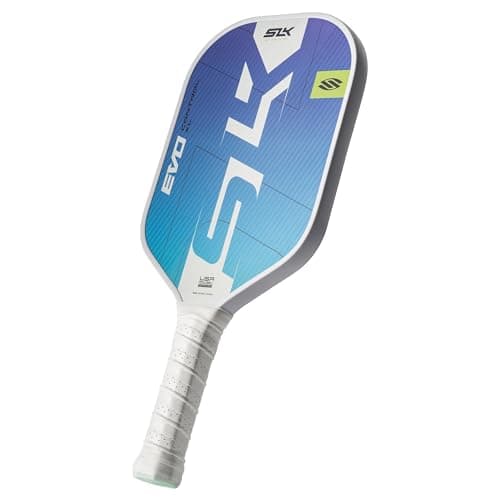 Selkirk SLK Evo Control XL Carbon Fiber Selkirk's carbon-fiber control paddle in the XL shape, built around touch rather than power. | A player committing to dinking at the non-volley line | |
| 2 | 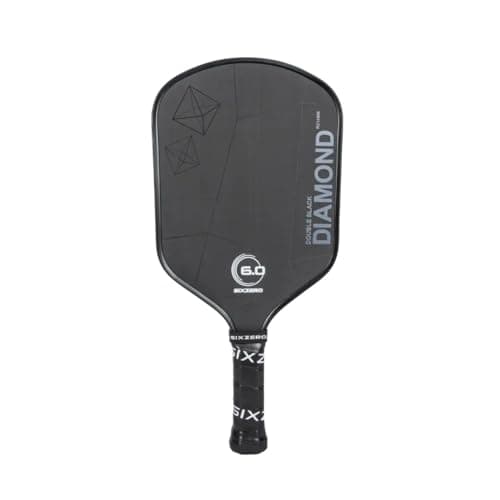 Six Zero Double Black Diamond Control 16mm Six Zero's Double Black Diamond Control in the 16mm core. | A player who already dinks well and wants the best control paddle here | |
| 3 | 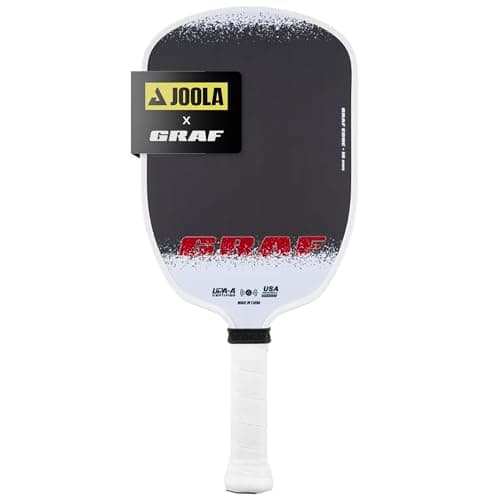 JOOLA GRAF Edge 16mm A carbon-faced 16mm paddle from a major brand, at the bottom of the brand-name range. | A newer player who wants a 16mm core without spending much |
Selkirk SLK Evo Control XL Carbon Fiber
Best for: A player committing to dinking at the non-volley line
This is the paddle that matches the brief of the kitchen rule most directly. The SLK Evo Control listing specifies a carbon fiber face in the XL shape - a control-named paddle from a major pickleball brand, with a larger hitting area that is more forgiving of the slightly off-center contact that produces an attackable pop-up. For a player whose game is moving toward the non-volley line, that forgiveness is worth more than any power claim. Selkirk also publishes genuinely useful grip-size and weight guidance, which makes it easier to buy the right one online.
Skip it if: Skip it if you still play most of your points from the baseline, where a control paddle will feel underpowered. Skip it too if you want the shortest handle you can get; the XL shape is a larger face, not a compact one.
Price as of October 25, 2026. #ad · how this works
Six Zero Double Black Diamond Control 16mm
Best for: A player who already dinks well and wants the best control paddle here
If the soft game is your game and the budget is not the constraint, this is the most serious control paddle in this registry. The Double Black Diamond is the paddle that built Six Zero's reputation among players who care about feel, and the 16mm version is the control-oriented one of the two core thicknesses it comes in - the thickness JOOLA's published guide associates with control and stability. It is a paddle bought by people who have decided what they want from a paddle rather than people shopping for their first. Our full review of it goes through the published specification.
Skip it if: Skip it if you are new - this is a lot of money for a paddle whose advantages are a matter of feel, and a new player cannot yet feel them. Skip it too if you want pop on your drives; the 14mm version of the same paddle is the one aimed at that.
JOOLA GRAF Edge 16mm
Best for: A newer player who wants a 16mm core without spending much
The specification that does most of the work for the soft game is the 16mm core, and this is the cheapest way to get it from a brand that serious players actually buy. The GRAF Edge listing specifies a carbon fiber face and a 16mm core, which is the same core thickness as paddles costing three times as much, from the same company. For a player who has just worked out why everybody is dinking at the line and wants a paddle that suits it, this is the sensible purchase - and our paddles under $50 page covers what else sits at that price.
Skip it if: Skip it if you already own a mid-range carbon paddle, since this is not an upgrade on one. Skip it too if you need a particular grip circumference; the pricier brand paddles publish more fit detail than this listing does.
Price as of October 25, 2026. #ad · how this works
Frequently asked questions
How big is the kitchen in pickleball?
USA Pickleball describes the non-volley zone as the 14-foot area around the net - 7 feet on each side - and it runs the full 20-foot width of the court. That makes it 140 square feet on your side, which is roughly a third of your own 440-square-foot half. It is much bigger than the word "kitchen" suggests.
Can you stand in the kitchen in pickleball?
Yes. Standing in the non-volley zone is legal; USA Pickleball says so explicitly while noting it is not recommended. What you cannot do is volley - hit the ball out of the air - while you are in there. The rule punishes the shot, not the position, and the game punishes the position on its own, because one ball hit into the air at your feet is unreturnable if you are standing in the zone.
Can you step into the kitchen to hit a ball?
Yes, as long as the ball has already bounced. Stepping in to play a bounced ball is explicitly permitted and it is what happens on almost every dink. The thing to do afterwards is get back out behind the line, because while you are in the zone you cannot volley the next ball.
What is the momentum rule in the kitchen?
If you hit a volley and your momentum then carries you into the non-volley zone, it is a fault - even though your feet were legal when you hit the ball. The shot being legal does not save you; the landing counts. This is the most common way experienced players lose points at the net, and the fix is hitting volleys from a balanced base instead of leaning forward into them.
Is the kitchen line in or out?
The line is part of the zone, so touching it while volleying is a fault. That is the opposite of how the rest of the court works: USA Pickleball's material says any shot landing on a court line is in, except for serves, which must clear the kitchen entirely - a serve landing in the kitchen or on the kitchen line is out.
Why does pickleball have a kitchen rule at all?
To stop the sport being a smashing contest. USA Pickleball puts it directly: the rule prevents easy smashes from right at the net and makes strategy more important. Without it, the game would reward whoever got to the net first and hit down hardest. With it, you get the dinking exchanges that make pickleball distinctive - and you remove one of the sport's most physically punishing movements, which matters in a game whose injuries concentrate in players over 50.
Does a different paddle help my kitchen game?
A little, and less than footwork does. No paddle prevents a momentum fault and none keeps you behind the line. What a control-oriented paddle - a thicker core, a textured face - does is make a low dink slightly easier to hit and an off-center contact slightly less likely to pop up. JOOLA's own paddle guide associates a 16mm core with control and stability, and that is the single specification worth looking for if the soft game is where you want to improve.
Keep exploring
The serve, the two-bounce rule and the faults.
How to keep score in pickleballThree numbers in doubles, two in singles.
Pickleball court dimensionsEvery official figure on the court.
Best control paddlesThe soft-game paddle roundup.
14mm vs 16mm paddlesWhat core thickness changes.
Pickleball ratings explainedWhere the soft game starts to decide games.
Six Zero Double Black Diamond reviewThe control paddle in detail.
What is pickleball?The whole sport in one page.
Sources
- USA Pickleball — How to Play Pickleball (serving, the two-bounce rule, the Non-Volley Zone "nicknamed the Kitchen, is the 14-foot area around the net (7 feet on each side)", scoring, and calling the score)
- USA Pickleball — Official Rulebook (court 20 x 44 ft; non-volley zone 7 ft from the net on each side; 2.E.3 paddle size 24 in combined length and width, 17 in maximum length; 2.E.4 no weight restriction)
- USA Pickleball — Official Rulebook, full text (searchable edition)
- JOOLA — Official Paddle Guide (core thickness: 16mm for control and stability, thinner cores for pop)
- Harvard Health Publishing — Practical pointers for pickleballers ("sudden starts and stops and side-to-side moves increase stress on joints, muscles, and ligaments"; players aged 50+)
Browse another way