Best Gear
The Best Pickleball Paddles for Power
For the player who came from tennis, hits hard, and finds control paddles dead. Here is what actually produces power in a paddle, and the picks that deliver it.
By Stephen V. · Updated October 2026 · How we pick
If you are buying for a player who came to pickleball from tennis, swings hard, and has said a paddle felt "dead" or "mushy," buy a power paddle — and the CRBN X Series Power 14mm is the pick to start with. It is a thinner-core carbon paddle whose own name states its purpose, from a brand serious players recognize, and it is the clearest expression of what this page is about: equipment that helps a player finish a rally rather than extend it.
Power in a paddle comes from three specifications and nothing else, and understanding them will make this page easy to shop. The first is core thickness. A thinner core — 13mm, 14mm, 15.2mm — compresses less and sends the ball back faster. JOOLA's own paddle guide frames the trade directly: thicker cores deliver control, precision and stability, so a thinner one is where pop lives. The second is shape. Selkirk's shape guide explains that an elongated body puts more length between the hand and the ball, which is leverage, and leverage is pace — at the cost of some maneuverability at the net. The third is weight distribution. Selkirk's weight guide is blunt about the trade: heavier paddles give put-away power, lighter ones give hand speed.
What power does not come from is the brand or the price. There are expensive control paddles and inexpensive paddles that pop everything off the face. That is also the single most important warning on this page: cheap thin-core fiberglass paddles are "powerful" in the worst sense — they send balls long, they feel harsh on the arm, and they are the reason many new players believe they cannot hit a soft shot. Every pick here is a thin-or-mid-core paddle with a carbon face from a real brand, not a hard sheet of fiberglass.
A word on who should not get one, because this is the gift most likely to go wrong in this category. A power paddle in the hands of a player who wanted control feels unforgiving: off-center hits are punished, soft drops sail past the kitchen, and the extra pace reaching the arm matters more than it sounds like it should given that Harvard Health Publishing notes most pickleball injuries occur in players aged 50 and over. If you do not know which the recipient wants, our control paddle page is the safer purchase and is linked throughout.
The selection test for this page was narrow on purpose. A paddle had to have a published core thickness at or below 15.2mm, or an elongated shape, or both — the two things that actually produce pace. It had to have a carbon face, because that is what pairs power with enough grip to keep the ball in. It had to come from a brand with a real paddle line and a published specification, so every claim on this page can be traced to the manufacturer rather than to a reviewer's impression. And it had to be an existing, in-stock, live-priced listing in this site's own product registry — nothing was added to the registry to fill a slot on this page.
One current rules note. USA Pickleball has published a 2,100 RPM spin rate limit with an implementation timeline beginning October 1, 2026, and because power paddles and high-grit faces often travel together, it is worth knowing about. Nothing on this page is affected in a way that should change a recreational purchase, but if your recipient competes in sanctioned events, the approved equipment database is the only list that matters. As everywhere on this site, there is no testing lab behind these picks and no invented rating — the specs are the manufacturers' own, the live price carries the date it was pulled, and each pick says who it is wrong for.
Disclosure: Popaddle earns a commission on qualifying purchases made through the links on this page, at no extra cost to you. Prices are pulled live and can change. How this works.
| # | Product | Best for | Price |
|---|---|---|---|
| 1 | 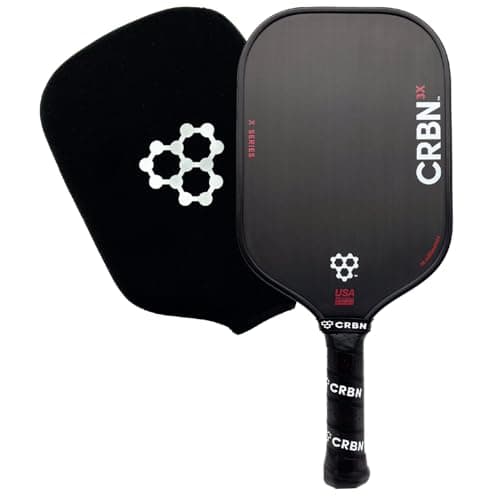 CRBN X Series Power 14mm Carbon Fiber A 14mm carbon paddle with Power in its name, from a brand built for serious players. | The player who wants pace and will not be talked out of it | $149.99 · View on Amazon $229.99 save 35% |
| 2 | 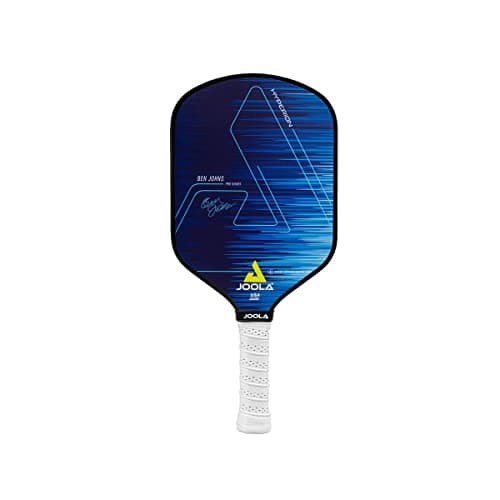 JOOLA Ben Johns Hyperion CAS 16 JOOLA's Ben Johns Hyperion CAS 16 — the most recognizable paddle name in the sport. | A recipient who wants the paddle they have seen the pros using | |
| 3 | 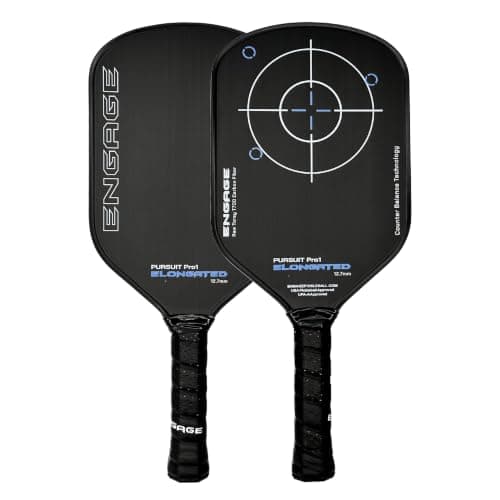 Engage Pursuit Pro1 Elongated 15.2mm A fully elongated 15.2mm paddle — the longest-feeling swing on this page. | A former tennis player who wants reach and a baseline drive | $129.99 · View on Amazon $259.99 save 50% |
| 4 | 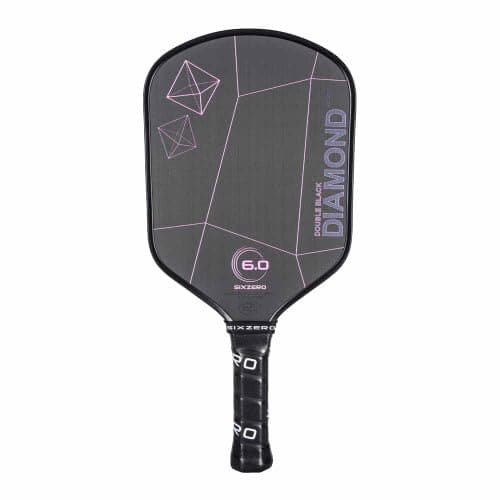 Six Zero Double Black Diamond Control 14mm The 14mm version of the control paddle this site rates most highly — same paddle, faster core. | Someone who wants pace without giving up the soft game entirely | |
| 5 | 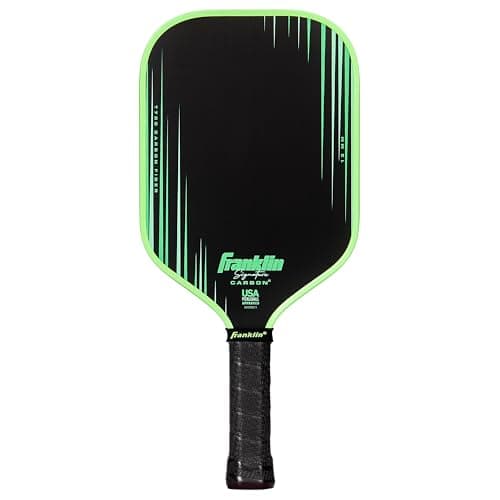 Franklin Sports Signature Carbon 13mm Elongated A 13mm elongated carbon paddle — the thinnest core on this page, from the most mainstream brand on it. | Maximum pop from a brand sold in every sporting goods store | |
| 6 | 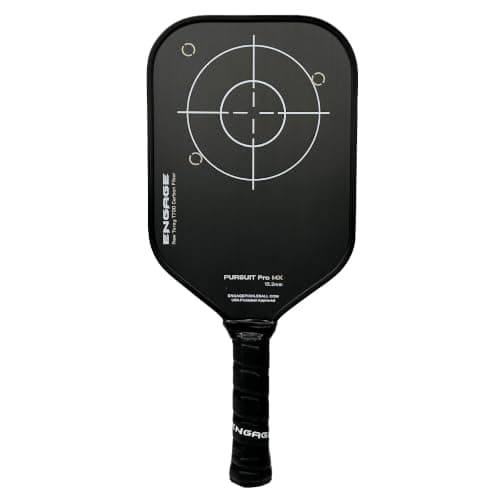 Engage Pursuit Pro MX 15.2mm A 15.2mm Engage — mid-thickness, built around a softer-feeling core than its thinness suggests. | A hard hitter who has started to feel it in the elbow |
The picks in detail
CRBN X Series Power 14mm Carbon Fiber
Best for: The player who wants pace and will not be talked out of it
This is the most direct answer on the page. CRBN publishes it as the X Series Power in a 14mm core with a carbon fiber face: the thinner core gives the faster return, the carbon face keeps enough grip on the ball that the extra pace stays in the court, and the brand carries real weight with players who follow equipment. For a gift, it has the rare quality of being unambiguous — the recipient can read the name and know you understood what they asked for, which is a surprisingly large part of what makes gear land as a present.
Skip it if: Skip it on price; this sits at the premium end and a player still finding their game will not extract the value. Skip it entirely if there is any chance the recipient is a soft-game player — a 14mm core punishes an off-center hit far more than a 16mm, and a control player handed this will quietly go back to their old paddle.
JOOLA Ben Johns Hyperion CAS 16
Best for: A recipient who wants the paddle they have seen the pros using
Recognition is a legitimate reason to buy a paddle as a gift, and no name in pickleball carries more of it than the Ben Johns Hyperion. JOOLA builds it in an elongated body, which is the shape that produces leverage and therefore pace, and the CAS construction is the company's premium carbon layup. It plays as a drive-first paddle: good players use it to hit through opponents from the baseline. If your recipient follows the professional game at all, this is the box they will most enjoy opening.
Skip it if: Skip it if they play mostly at the net and value hand speed — an elongated premium paddle is a lot of swing weight to move in a fast exchange, and the standard-shape options on our control page will serve them better. Skip it on budget too: this is a splurge, full stop.
Price as of October 5, 2026. #ad · how this works
Engage Pursuit Pro1 Elongated 15.2mm
Best for: A former tennis player who wants reach and a baseline drive
This is the pick for the converted tennis player, and it is worth saying why that recipient is so distinct. They are used to a long implement, they generate their own pace with a full swing, and they reach for balls rather than waiting for them. Engage's Pursuit Pro1 is a fully elongated 15.2mm paddle, which means maximum length between hand and ball within the legal limit and a core thin enough to return the ball quickly. For somebody whose instinct is to step in and drive, this feels more like the racquet sport they already know than anything else here.
Skip it if: Skip it for a beginner outright. An elongated paddle has a smaller effective sweet spot and demands a cleaner contact point, so a new player gets a worse experience than they would from a forgiving thick-core standard shape. Skip it too if your recipient has mentioned elbow or shoulder trouble — reach and pace both add load, and our tennis-elbow page exists for that case.
Six Zero Double Black Diamond Control 14mm
Best for: Someone who wants pace without giving up the soft game entirely
Six Zero publishes the Double Black Diamond in both 16mm and 14mm, which makes this the cleanest like-for-like demonstration of what thickness does. Everything else about the paddle is the same: the raw carbon face, the shape, the build. Take 2mm out of the core and the ball comes off faster. That makes this the pick for a player who wants more pop than a control paddle but is not willing to lose all the touch — and it is the one paddle on this page that a soft-game player might also genuinely enjoy. If you are torn between this page and our control page, this is the paddle that splits the difference honestly.
Skip it if: Skip it if raw power is the whole point: the CRBN above and the elongated picks here will out-drive it, because thickness is only one of the three power levers and this paddle does not use the other two. Skip it on price if the recipient is new to the sport; it is a premium paddle either way.
Price as of October 5, 2026. #ad · how this works
Franklin Sports Signature Carbon 13mm Elongated
Best for: Maximum pop from a brand sold in every sporting goods store
Thirteen millimeters is thinner than the mainstream 14mm and 16mm standard, and Franklin pairs it with an elongated body and a carbon face. On paper that is two of the three power levers pulled at once, and in practice it is the liveliest paddle in this group. Franklin also happens to be the brand most likely to be familiar to an American recipient who does not follow equipment closely — it makes the official ball of several major tours — so this is the pick that combines genuine pop with a name that does not need explaining.
Skip it if: Skip it if the recipient is still learning to control depth. A 13mm core plus an elongated shape is the least forgiving combination on this page, and balls will go long until they adjust. Skip it too if they are a net player: all that length is working against hand speed in the fast exchange.
Price as of October 5, 2026. #ad · how this works
Engage Pursuit Pro MX 15.2mm
Best for: A hard hitter who has started to feel it in the elbow
The usual advice given to a player with a sore arm is to give up power, and that is a hard sell. Engage's Pursuit Pro MX is the closest thing on this page to a compromise: at 15.2mm it sits between the 14mm power paddles and the 16mm control paddles, and Engage's construction is known among players for a softer, less jarring feel than its core thickness would predict. For a recipient who hits hard and has mentioned their elbow, this is the pick that does not ask them to change how they play. Nothing here is medical advice — if the elbow is a real problem rather than an occasional ache, our tennis-elbow paddle page and a doctor are both better sources than a gift guide.
Skip it if: Skip it if they want the absolute most pace available: the CRBN and the Franklin both hit harder. Skip it too on price — this is premium-tier money for a paddle whose main virtue is a compromise, which is excellent value for the right recipient and poor value for anyone else.
Price as of October 5, 2026. #ad · how this works
Frequently asked questions
What actually gives a pickleball paddle power?
Three specifications. A thinner core (13mm to 15.2mm rather than 16mm) compresses less and returns the ball faster. An elongated shape puts more length between the hand and the ball, and that leverage becomes pace — Selkirk's shape guide sets out the dimensions per shape. And more weight, particularly weight toward the head, gives put-away power at the cost of hand speed, which is exactly how Selkirk's own weight guide frames the trade. Price and brand have nothing to do with it.
Are cheap paddles powerful?
Some are, in the worst way. An inexpensive thin fiberglass paddle sends the ball back fast because it has no core worth speaking of, and the result is balls sailing long, a harsh feel in the hand and a player who concludes they cannot hit a soft shot. That is not the kind of power anyone wants. Real power paddles pair a thin core with a carbon face that grips the ball enough to keep it in the court, which is why every pick on this page has a carbon face from a brand with a published specification.
Should a beginner get a power paddle?
Generally no. A thin core and an elongated shape both shrink the margin for error, so an off-center hit — which is most hits for a new player — gets punished rather than forgiven. The common exception is a beginner who comes from tennis: they already have a full swing, they generate their own pace, and they often find a control paddle unresponsive. If that describes your recipient, the Engage Pursuit Pro1 or the Franklin on this page will feel like home. If it does not, buy from our control page instead.
Can one paddle do both power and control?
Only as a compromise, which is what "best paddle for power and control" — the most-searched version of this question — is really asking for. Physics sets the trade: the core either absorbs impact or returns it. The honest middle grounds on this page are the Six Zero Double Black Diamond 14mm (a control paddle's build with a faster core) and the Engage Pursuit Pro MX at 15.2mm. Both give up some of each. A player who knows which half of the game they win with is better served by committing to that half.
Do the rules limit how powerful a paddle can be?
Not directly. USA Pickleball caps combined length and width at 24 inches and length at 17 inches, and sets no restriction on core thickness or weight. What it has moved on is surface texture: a 2,100 RPM spin rate limit has been published with an implementation timeline beginning October 1, 2026. That is a spin rule rather than a power rule, but texture and power paddles often ship together, so if your recipient plays sanctioned events, check the approved equipment database rather than relying on any article.
My recipient hits hard and their elbow hurts. What do I buy?
Not the thinnest paddle on this page. More pace returning through a thin core means more shock reaching the arm, and Harvard Health Publishing notes that most pickleball injuries occur in players aged 50 and older, with the sport's sudden stops and lateral movement as the mechanism. The Engage Pursuit Pro MX here is the power pick that asks least of the arm, and our dedicated tennis-elbow paddle page covers the thick-core and grip options properly. None of that is medical advice, and a persistent elbow problem is a doctor's question rather than a paddle's.
Keep exploring
The other half of this decision - and the safer blind buy.
Best paddles for tennis playersThe recipient most likely to want a power paddle.
Paddle thickness explainedWhy 14mm pops and 16mm does not.
Paddle weight guideThe third power lever, and the one people get wrong.
Best paddles for spinWhere power and surface texture overlap.
Best paddles for tennis elbowIf hitting hard has started to hurt.
Best paddles for advanced playersThe skill-level page above this one.
Sources
- JOOLA — Official Paddle Guide (core thickness: 16mm control and stability vs thinner cores for pop)
- Selkirk Sport — The ultimate guide to pickleball paddle shapes (standard vs elongated dimensions and trade-offs)
- Selkirk Sport — Pickleball paddle weight guide (lighter paddles for hand speed, heavier for put-away power)
- Six Zero — Double Black Diamond product specification (same paddle published in 16mm and 14mm)
- USA Pickleball — Official Rulebook, Section 2 (rule 2.D ball specification and hole count; 2.E.3 paddle size; 2.E.4 no weight restriction)
- USA Pickleball — Update regarding the spin rate test and implementation timeline (2,100 RPM limit, effective 2026-10-01)
- USA Pickleball — Approved equipment database (which paddles and balls are approved for sanctioned play)
- Harvard Health Publishing — Practical pointers for pickleballers (injury patterns, players aged 50+, equipment advice)
Browse another way