Guide
Are Pickleball Glasses Necessary?
Not required by any rule, and not worn by most players. Here is the honest case for them, who should genuinely wear a pair, and what the lens-free style protects against.
By Stephen V. · Updated October 2026 · How we pick
The short answer
No rule requires them. USA Pickleball does not mandate eye protection for recreational play or for sanctioned tournaments, and most players at most courts do not wear any. If your recipient has never mentioned them, they are not failing to comply with anything.
That said, "not required" and "not worth it" are different claims, and the honest position is in between. Mass General Brigham — a major academic health system — has published guidance specifically on pickleball eye injuries, which tells you the injury pattern is documented rather than theoretical. The sport puts four players on a court twenty feet wide with a hard perforated ball and two swinging paddles, and the people at the net are standing seven feet from the person hitting it.
So the right question is not whether glasses are necessary in general. It is whether your recipient is one of the players for whom the case is strong. Below is who those players are, what the eyewear actually does, and the picks worth buying if the answer is yes. If you have already decided, our pickleball glasses roundup covers the full field.
How eye injuries happen in this sport
Three mechanisms, and understanding them is what makes the decision concrete rather than vague.
The ball off a paddle at close range.Pickleball's non-volley zone — the "kitchen" — is, in USA Pickleball's own words, "the 14-foot area around the net (7 feet on each side)." In doubles, both teams spend most of a rally standing just behind their line, which means roughly fourteen feet separates two players who are hitting a hard plastic ball at each other. A drive aimed at the body that rises is the classic case.
A partner's paddle. Doubles partners cover overlapping ground and both go for balls down the middle. A paddle swung at head height by somebody a stride away is a blunt object, and this is the mechanism that produces the injuries people describe as freak accidents.
A ball out of the sun or the lights. Losing a ball in bright sun and picking it up late is a common experience outdoors, and a late pickup is a ball arriving at a face that is not ready for it.
None of that makes pickleball dangerous — it is one of the most accessible sports there is, and Harvard Health Publishing's advice for players focuses far more on joints, lateral movement and footwear than on eyes. It does mean that the eye risk is a real, specific, close-range risk rather than a marketing invention.
Who should genuinely wear a pair
Five recipients with a strong case. If your person is on this list, eyewear stops being a novelty gift and becomes a sensible one.
- Anyone who has had eye surgery — cataract, LASIK, retinal work. The consequence of an impact is different for them, and this is the group most likely to already be thinking about it.
- Contact lens wearers, who have the additional everyday problem of wind, dust and sweat on court.
- Dedicated net players in doubles, who spend the whole rally inside that fourteen-foot window with a paddle in front of them.
- Players who already wear prescription glasses on court, since ordinary frames are not impact-rated and a broken lens near the eye is the worst version of this problem.
- Anyone who has already had a scare— a ball off the cheekbone, a near miss from a partner's paddle. A player who has felt it once usually wants the protection and has not got round to buying it, which is exactly the gift gap worth filling.
Conversely: a casual player who plays singles outdoors once a fortnight has a weak case, and would get more from a visor or better socks. Buying safety equipment for someone who has not asked for it can also read as a comment on their play, so it is worth a light touch.
What lens-free frames actually do
This is the part that confuses gift buyers most, and it is worth getting right before you buy. A large share of the pickleball-specific eyewear on the market is lens-free: an open frame that surrounds the eye area without any lens in front of it. Several of the picks below are this style.
What that design does is shield the eye socket from something striking it — a paddle edge, a ball at close range — while leaving the field of view completely unobstructed and eliminating the two things players hate about sport glasses, which are fogging and glare on a lens. In a sport where the ball is large, slow relative to a squash ball, and the main threat is a blunt impact, that trade is a reasonable one.
What it does not do: it is not sunglasses. A lens-free frame does not filter light, does not help with a ball lost in the sun, and does not keep dust out. It also does not carry the certification of a closed protective goggle. If your recipient wants sun protection, that is a hat or a visor, not these; if they want maximum impact protection, a closed goggle designed for racquet sports is the stricter answer and one of the picks below is exactly that.
One more practical note: fit is everything with eyewear and fit is personal. Frames sit differently on different faces, and a pair that slides down a nose on the third point will not get worn. That is the main argument for buying at the cheaper end as a first pair rather than spending up front.
The verdict, and what to buy
If your recipient is on the five-person list above, buy them a pair — it is an inexpensive, specific, thoughtful gift that solves a problem they have probably thought about and not acted on. If they are not on that list, buy something else and do not worry about it; the majority of pickleball players will go their whole playing lives without eye protection and be fine.
The three picks below cover the honest range: the pickleball-specific lens-free frame to buy as a default, the cheapest way to find out whether they will wear any at all, and the closed racquet-sport goggle for the recipient who wants real certified protection rather than a shield. The full field, including the opaque shield style, is on our glasses roundup.
The gear this guide points to
Disclosure: Popaddle earns a commission on qualifying purchases made through the links on this page, at no extra cost to you. Prices are pulled live and can change. How this works.
| # | Product | Best for | Price |
|---|---|---|---|
| 1 | 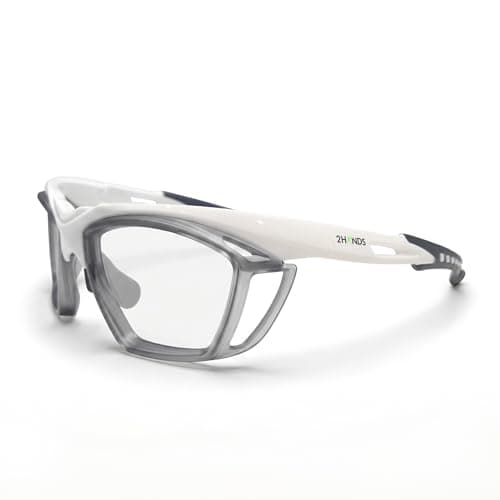 2Hands Lens-Free Pickleball Glasses A pickleball-specific lens-free frame — unobstructed view, no fogging, shields the eye area. | A doubles net player who wants protection without a lens to fog | |
| 2 | 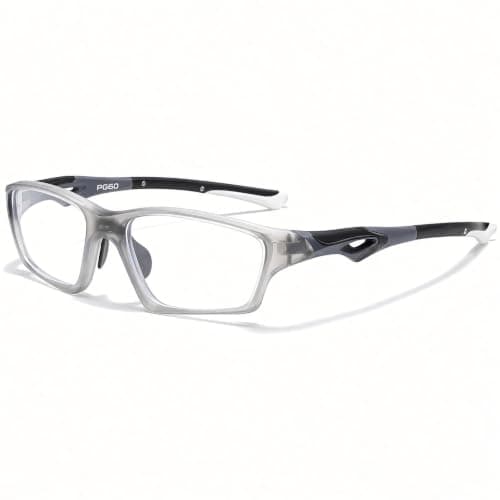 eSeasonGear PG60 Lens-Free Sport Glasses A lens-free sport frame at stocking-stuffer money. | Testing whether they will actually wear a pair | |
| 3 | 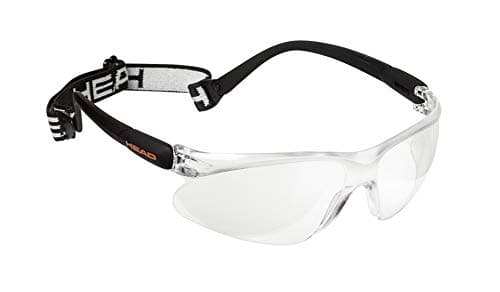 HEAD Impulse Racquetball & Squash Goggles A closed racquetball and squash goggle from an established racquet-sport brand — real enclosure, not a shield. | Someone who has had eye surgery, or wants a closed, certified goggle | $12.31 · View on Amazon $14.00 save 12% |
2Hands Lens-Free Pickleball Glasses
Best for: A doubles net player who wants protection without a lens to fog
This is the pick for the most common case: a player who stands at the kitchen line in doubles, has thought about eye protection, and does not want to look through a lens. The lens-free design surrounds the eye area while leaving the field of view completely clear, which removes the two reasons people abandon sport glasses — fog and glare. It is also pickleball-specific rather than borrowed from another sport, which matters for a gift: the recipient can see you bought the thing for their game rather than a generic pair of safety glasses.
Skip it if: Skip it if they want sun protection — a lens-free frame does nothing about a ball lost in bright sun, and a visor is the right purchase for that. Skip it too if they want certified impact protection rather than a shield, in which case the closed goggle below is the honest answer.
Price as of October 5, 2026. #ad · how this works
eSeasonGear PG60 Lens-Free Sport Glasses
Best for: Testing whether they will actually wear a pair
Eyewear is the item most likely to be bought and never worn, because fit is personal and frames sit differently on every face. That makes the cheapest honest option genuinely useful: spend very little to discover whether your recipient tolerates something on their face mid-rally. If they do, a better pair is an easy follow-up gift; if they do not, nobody has lost much. It also works as a filler alongside a larger present rather than as the gift itself.
Skip it if: Skip it if this is the main gift for an occasion that matters — it is inexpensive and looks it. Skip it too if the recipient already knows they want eye protection and has specific requirements; at that point buy the pickleball-specific frame above or the goggle below rather than the entry-level option.
Price as of October 5, 2026. #ad · how this works
HEAD Impulse Racquetball & Squash Goggles
Best for: Someone who has had eye surgery, or wants a closed, certified goggle
Racquetball and squash have taken eye protection seriously for decades because their balls are small and travel fast, and the equipment reflects that: this is a closed goggle designed for impact rather than an open frame. For the recipient with the strongest case — post eye surgery, or simply unwilling to accept an open design — this is the pick, and the fact that it is sold for another racquet sport is a strength rather than a compromise, because that is where the engineering happened. HEAD is also a name a multi-sport player will recognize.
Skip it if: Skip it if fogging is likely to be the deciding factor. A closed goggle has a lens, and a lens in a humid gym can fog, which is precisely the problem the lens-free frames above exist to avoid. Skip it too if the gift needs to read as pickleball-specific: this listing is for racquetball and squash, and some recipients care about that.
Frequently asked questions
Does any rule require eye protection in pickleball?
No. USA Pickleball does not require eye protection for recreational play or for sanctioned tournaments, and the great majority of players wear none. Individual facilities occasionally set their own policies, but there is no sport-wide requirement. It is a personal risk decision, which is why this page tries to describe who the risk actually applies to rather than issuing a blanket recommendation.
Are pickleball eye injuries actually common?
They are documented enough that Mass General Brigham has published guidance on them specifically, which is a meaningful signal — academic health systems do not write up hypothetical injury patterns. The mechanism is close range rather than high speed: in doubles, both teams stand just behind a non-volley zone that USA Pickleball describes as the 14-foot area around the net, 7 feet on each side, so a hard drive or a partner's paddle arrives from very close. That is the risk; this page does not put a number on its frequency, because none was available from a source worth citing.
What is the difference between lens-free glasses and sunglasses?
Everything except the shape. Lens-free pickleball frames surround the eye area without a lens, so they shield against a paddle or ball striking the eye while leaving vision completely unobstructed and never fogging. They do not filter light at all. Sunglasses do the opposite job and are not impact-rated. If your recipient's problem is losing the ball in the sun, buy a hat or visor; if it is a ball off a paddle from ten feet away, buy the frames.
Can they just wear their normal glasses?
They can, and many players do, but ordinary prescription frames are not impact-rated and a lens breaking near the eye is the worst version of this problem. A player who already wears glasses on court is one of the strongest candidates for proper sport eyewear — either a closed goggle that fits over them or prescription sport frames from an optician, which is outside what this site covers.
Will they actually wear them?
That is the real question, and it is why the cheapest pick on this page exists. Eyewear is personal: frames sit differently on every face, and a pair that slips mid-rally gets left in the bag. If your recipient has never worn any, the sensible move is to spend very little on a first pair and upgrade later. If they have asked for eye protection outright, buy the better pair.
Is safety gear a good gift?
It is, with one caveat: it can read as a comment on somebody's play or their age if it arrives unprompted. The recipients where it lands well are the ones who have already mentioned a near miss, had eye surgery, or wear contacts and complain about wind. For everyone else, pair it with something fun so the gift is not purely cautionary - our stocking stuffers page is full of the right companions.
Keep exploring
The full roundup, including the opaque shield style.
Best pickleball hats and visorsWhat to buy if the real problem is the sun.
Best pickleball accessoriesEverything else that lives in the bag.
Pickleball rules for beginnersIncluding the kitchen rule this page refers to.
Pickleball gifts for seniorsWhere eye protection most often comes up.
Pickleball stocking stuffersWhat to pair with a cautious gift.
What to wear to play pickleballThe rest of the on-court kit.
Sources
- Mass General Brigham — Pickleball eye injuries (how eye injuries happen in the sport and the role of protective eyewear)
- USA Pickleball — How to Play ("The Non-Volley Zone (NVZ), nicknamed the Kitchen, is the 14-foot area around the net (7 feet on each side)")
- USA Pickleball — Official Rulebook, Section 2 (court 20 x 44 ft, net 36 in at the sidelines and 34 in at the center, net at least 21 ft 9 in post to post, rule 2.D ball hole count)
- Harvard Health Publishing — Practical pointers for pickleballers ("sudden starts and stops and side-to-side moves increase stress on joints, muscles, and ligaments"; roomy toe box; players aged 50+)
Browse another way