Best Gear
The Best Paddletek Pickleball Paddles
Paddletek is a long-established US brand whose listings still say Made in USA, and its two family names tell you almost everything. Here is what Bantam and Phoenix mean, and which one you need.
By Stephen V. · Updated November 2026 · How we pick
The short answer: buy the Paddletek Phoenix Talon 14mm. It publishes a raw carbon fiber face over a polypropylene honeycomb core, a 5.25-inch handle and USAPA approval, which is the most complete specification in the brand's mid-range and the combination most club players actually want. The budget pick is the Phoenix Genesis 2 14mm, which keeps the handle length and the approval and swaps raw carbon for a fiberglass composite face at a clear step down in price. If two people need paddles, the Phoenix G6 set solves it in one box. And if you are a competitive player who wants the serious end of the range, the Bantam GTO-C is the only pick here that publishes pro-tour certification.
Here is what makes a Paddletek page worth reading. This is a long-established US brand rather than a marketplace label, and the Bantam GTO-C listing states Made in USA on the label itself - a claim almost nothing else at this money makes. That matters in a category where most listings are marketplace brands with no factory, no warranty path and a name invented last quarter. What it does not do is explain itself: Paddletek uses two family names, two core trade names and a handful of model suffixes, and the retail listings assume you already know the vocabulary. You do not need to. There are only two decisions on this page.
The first decision is Bantam or Phoenix. Bantam is the more premium family and the name attaches to the brand's own core technology - its listings specify a Bantam PolyCore honeycomb core, and the current carbon models in the family carry the Paddletek specifications a competitive player looks for. Phoenix is the family whose listings read as a clearer ladder: the Genesis 2 at the bottom with a fiberglass composite face, the Talon in the middle with a raw carbon face, and the G6 as a two-paddle set. If you are buying one paddle for club play, shop Phoenix. If you are buying for a tournament player who has opinions, shop Bantam.
The second decision is the face, and it is the one that changes how the paddle plays. Paddletek sells three surfaces across these picks and the listings name them plainly. A raw carbon fiber face is unpainted and textured, which grips the ball and is what lets a player brush up the back of it and make it dip - the Talon and the GTO-C publish this. A polycarbonate surface over a honeycomb core is the classic Bantam construction, which is the smoother, more damped, more forgiving option the EX-L and the G6 publish. A fiberglass composite face, which the Genesis 2 publishes, is the cheapest of the three and gives a little more pop with less bite on the ball. None of these is a bad face. They are different trades and Paddletek sells all three deliberately.
Core thickness is where this brand is unusual, so read this before you buy. Both current Phoenix models and the Bantam GTO-C publish thin cores - 14mm on the Phoenix pair and 14.3mm on the GTO-C - and the Bantam EX-L listing does not publish a thickness at all. JOOLA's own paddle guide is the cleanest manufacturer statement on what that means: 16mm is the choice for control and stability, and thinner cores deliver pop. So the honest characterization of Paddletek's current range is that it leans lively rather than damped: you get free pace you did not have to generate, a slightly smaller effective sweet spot, and more punishment on the ball you catch off-center. If balls already sail long on you, this brand page is the wrong one and our control paddle roundup is the right one - or buy a 16mm paddle from another brand.
Handle length is the specification Paddletek publishes most consistently, and it is the one nobody checks. Both Phoenix picks publish a 5.25-inch handle and the Bantam GTO-C publishes 5.5 inches, which is the longest on this page. This matters for exactly one reason: a long handle is what makes a two-handed backhand practical. If the player you are buying for puts two hands on the backhand, handle length is the first filter and everything else here is the second. Grip circumference is a separate thing and Selkirk's grip guidance is the useful rule - measure from the middle crease of the palm to the tip of the ring finger, and when you are between sizes go smaller and build the handle up with an overgrip, because material can be added and never removed.
A word on certification, because one pick here carries something the others do not. The GTO-C listing states UPA-A and PBCoR .43 certification, which are the professional tour's approvals rather than the recreational governing body's, and almost nothing at this price publishes them. The other picks state USAPA approval. All of that is listing text rather than an authoritative record, which is why this page treats it the way it treats every approval claim: USA Pickleball maintains an approved equipment database that lists current status model by model, USA Pickleball has published a spin rate test with a 2,100 RPM maximum taking effect from October 1, 2026, and if the paddle is for sanctioned play you check the exact model there rather than trusting a listing. For recreational and club play none of it matters.
Shape, briefly, because one pick has an unusually interesting published dimension. The GTO-C listing publishes a 16.25 by 7.75 inch face in what it calls an aerodynamic tapered shape - and 16.25 plus 7.75 is exactly 24, which is the maximum combined length and width USA Pickleball's rulebook allows. In other words that paddle is built right up against the legal envelope, which is what a hybrid shape is: as long as the rules permit while keeping as much width as possible. Selkirk's shape guide states the general trade that makes this a decision rather than a free lunch - wider outlines spread the hitting area, longer ones trade sweet-spot width for reach. The other picks on this page do not publish face dimensions and this page does not estimate them.
What a Paddletek costs, in brackets rather than numbers, because every figure here renders live from this site's price layer. The Genesis 2 sits at the price of a nice dinner out and is the cheapest way into a real American-made brand. The Talon, the EX-L and the G6 set all land in the bracket of a decent pair of running shoes - and the G6 is two paddles and two balls for that, which is the best per-paddle value on the page by a distance. The GTO-C sits a step above and is the only pick aimed squarely at a competitive player. Nothing here reaches the $200 flagship tier, which is Paddletek's Bantam TKO-C territory; those listings reported low stock on the day this page was written and this site does not feature a paddle it cannot confirm you can actually buy.
The honesty section. Nobody on this site has hit with any of these paddles. There is no lab, no ball machine and no testing program behind Popaddle, and not one swing weight, spin figure, durability judgment or feel description below is ours. Every face material, core description, thickness, handle length, dimension, certification and inclusion claim is repeated from the live retail listing it describes. Paddletek's own storefront refused automated requests on the day this page was published, so nothing here is attributed to a manufacturer page we could not read - and where a listing publishes no figure, this page says so rather than filling the gap. Availability was verified listing by listing immediately before publication and only paddles reporting In Stock with a live price are picks, which is why several well-known Paddletek models are missing. Prices in this category move weekly, so every number renders live with its own date stamp under its own button.
Disclosure: Popaddle earns a commission on qualifying purchases made through the links on this page, at no extra cost to you. Prices are pulled live and can change. How this works.
| # | Product | Best for | Price |
|---|---|---|---|
| 1 | 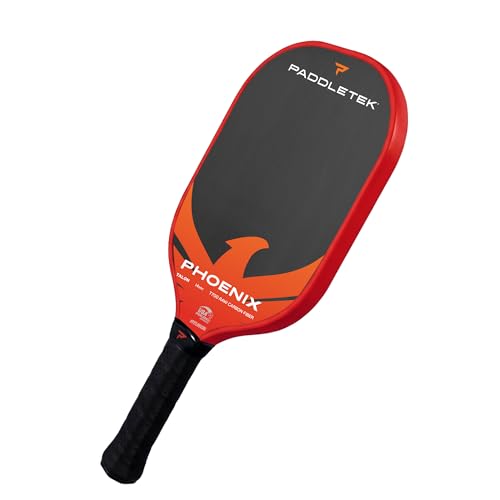 Paddletek Phoenix Talon 14mm A raw carbon fiber face over a polypropylene honeycomb core, USAPA approved, with a published 5.25-inch handle. | A club player who wants raw carbon, a published handle length and an American brand behind it | |
| 2 | 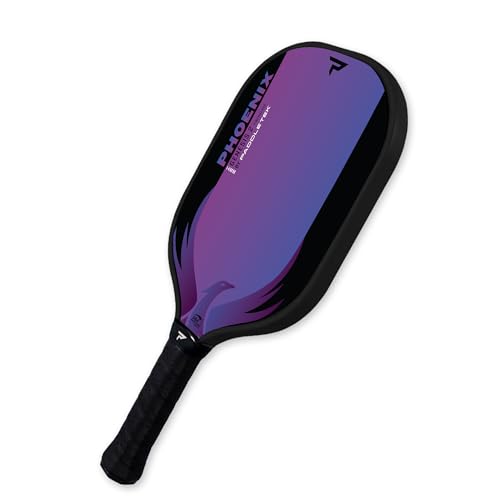 Paddletek Phoenix Genesis 2 14mm A fiberglass composite face with the same published 5.25-inch handle and USAPA approval, for well under the top pick. | A beginner's first real paddle, or a second paddle to lend to whoever turns up without one | |
| 3 | 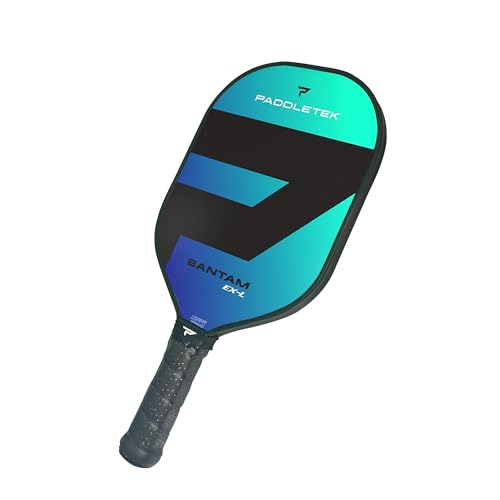 Paddletek Bantam EX-L The classic Bantam build - polycarbonate surface over Bantam PolyCore honeycomb, with Paddletek's high-tack grip and USAPA approval. | A player who wants the smoother Bantam construction rather than a textured carbon face | |
| 4 | 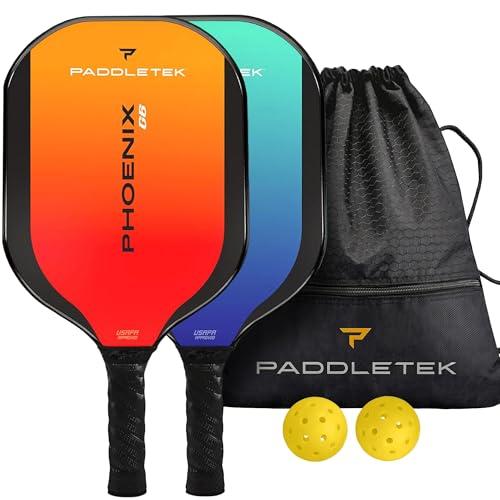 Paddletek Phoenix G6 Set (2 Paddles, 2 Balls) Two Phoenix G6 paddles and two outdoor balls in one box - honeycomb core, polycarbonate surface, graphite PolyCore, USAPA approved. | A couple, a family or anyone buying one gift that has to cover two people | |
| 5 | 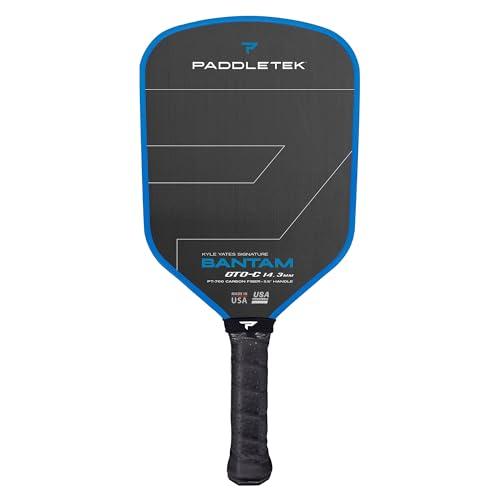 Paddletek Bantam GTO-C 14.3mm A raw carbon hybrid built to the legal limit - 16.25 x 7.75 in, 5.5-inch handle, UPA-A and PBCoR .43 certified, made in the USA. | A tournament player who wants pro-tour certification and a long handle, made in America | $119.99 · View on Amazon $199.99 save 40% |
The picks in detail
Paddletek Phoenix Talon 14mm
Best for: A club player who wants raw carbon, a published handle length and an American brand behind it
This is the Paddletek to buy if you want one answer and no homework. The listing specifies a Phoenix Talon 14mm with a raw carbon fiber face, balanced control and spin, a polypropylene honeycomb core, USAPA approval and a 5.25-inch handle. Raw carbon is the specification worth chasing at this money: an unpainted, textured surface is what grips the ball and lets you brush spin onto it, and paint over carbon does not do the same job. The published handle length is the quiet reason this is the top pick - at 5.25 inches a two-handed backhand is practical, and most listings in this bracket do not tell you. Paddletek being a long-established American manufacturer rather than a marketplace label is the other thing you are buying, and it is the part that matters if a warranty claim is ever in your future.
Skip it if: Skip it if balls already sail long on you. This is a 14mm core and per JOOLA's own guide thinner cores are the pop choice rather than the control one - a 16mm paddle will keep more of your drives on the court. Skip it too if you want pro-tour certification specifically, which this listing does not state and the GTO-C below does.
Price as of November 22, 2026. #ad · how this works
Paddletek Phoenix Genesis 2 14mm
Best for: A beginner's first real paddle, or a second paddle to lend to whoever turns up without one
This is the cheapest way into a real brand on this page, and it gives up less than the price suggests. The listing specifies a Phoenix Genesis 2 14mm with a fiberglass composite face, easy power and soft feel, USAPA approval and a 5.25-inch handle. Fiberglass is the honest trade here - it does not grip the ball the way raw carbon does, but it is lively and forgiving, which is exactly what a new player needs while they are still learning where the ball goes. Keeping the 5.25-inch handle at this price is the detail worth noticing, because it means a player who develops a two-handed backhand does not immediately outgrow the paddle. For a first paddle, or a spare in the bag, this is the right amount of money to spend.
Skip it if: Skip it if spin is the point. A composite face will not bite the ball like the raw carbon on the Talon and the GTO-C, and a player who already brushes up on the ball will feel the difference immediately. Skip it too if the paddle is a gift for someone who shops by specification - this is the entry model in the range and the listing reads like it.
Price as of November 22, 2026. #ad · how this works
Paddletek Bantam EX-L
Best for: A player who wants the smoother Bantam construction rather than a textured carbon face
Buy this one if what you want is feel rather than bite. The listing specifies a Bantam EX-L with a honeycomb core, a polycarbonate surface, Bantam PolyCore and a high-tack performance grip, USAPA approved. That is the construction the Bantam name carries and it behaves differently from the raw carbon picks on this page: a smooth polycarbonate face is more damped and more predictable, so the ball comes off softly and goes where you aimed rather than where the texture took it. Players who came to pickleball from tennis or platform tennis often prefer exactly this. It is also the only Bantam on this page under the $100 mark, which makes it the cheapest route into the brand's premium family.
Skip it if: Skip it if you want to know the core thickness before you buy, because this listing does not publish one - and thickness is the specification that most changes how a paddle plays, so that is a real gap rather than a nitpick. Skip it too if spin is your game: a smooth polycarbonate face is the opposite of the raw, textured carbon that makes a brushed ball dip.
Price as of November 22, 2026. #ad · how this works
Paddletek Phoenix G6 Set (2 Paddles, 2 Balls)
Best for: A couple, a family or anyone buying one gift that has to cover two people
This is the best value on the page and the easiest gift decision on it. The listing specifies a Phoenix G6 set with two paddles and two outdoor balls, a honeycomb core, a polycarbonate surface, graphite PolyCore and a high-tack grip, USAPA approved. Two real paddles from an established American brand for roughly what one mid-range paddle costs is a genuinely good trade, and the two balls mean the recipient can go and play the day they open it rather than making a second purchase. The construction is the smooth, damped Bantam-style face rather than textured carbon, which is the right call for two people who are probably learning together.
Skip it if: Skip it if both players are already committed and have preferences, because a matched pair of entry paddles is the wrong answer for two people who each want a different shape and thickness - buy them one good paddle each instead. Skip it too if you want a full starter kit: this is paddles and balls, with no bag and no net, and our beginner set roundup covers the boxes that include everything.
Price as of November 22, 2026. #ad · how this works
Paddletek Bantam GTO-C 14.3mm
Best for: A tournament player who wants pro-tour certification and a long handle, made in America
This is the serious paddle on the page and the listing is unusually forthcoming about why. It specifies a Bantam GTO-C 14.3mm hybrid with a raw carbon fiber face, an aerodynamic tapered shape, a polymer core, a 16.25 by 7.75 inch face, a 5.5-inch handle, UPA-A and PBCoR .43 certification and US manufacture. Three of those are rare at this price. The dimensions add to exactly 24 inches, which is the maximum combined length and width USA Pickleball's rulebook allows - this paddle is built right up against the envelope, keeping width while taking all the length the rules permit. The 5.5-inch handle is the longest here, which makes it the two-handed-backhand pick by default. And the pro-tour certifications are the kind of thing flagship paddles advertise and mid-range ones usually cannot.
Skip it if: Skip it if this would be someone's first or second paddle: a 14.3mm core on a hybrid shape is a specialist's tool and a new player will mis-hit it more than they would the forgiving picks above. Skip it too if your game is the soft game at the kitchen line, where a thin, lively core works against you and the EX-L or a 16mm paddle from another brand will win more points.
Frequently asked questions
What is the difference between Paddletek Bantam and Phoenix?
Bantam is the more premium family and the name carries Paddletek's own core technology - the EX-L listing specifies Bantam PolyCore with a polycarbonate surface, and the current carbon model in the family, the GTO-C, publishes pro-tour certification and US manufacture. Phoenix is the newer family and reads as a ladder: the Genesis 2 with a fiberglass composite face at the bottom, the Talon with a raw carbon face in the middle and the G6 sold as a two-paddle set. For one paddle for club play, shop Phoenix. For a tournament player with opinions, shop Bantam.
Are Paddletek paddles made in the USA?
The Bantam GTO-C listing states that it is made in the USA. The other listings on this page do not carry that claim in their published text, so this page does not extend it to them - Paddletek is a long-established US brand, but country of manufacture is a per-model claim and we only repeat it where the listing makes it. If US manufacture is the deciding factor for you, the GTO-C is the pick that publishes it.
Which Paddletek is best for beginners?
The Phoenix Genesis 2, or the Phoenix G6 set if two people are starting together. The Genesis 2 publishes a fiberglass composite face, easy power and soft feel, USAPA approval and a 5.25-inch handle, and it is the cheapest pick here by a clear margin - which is the right amount to spend on a first paddle. The G6 set is two paddles and two outdoor balls in one box, which is better value per paddle and means nobody has to borrow. Avoid the GTO-C as a first paddle: a thin core on a hybrid shape punishes a player who is still learning where the middle of the face is.
Do any of these have a 16mm core?
No. The two Phoenix picks publish 14mm, the Bantam GTO-C publishes 14.3mm and the Bantam EX-L listing does not publish a thickness at all. That is a real characteristic of this brand's current range rather than an oversight on this page: per JOOLA's paddle guide, 16mm is the control-and-stability thickness and thinner cores deliver pop, so Paddletek's current lineup leans lively. If you specifically want 16mm, our 16mm paddle roundup and our thickness guide are the pages to read, and the Vatic Pro brand page is entirely 16mm.
What does PBCoR .43 certified mean on the GTO-C?
It is a professional-tour certification that the listing states, alongside UPA-A - the sanctioning approvals used in the pro game rather than the recreational governing body's. The practical significance for a buyer is simply that a paddle carrying them has been submitted to and cleared a tour standard, which very little at this price does. What this page will not do is tell you it makes the paddle legal for your event: approval and certification are per model and per generation, so if you are entering sanctioned play, confirm the exact model in USA Pickleball's approved equipment database and with your event's own rules before you buy.
How were these picks chosen, and have you tested them?
No, and that is the first thing to say. Nobody on this site has hit with any of these paddles and there is no testing program behind Popaddle, so no rating, swing weight, spin figure or feel judgment here is ours. The shortlist is every Paddletek we could resolve to a live retail listing, filtered to the ones reporting In Stock with a live price on the day of publication - which is why the Bantam TKO-C, the Honeyfoam TKO-X, the Honeyfoam ESQ and the Bantam TS-5 are all absent: every one of them reported low stock. Specifications are repeated from the listing each pick describes, with construction and shape context sourced to JOOLA, Selkirk and USA Pickleball below. Prices render live with their own date stamp.
Keep exploring
The direct-to-consumer brand people shop against Paddletek, and the whole 16mm range.
Best JOOLA pickleball paddlesThe same brand-by-brand treatment for JOOLA.
Best Selkirk pickleball paddlesThe other American brand with real retail presence.
Best pickleball paddles under $75Includes the Genesis 2, plus the cheaper carbon paddles it competes with.
Pickleball paddle brands rankedWhere Paddletek sits against the rest of the market.
Carbon vs fiberglass paddle facesThe difference between the Talon and the Genesis 2, explained properly.
Best pickleball paddle sets of 2Other two-paddle boxes, if the G6 set is the shape of what you want.
Sources
- JOOLA — Official Paddle Guide (core thickness: 16mm for control and stability, thinner cores for pop)
- Selkirk Sport — the ultimate guide to pickleball paddle shapes (standard/widebody shapes spread the hitting area; elongated shapes trade sweet-spot width for reach)
- Selkirk Sport — how to know your pickleball grip size (measure from the middle crease of the palm to the tip of the ring finger; when between sizes, go smaller and build up with an overgrip)
- USA Pickleball — Official Rulebook, Section 2 (2.E.3 paddle size: 24 in combined length and width, 17 in maximum length; 2.E.4 no weight restriction; no core-thickness limit)
- USA Pickleball — Approved equipment database (current approval status, paddle by paddle)
- USA Pickleball — update regarding the spin rate test and implementation timeline (2,100 RPM maximum from October 1, 2026)
Browse another way